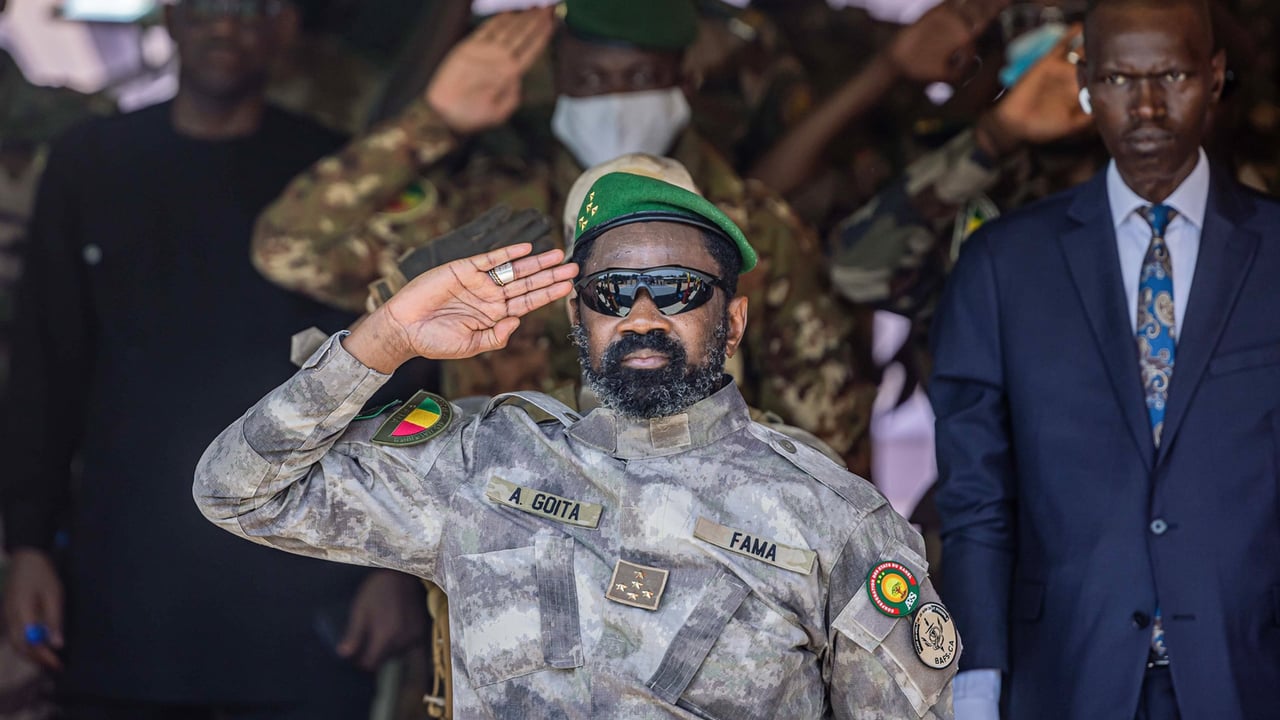

The political landscape of Mali remains precarious as Assimi Goïta, the country’s head of state, continues to navigate a complex web of challenges. Recent events have underscored the fragility of his position, despite his reputation as a decisive leader.
a fragile mandate in turbulent times
Since assuming power in 2020, Assimi Goïta has been at the center of Mali’s political storm. His leadership has been marked by a series of upheavals, including the removal of interim President Bah N’Daw in 2021. While some view him as a stabilizing force, others argue that his rule has deepened the nation’s instability.
The recent passing of Sadio Camara, his Defense minister, during a military operation has further exposed the vulnerabilities of Mali’s government. The loss of a key figure in his administration has raised questions about the effectiveness of Goïta’s security strategies and the long-term impact on the country’s stability.
the rise of extremist threats
The growing influence of armed groups, particularly the Group for the Support of Islam and Muslims (JNIM), continues to pose a severe threat to Mali’s sovereignty. These groups have exploited the nation’s political instability to expand their reach, complicating efforts to restore peace and security.
Assimi Goïta faces mounting pressure to address these security challenges while maintaining public trust. His ability to balance military action with diplomatic solutions will determine whether Mali can begin to chart a path toward stability.
public perception and political challenges
The Malian population remains deeply divided over Goïta’s leadership. While some citizens support his strongman approach, others criticize his government for failing to deliver on promises of security and economic recovery. The recent funeral of Sadio Camara served as a stark reminder of the ongoing crisis, drawing thousands of mourners in Bamako.
The political elite, including figures like former President Ibrahim Boubacar Keïta, remain a critical voice in the national discourse. Their opinions often shape public sentiment, adding another layer of complexity to Goïta’s leadership challenges.
what lies ahead for Mali
The road to stability in Mali is fraught with obstacles. Assimi Goïta must navigate a delicate balance between consolidating his authority and addressing the urgent needs of his people. With extremist threats looming and political tensions simmering, the coming months will be crucial in defining the country’s future.
As Mali grapples with these challenges, the world watches closely. The decisions made by Goïta and his administration will not only shape the nation’s trajectory but also influence the broader dynamics of West Africa.