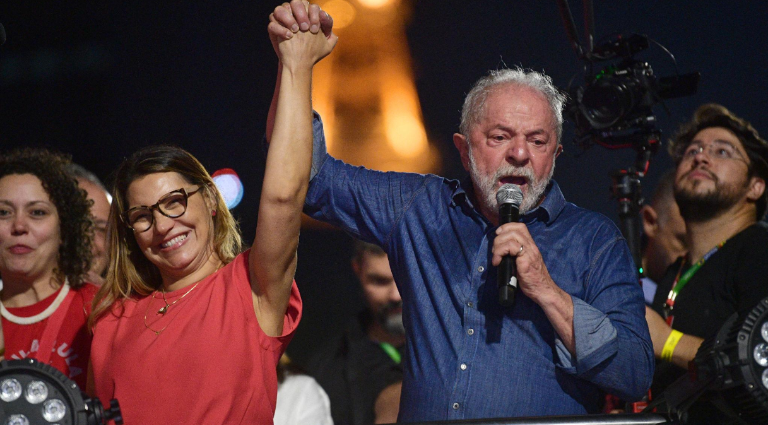
Luiz Inácio Lula da Silva has been re-elected president of Brazil, securing his fourth term with 51.79% of the vote. His rival, Senator Flávio Bolsonaro, has refused to accept the result and is pursuing legal action to overturn the outcome, citing last-minute changes to voting procedures.
Lula declared winner as Bolsonaro contests results
The Brazilian electoral authority confirmed Lula’s victory, marking a historic fourth term for the left-wing leader and posing an immediate challenge to his ability to govern under the shadow of legal disputes. With 64,256,232 votes, Lula surpassed Flávio Bolsonaro’s 59,826,041 votes by more than 4.4 million ballots.
Flávio Bolsonaro, son of former President Jair Bolsonaro, acknowledged the numerical defeat but vowed to challenge the election’s validity, alleging irregularities in the voting process. His campaign has focused on the late extension of polling hours by the Supreme Court, which permitted additional voting in select districts where logistical issues had been reported.
Controversy over extended voting hours
The legal dispute centers on a Supreme Court decision to extend voting deadlines in parts of Bahia and São Paulo due to transportation disruptions. While the measure aimed to ensure voter access, Flávio Bolsonaro’s team argues it compromised the fairness of the election by altering established rules mid-process.
Critics, however, note that Bolsonaro’s campaign had previously requested an extension themselves, citing adverse weather conditions in southern Brazil. This complicates the argument that the change was unilaterally imposed by electoral authorities.
No evidence of fraud, legal challenge proceeds on procedural grounds
The dispute does not allege direct fraud but questions the integrity of the electoral process. Flávio Bolsonaro has stopped short of claiming widespread misconduct, instead framing the appeal as a defense of democratic standards. His legal team is expected to file formal objections, though the path to election annulment remains uncertain.
Under Brazilian law, the Supreme Electoral Court retains the final authority over electoral disputes. Even as challenges proceed, Lula’s victory stands as the official result until proven otherwise in court.
Divided nation braces for political fallout
Brazil enters a new phase of political division, with Lula’s re-election setting the stage for a contentious term. His agenda—centered on social welfare and inequality reduction—faces opposition from a strengthened conservative bloc in Congress, where right-wing factions hold significant influence.
The incoming administration will need to navigate deep societal polarization, with nearly half of voters rejecting Lula’s leadership. In his postelection remarks, Lula struck a unifying tone, asserting his commitment to represent all Brazilians regardless of political affiliation.
What’s next for Brazil’s democracy?
The coming weeks will test the resilience of Brazil’s institutions. The Supreme Electoral Court must now weigh the merits of Flávio Bolsonaro’s legal challenge against the procedural irregularities alleged. While the election outcome remains intact for now, the contestation underscores broader concerns about trust in the electoral system.
The episode reinforces the challenges facing Latin America’s largest democracy: reconciling political rivalry with institutional legitimacy. As legal proceedings unfold, the world watches whether Brazil can resolve its differences within the framework of its laws—or risk deeper institutional strain.
Comments are closed, but trackbacks and pingbacks are open.