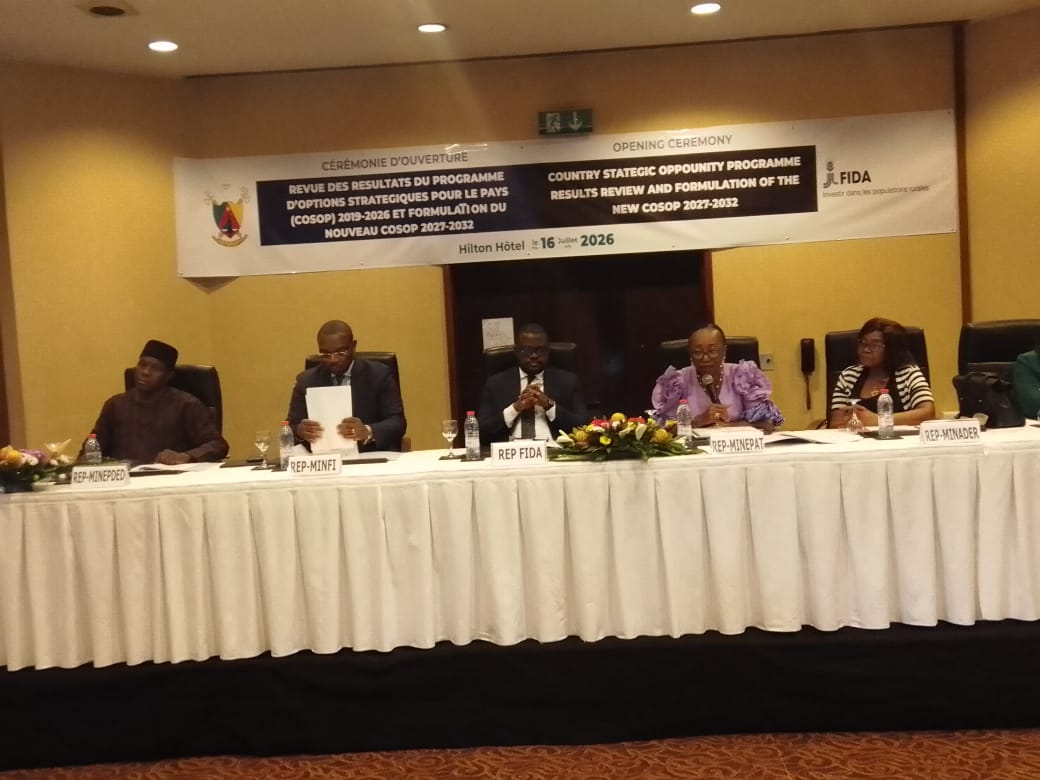
Key targets were set under the 2019–2026 Country Strategic Opportunities Programme (COSOP).
On 16 July 2026, Yaoundé hosted a high-level joint workshop between Cameroon’s government and the International Fund for Agricultural Development (IFAD). The event reviewed results from the 2019–2026 COSOP and laid the groundwork for the 2027–2032 programme. The COSOP channels IFAD financing into priority investments for rural poor communities, with special focus on young people and women, aiming to lift living standards across the country’s hinterlands.
During the Yaoundé gathering, delegates assessed the 2019–2026 programme’s implementation, measured outcomes and crafted recommendations to keep interventions aligned with Cameroon’s National Development Strategy 2020–2030 and the UN Sustainable Development Cooperation Framework.
Measurable gains in agricultural productivity
The “Sustainably increasing productivity and production of small farms and rural businesses” pillar achieved a 98% completion rate. It now supports 139 cooperatives in rice and onion value chains, involving 10 505 producers—39% women and 49% youth. By 2024, the goal was to enrol at least 10 000 members, with women and youth presiding over half of the structures. All initiatives in this strand feature environmental and social management plans.
Within the Youth Agropastoral Entrepreneurship Promotion Programme (PEA-Jeunes), 99% of targeted young people adopted the taught techniques, surpassing the 50% forecast. However, hydro-agricultural land development for rice and onion production reached only 649 hectares—43% of the planned 1 600 hectares.
Rice and onion yields outperform expectations
Phase II of the Support Programme for Agricultural Value Chains (PADFA II) reports strong gains: lowland rice yields rose to 3.7 tonnes per hectare—74% of the 5-tonne target—while upland rice reached 2.5 tonnes per hectare, 63% of its 4-tonne goal. Onion production hit 18 tonnes per hectare, 86% of the 21-tonne objective.
Overall paddy rice output under PADFA II totalled 52 996 tonnes against a 74 750-tonne target (70.4%). Onion bulb production stood at 45 000 tonnes versus a 85 562-tonne forecast (52.5%).
Climate-smart reforms and policy progress
The ecosystem-based adaptation and climate-smart agriculture guidelines pillar achieved a flawless 100% adoption rate. A strategic plan covering 17 reforms is now available, alongside a draft agropastoral orientation law and three new strategies supporting bamboo restoration policies.
Cameroon and IFAD first approved the 2019–2024 COSOP in 2019 and extended it to 31 December 2026 at the government’s request, following a mid-term review in July 2021.