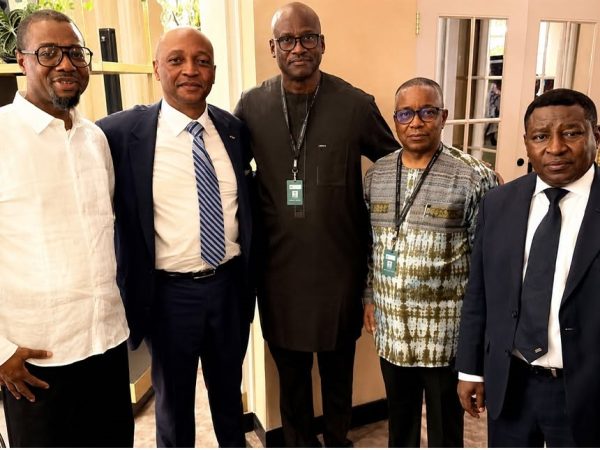
In a landmark move, the Confederation of African Football (CAF) has officially recognized the joint bid by Burkina Faso, Mali, and Niger to host the Africa Cup of Nations (CAN) in 2032. Though a symbolic first step, the trio now faces the challenge of proving their readiness in terms of infrastructure and security.
The milestone was achieved during a meeting in New York on July 18, where CAF President Patrice Motsepe met with the presidents of the three national football federations—Colonel Oumarou Sawadogo (Burkina Faso), Mahamadou Cissé (Mali), and Issaka Adamou (Niger). The announcement was made public on July 20, sparking immediate regional discussions.
Beyond the administrative nod: what comes next?
While the validation of their joint declaration of interest is a necessary procedural step, it does not guarantee selection. Under CAF regulations, this approval simply allows the bid to advance to the next phase, where technical, logistical, and security assessments will take precedence. The federation’s statement emphasized that this remains an early, non-binding stage in the bidding process.
Why three editions at once?
In early July 2026, CAF opened simultaneous calls for bids for CAN 2028, 2032, and 2036, giving member associations extended time to prepare competitive proposals. The strategy aims to bring long-term stability to the tournament’s scheduling while allowing federations to develop comprehensive hosting plans.
For the Sahel trio’s bid to succeed, CAF will scrutinize critical factors such as stadium quality, accommodation availability, transport networks, and overall security conditions—especially in light of recent regional instability.
A tested model for collaboration
This isn’t the first time a multi-country bid has been proposed. Kenya, Uganda, and Tanzania are jointly hosting CAN 2027, setting a precedent that Burkina Faso, Mali, and Niger may follow. A shared approach could help distribute the financial and logistical burden while pooling existing resources across the three nations.
CAF leadership has praised the bid as a demonstration of regional cooperation, while stressing the need to adhere to strict organizational standards.
Football as a unifying force in the Sahel
The joint bid reflects broader efforts by the three countries—now aligned under the Alliance of Sahel States—to assert their autonomy following their departure from the Economic Community of West African States (ECOWAS). Recent joint initiatives span economic and diplomatic domains, with this sports bid offering a potential international platform for the alliance.
Yet, the bid’s success hinges on overcoming persistent security challenges. The African Union recently condemned deadly attacks in Niger and Mali, underscoring the need for robust safety measures as part of the evaluation process.
Key takeaways from the CAF decision
The July 18 approval marks only the initial administrative hurdle in a lengthy journey. Success will depend on the trio’s ability to meet CAF’s rigorous technical and security requirements over the coming years. While the 2032 timeline remains flexible, the bid’s credibility will be tested far beyond conference rooms—it will be measured in concrete stadiums, reliable transport, and secure environments.
The CAN 2032 bid could ultimately serve as a testament to the Sahel’s capacity to translate political unity into a lasting global showcase.