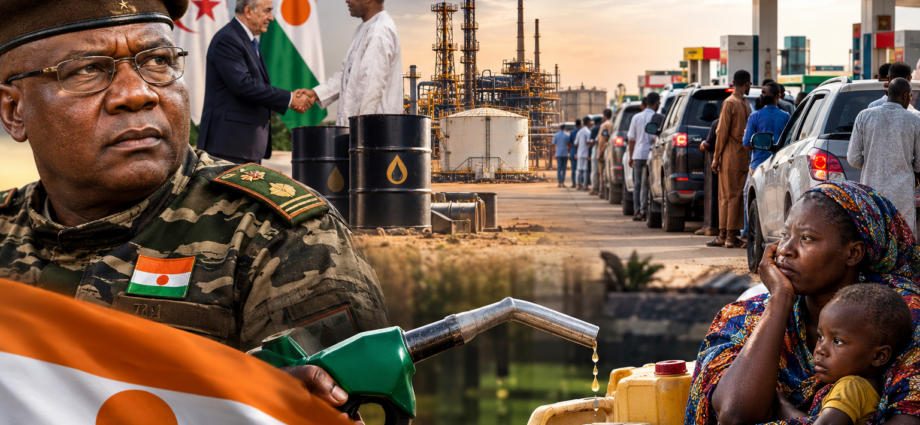
Niamey has officially entered into a new security agreement with Algeria, yet this diplomatic milestone unfolds against a stark domestic reality. Citizens are currently grappling with severe energy deficits, highlighting a glaring contradiction: a nation endowed with significant crude reserves is simultaneously struggling to keep its own gas stations operational.
The reality of domestic supply deficits
The contradiction is evident across the country. Although the state possesses substantial hydrocarbon reserves and has invested in extraction infrastructure, the local market remains critically underserved. Motorists endure extensive queues at petrol stations, logistics networks face severe delays, and small businesses suffer operational disruptions. When the supply chain falters, the immediate burden falls squarely on transport operators, merchants, and everyday commuters.
Unanswered questions regarding crude distribution
The core issue extends beyond mere extraction capacity; it fundamentally involves resource allocation and logistical control. Critical inquiries remain unresolved regarding the final destination of the crude pumped from the subsoil.
Export volumes versus local consumption
Authorities must provide precise, data-backed explanations concerning the proportion of oil allocated for internal use compared to the volumes shipped abroad. Furthermore, the adequacy of current refining, storage, and transport mechanisms to meet national demand requires thorough public clarification.
Geopolitical partnerships and economic transparency
Alongside these logistical challenges, the expanding footprint of external actors in strategic sectors demands careful scrutiny. The growing involvement of Russia alongside other regional military administrations raises valid concerns regarding the exact terms of these economic and defense arrangements. True sovereignty requires absolute transparency. If the government claims enhanced control over natural assets, it must prove that this authority translates into steady domestic availability, affordable pricing, and a clearly audited revenue stream.
The limits of diplomatic agreements
The recent alignment with Algerian defense objectives must be evaluated through this practical lens. While regional security cooperation addresses genuine threats in the Sahel, signing international treaties does not automatically resolve grassroots economic hardships. Military alliances cannot substitute for a robust energy policy or the accountable administration of national wealth.
Demanding tangible results for the population
The primary concern for the public remains highly pragmatic: the utility of subterranean wealth is negligible if it fails to power the domestic economy. True independence is not quantified by the volume of international treaties signed or the number of foreign delegations hosted. Instead, it is measured by the state’s ability to convert raw materials into direct, material benefits for its people. Moving forward, the administration must eliminate the opacity surrounding the hydrocarbon supply chain. Until local pumps reliably meet public demand, assertions of economic autonomy will inevitably face a fundamental challenge regarding who truly benefits from the nation’s resources.
Comments are closed, but trackbacks and pingbacks are open.