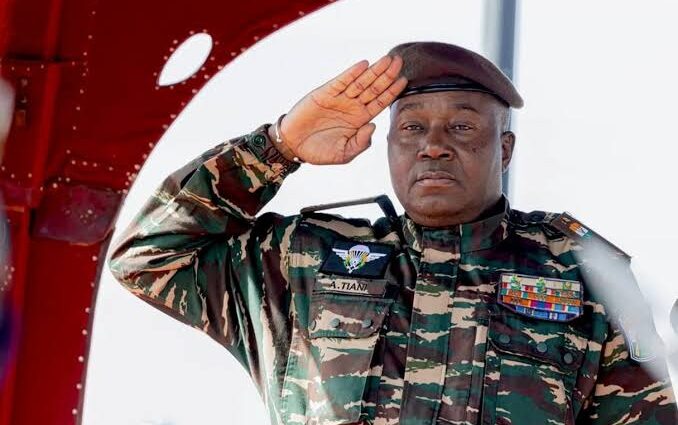
When Niger’s military leadership seized power in July 2023, it framed its intervention as a necessary response to worsening security threats, poor governance, and a perceived erosion of national sovereignty under former president Mohamed Bazoum. Three years later, the promised improvements have failed to materialize—instead, the junta has deepened the very crises it vowed to resolve.
Military promises of restored sovereignty yield shaky alliances
The expulsion of French and U.S. forces was hailed as a triumph of “reclaimed sovereignty,” yet Niger’s search for new partnerships has taken a troubling turn. Recent security accords with Russia and the unexpected deployment of Algerian troops to Madama, situated over 200 kilometers inside Nigerien territory, raise serious questions about the transparency of these agreements.
These decisions were made without parliamentary oversight or public consultation, undermining the very principle of popular consent that the junta claimed to defend. What was once condemned as foreign overreach under civilian rule has now been replaced by opaque alliances with new regional and international actors.
Security cracks widen as junta struggles with militant threats
The military’s core justification for the coup—escalating threats from armed groups like the Islamic State in the Greater Sahara (EIGS) and Jama’at Nusrat al-Islam wal Muslimin (JNIM)—has yet to be fulfilled. Despite increased aerial operations and repeated claims of military successes, militant attacks continue to devastate swathes of territory. In regions such as Diffa, Maradi, Tahoua, and Tillabéri, the closure of schools and health centers persists, signaling a tenuous, if not deteriorating, grip on power.
Economic stagnation mirrors political uncertainty
On the economic front, progress remains stalled. Major energy initiatives, from the delayed Kafra oil permit to the uncertain future of the Trans-Saharan Gas Pipeline, highlight the junta’s inability to translate its rhetoric of economic independence into tangible results. Investor confidence has plummeted, leaving the country’s development prospects in limbo.
Public silence masks mounting discontent
Domestically, a growing culture of silence has taken hold. Critics and opposition figures report increasing intimidation, while once-vocal civil society groups now tread cautiously. The stark contrast between the vehement opposition to Bazoum’s policies and the muted response to the junta’s actions underscores a dangerous double standard. By cloaking its leadership in the language of sovereignty, the military regime in Niamey has only succeeded in trapping itself—and Niger’s citizens—in a cycle of unmet expectations and unresolved crises.
Comments are closed, but trackbacks and pingbacks are open.