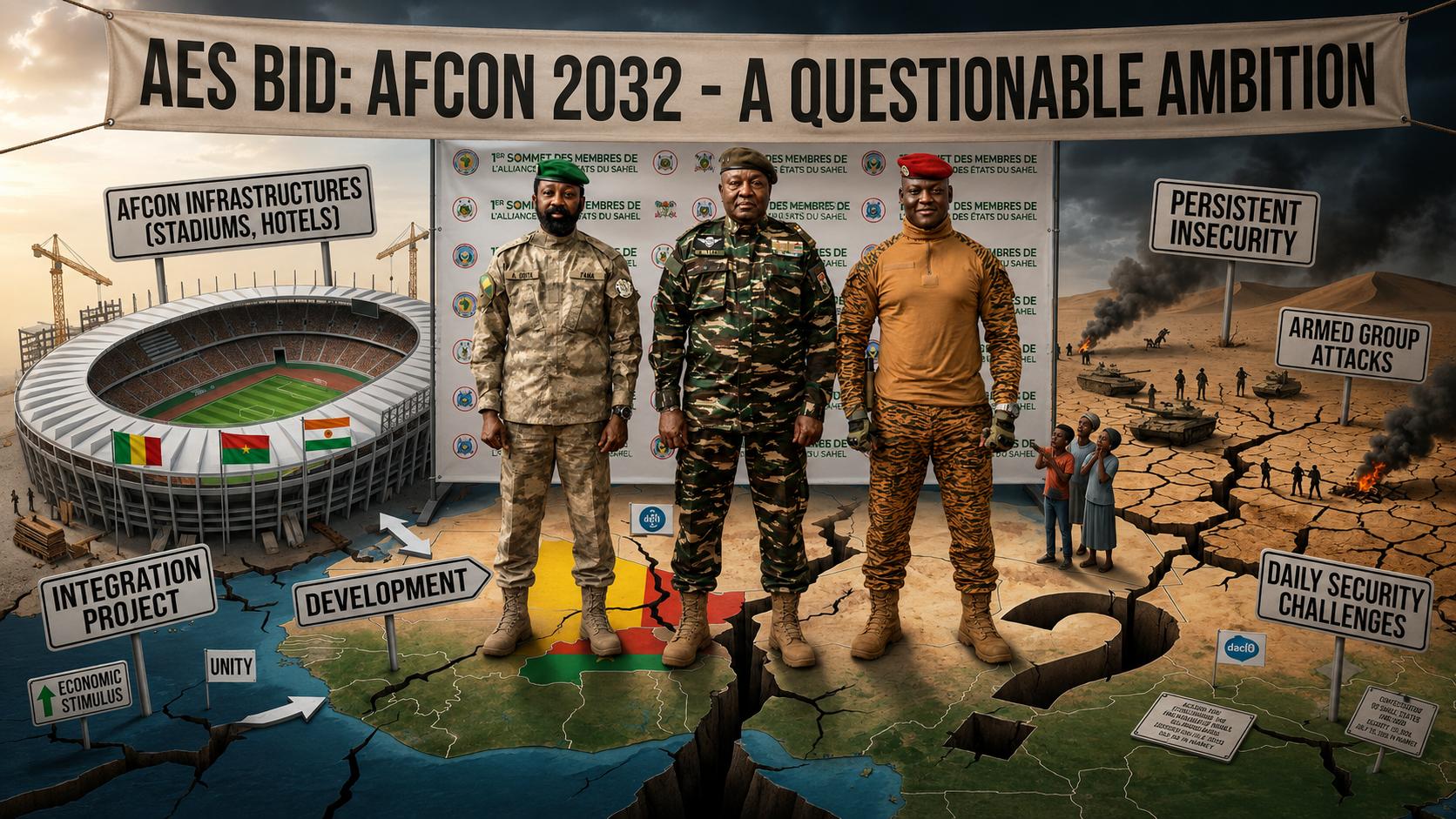
Burkina Faso, Mali and Niger have jointly submitted their bid to host the 2032 Africa Cup of Nations (AFCON), positioning the initiative as a demonstration of unity within the Alliance of Sahel States (AES). While the move is framed as a unifying gesture for the continent, it raises pressing concerns about whether these nations currently possess the necessary conditions to safely host Africa’s premier football tournament.
Hosting the AFCON extends far beyond stadium construction or renovation. It demands a secure environment capable of protecting athletes, officials, journalists, fans, and the tens of thousands of visitors expected to descend on the host nation for weeks. This is where the bid by Burkina Faso, Mali, and Niger encounters scrutiny.
Since military coups reshaped the political landscape in these countries, restoring security and reclaiming territory from armed groups have been central promises of the new regimes. Yet, despite these assurances, attacks on civilians, military personnel, and critical infrastructure persist. Many regions remain under the shadow of insecurity, leaving populations vulnerable and raising doubts about the feasibility of a major international event.
Critics argue that pursuing a continental competition while large segments of the population still face daily threats of violence may be misaligned with immediate national priorities. The fundamental question lingers: if locals cannot move freely and safely within their own countries, how can foreign visitors be assured of protection?
The logistical hurdles are equally daunting. A successful AFCON requires robust road and airport infrastructure, an extensive hotel network, adequate medical facilities, and a foolproof security framework. Meeting these demands demands substantial investment, particularly when national budgets are already strained by ongoing counterterrorism efforts.
The international credibility of the bid also hangs in the balance. Federations, sponsors, broadcasters, and commercial partners prioritize stability when evaluating a host nation. Any sign of persistent violence or instability could undermine confidence in the bid, potentially derailing its prospects before the evaluation phase even begins.
This bid has reignited discussions about national priorities. For many citizens, the most urgent expectation from the military-led governments remains the restoration of everyday security. The coups that ousted democratically elected leaders were justified by promises of more effective action against armed groups, yet the security situation in several regions has shown little improvement. This disconnect fuels skepticism about the tangible progress of these transitions.
In light of these challenges, voices within the region and beyond contend that Burkina Faso, Mali, and Niger should first demonstrate tangible, lasting improvements in security, governance, and stability before aspiring to host a high-profile event like the AFCON. The credibility of such a bid rests not on political rhetoric but on the ability to provide verifiable guarantees—both to potential participants and to their own people.
A bid for the AFCON can serve as a catalyst for national unity and development, but its legitimacy is contingent on tangible achievements. Until security concerns are decisively addressed and institutions strengthened, the focus must remain on protecting citizens and fostering an environment where stability is not just promised but realized.