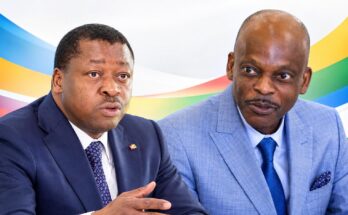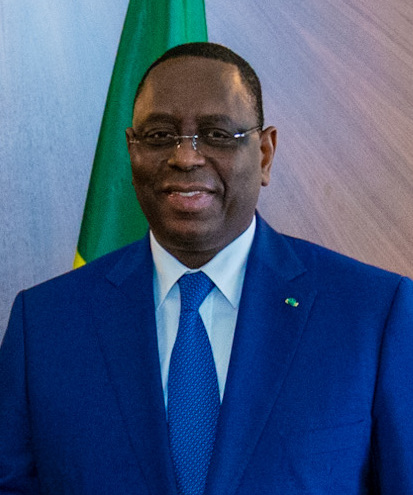
Senegal has formally pledged its full endorsement to the candidacy of former President Macky Sall for the position of United Nations Secretary-General. This decision, announced by President Bassirou Diomaye Faye just three days after a high-level meeting at the Palais de la République, underscores a significant shift in the country’s diplomatic posture.
A move rooted in state continuity
The endorsement, though not guaranteed to secure Sall’s victory, carries substantial symbolic and strategic weight. It positions Senegal as a proactive advocate for African representation within the UN, particularly in the pursuit of a permanent seat on the Security Council—a cause long championed by the continent. Success in this bid would not only elevate Sall’s global profile but also reinforce Senegal’s diplomatic influence.
This decision, however, comes with historical irony. The relationship between Bassirou Diomaye Faye and Macky Sall has been fraught with conflict. Faye’s rise to power was marked by adversity—incarcerated in April 2023 amid a political crackdown targeting opposition figures like Ousmane Sonko, he was released in March 2024, days before the presidential election, following a presidential pardon. His victory, secured in a single round, was framed as a rejection of Sall’s authoritarian tendencies and a promise of systemic change.
Yet, in a display of political pragmatism, Faye has chosen to set aside personal grievances in favor of national interests. The Senegalese presidency has framed this move as part of a broader commitment to dialogue beyond partisan divides, emphasizing the need to present a united front in support of a cause deemed vital for Africa and multilateralism. The government has since instructed the country’s diplomatic corps to actively promote Sall’s candidacy.
The turning point: a political rupture
This about-face would likely have been far more contentious without a recent political development: the public split between Bassirou Diomaye Faye and his former ally, Ousmane Sonko. Sonko, who had been dismissed as Prime Minister in May, had been the most vocal critic of Sall’s regime, embodying the hardline stance against the former administration. His removal provided Faye with the political breathing room to reassess his approach to Sall’s candidacy, framing it as a decision driven by statecraft rather than personal animosity.
The timing of this endorsement aligns with Faye’s broader strategic ambitions. With plans to launch his own political party, he is seeking to consolidate support from diverse political networks, including factions historically aligned with Sall and former President Abdoulaye Wade. This maneuver positions Faye to strengthen his political base ahead of the 2029 elections, while also leveraging Sall’s enduring popularity—a factor Faye observed firsthand during a recent visit to Dakar.
A candidacy bolstered but not secured
For Macky Sall, Senegal’s backing is a critical lifeline. His candidacy, officially submitted by Burundi in March on behalf of the African Union’s rotating presidency, had faced a structural weakness: the absence of support from his home country. In the high-stakes diplomacy of UN elections, such neutrality or silence is often interpreted as disapproval, undermining a candidate’s credibility before the Security Council’s veto-wielding permanent members even weigh in.
With Dakar’s formal endorsement now in place—and the Senegalese diplomatic apparatus mobilized—Sall’s campaign gains legitimacy, depriving rivals of a key argument. Yet, his prospects remain uncertain. The race to succeed António Guterres is governed by an unspoken continental rotation principle, favoring Latin American candidates this cycle. With four of the five declared candidates hailing from the region, including former leaders like Michelle Bachelet and Rafael Grossi, Sall faces an uphill battle. The last African to hold the post, Boutros Boutros-Ghali, served in the 1990s, and no candidate can afford to ignore the entrenched regional expectations.
While Senegal’s backing strengthens Sall’s position, it does not erase the primary obstacle: the consensus required among the five permanent members of the Security Council. Though Sall maintains cordial ties with major powers, including France—where he cultivated support during his presidential bid—and has engaged constructively with Russia, as evidenced by a recent meeting with Foreign Minister Sergey Lavrov, the final outcome remains uncertain. The verdict is expected this autumn.