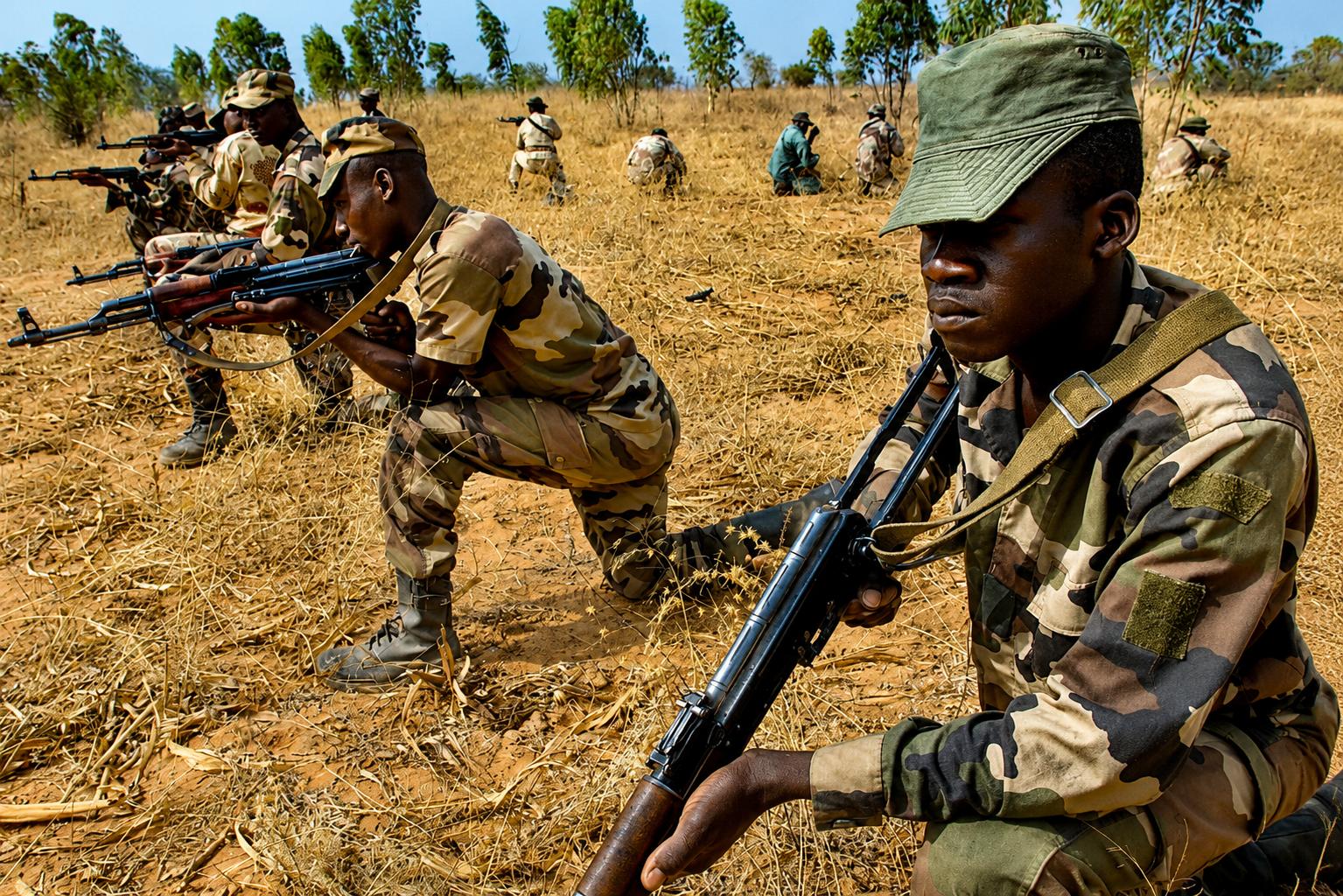
Sixteen members of Niger’s Defense and Security Forces (FDS) were killed and twenty-three others wounded following a terrorist ambush on Friday, July 17, 2026, in the Tillabéri region.
The attack targeted a military detachment conducting an administrative liaison mission along the Bankilaré–Téra axis, close to the village of Doungouro. According to military officials, the assault involved both improvised explosive devices and sustained gunfire from armed groups.
In response, Niger’s armed forces reported neutralizing fifteen attackers, seizing or destroying ten motorcycles, and recovering light military equipment. Immediate aerial and ground sweep operations were launched to track down remaining insurgents in the area.
Casualties and emergency evacuations
The wounded, including nine in critical condition, were urgently transported to the Armed Forces Central Hospital for treatment. The death toll and injuries reflect the intensity of the assault, marking one of the deadliest attacks on Nigerien security personnel in recent months.
Border porosity fuels insurgent threats in the three-border zone
This tragic incident underscores the persistent threat posed by insurgent groups in the volatile three-border zone—where the borders between Niger, Mali, and Burkina Faso are effectively nonexistent. Armed factions such as the ISIS-affiliated EIGS and the Jama’at Nusrat al-Islam wal Muslimin (JNIM) exploit this porous terrain to evade military pressure, slipping effortlessly across national lines.
The vast, unmonitored bushlands of the region provide these groups with a permanent logistical base, enabling them to regroup, rearm, and launch fresh attacks. Without a genuine, cross-border security strategy, coordinated beyond national policies, the ability of regional forces to secure this critical area remains severely compromised.
Until military responses evolve into unified, borderless operations—rather than isolated national efforts—the insurgents will continue to exploit the gaps in regional defense.