
The shadow over the Congo River: how congolese spies shaped power
by Gilbert MUHIKA, political analyst
In the Democratic Republic of Congo, power has never been seized in broad daylight—it has always been taken in the shadows. Since independence in 1960, every president, rebellion, and transition has relied on a shadowy figure: the master spy. Unseen, feared, and absolutely essential.
The Congolese intelligence services are not just another state apparatus—they are the state itself. When the Sûreté National coughs, the Presidential Palace shakes. When the CND listens, ministers fall silent. When the ANR arrests, the courts comply.
Why? Because the Congo was born in the Cold War, amid coups and deep distrust. On June 30, 1960, independence was declared. By September 14, Mobutu had already carried out his first coup. In between: a dangerous void. A void that the Sûreté National rushed to fill.
Their real mission was never written in any law. Officially, they gathered political, economic, and social intelligence. Unofficially, they did three things:
- Protect the leader—from enemies, from the army, even from the people;
- Monitor everyone—opposition figures, ministers, bishops, students, and the diaspora;
- Instill fear—so no one would dare challenge the system.
From 1960 to 1990, one system, three faces. Three men wrote the grammar of fear in Congo:
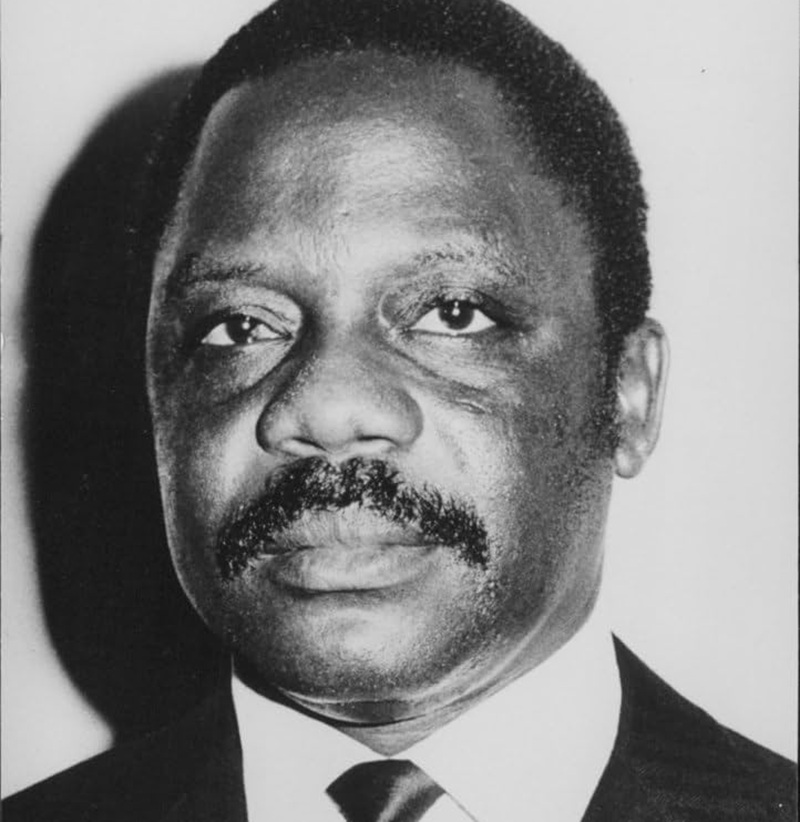
The architect of fear: Victor Nendaka Bika
Known as “the Congolese Oufkir,” Nendaka was a nurse turned spymaster who transformed the colonial-era Sûreté into a political weapon. He established a rule that would define Congo’s intelligence culture: the head of the Sûreté answered only to the president—not to ministers or the law.
The professionalizer: Seti Yale
Trained by Israel and the United States, he built the CND—the “Zairian KGB.” He introduced wiretapping, surveillance, and torture as standard practice. The CND became an arm of the state, reaching into every ministry and embassy.
The industrializer: Honoré Ngbanda
Nicknamed “Terminator,” he turned the CND into a state within a state. Every ministry had its informant. Every embassy, its listening post. He exported terror as far as Europe.
The red thread from 1960 to 1990: “Whoever controls intelligence controls power.” Mobutu understood this early. He created multiple agencies—CND, SNIP, SARM, DSP—so they would spy on each other. But he never let one man control the machine for too long. Nendaka was fired in 1965. Seti Yale was sidelined. Ngbanda was dismissed in 1990.
In 1997, the system collapsed with Mobutu. But it did not die—it evolved. The names changed: SNIP, AND, then ANR. The acronyms shifted. The cells remained. The methods endured.
This series reveals three decades of power seen from the underground. It begins with an emergency appointment in October 1960 and ends with a “Terminator” expelled by the winds of democracy in 1990. In between: wiretaps, disappearances, fatal transfers, and twisted coups.
Welcome to the real story of power in Kinshasa. The one that is never spoken into a microphone. The one whispered in windowless offices.
It all started in October 1960. Congo was just three months old. Mobutu had just overthrown Lumumba. Someone had to secure the state. Someone who asked no questions. That someone was Victor Nendaka Bika…
The Congolese Oufkir: how Victor Nendaka invented the machine that crushed power
He never wore a uniform. Yet from 1960 to 1965, a former nurse turned spymaster shook Congo to its core. Victor Nendaka Bika, first director of the Sûreté Nationale, laid down the rules of the game: threaten ministers, manipulate documents, deliver opponents. A dive into the archives of terror.
Léopoldville, December 13, 1961: The day the police staged a coup against its own minister.
The scene unfolds in the offices of the Sûreté Nationale. Christophe Gbenye, Minister of the Interior, still believes he is in charge. He signs a communiqué: Victor Nendaka is to be removed. “Reassigned elsewhere.”
Nendaka’s response came in the form of a phone call—and troops.
He turned to Mobutu, who immediately sent armed soldiers to surround the Sûreté building. They threatened to arrest and imprison Gbenye if he intervened.
A few days later, the *Moniteur Congolais* published the decree: Nendaka stayed. Gbenye was gone.
This was the first time in Congo that a police chief threatened a minister with soldiers—and won. The “Oufkir model” was born.
January 16, 1961: The handwritten note that killed Lumumba
Forty years later, before a Belgian inquiry commission, an elderly man still held his trump card: a yellowed sheet of paper.
“When we learned that Tshombe would welcome Lumumba, the evacuation plans for three prisoners were altered by André Lahaye, a Sûreté agent… I kept this document,” Victor Nendaka testified.
That document was the order transferring Patrice Lumumba, Maurice Mpolo, and Joseph Okito to Elisabethville. As chief administrator of the Sûreté, Nendaka organized the convoy. On the night of January 17, the three men were executed.
His defense?
“Kasa-Vubu agreed to the transfer because he, like me, believed Lumumba would not be killed in Katanga. In our culture, we did not kill our opponents—debate under the baobab tree was the tradition.”
Historians note: “Victor Nendaka, who had strained relations with Lumumba since the 1960 elections, was suspected of involvement in the incident.”
October 1960: The nurse who turned the Sûreté into a political weapon
A month after Mobutu’s first coup, Nendaka was named director of the Sûreté Nationale.
“Nendaka quickly reorganized the institution and transformed it into an effective intelligence-gathering service.”
He created the National Bureau of Investigations (BIN). Its mission was no longer to catch thieves—it was to profile, monitor, and neutralize Lumumbists. He joined the “Binza Group” with Mobutu and became a key player in the shadow government that ran the country.
Why was he called “the Congolese Oufkir”?
Like the Moroccan general, Nendaka imposed three rules that would haunt Congo for 60 years:
- The Sûreté above the law: He surrounded his office with soldiers when a minister tried to fire him;
- Intelligence as political project: As a member of the Binza Group, he helped appoint and dismiss prime ministers with CIA support;
- Plausible deniability: About Lumumba, he always claimed: “It wasn’t me—it was D’Aspremont, Tshombe, Lahaye.”
In 1965, Mobutu removed him from power. Too powerful. But the machine was already running. Seti Yale, Honoré Ngbanda, and others simply industrialized Nendaka’s methods.
In the next installment: How Seti Yale transformed the small, artisanal BIN into the CND—the “Zairian KGB”—trained by Israel and the U.S. Exclusive testimonies from the CND’s underground chambers in the 1970s.
The “monster of darkness” as seen by his contemporaries.
Some Congolese writings refer to Victor Nendaka Bika as the “bloodthirsty terminator, the monster of darkness,” for his role in organizing Lumumba’s fatal transfer. He maintained his innocence until his death, insisting the Lumumba Commission was trying to frame him.