Lomé, Togo — The third edition of Biashara Afrika kicked off on May 18, 2026, bringing together African leaders, investors, and private sector representatives to discuss trade, investment, and continental economic partnerships. The event serves as a critical platform for shaping the future of African economic integration and addressing the continent’s most pressing trade challenges.
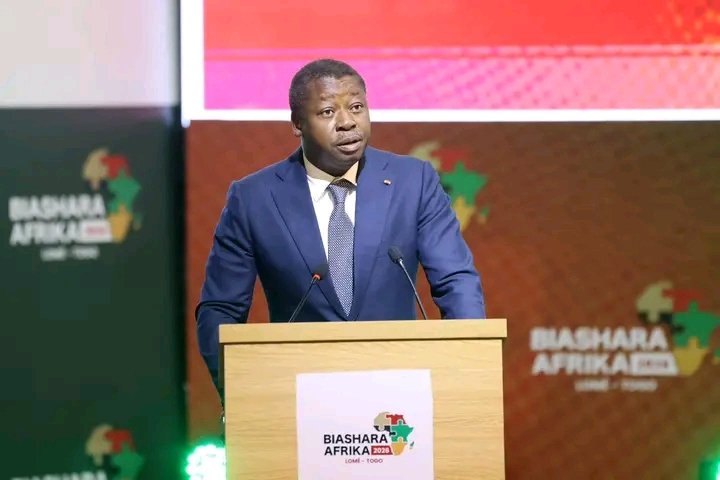
The forum’s opening ceremony featured a keynote address by Faure Essozimna Gnassingbé, President of the Togolese Council, who emphasized the urgent need to shift from policy ambitions to tangible economic outcomes. Addressing a diverse audience of policymakers and business leaders, he declared, « The era of vision must now give way to the era of results. »
tribute to a visionary: honoring mahamadou issoufou’s legacy
Gnassingbé began his speech by paying tribute to Issoufou Mahamadou, a champion of the African Continental Free Trade Area (AfCFTA). The Togolese leader acknowledged Mahamadou’s pivotal role in advancing the vision of a unified African market, stressing that his contributions have laid the groundwork for the continent’s economic transformation.
moving beyond agreements: the call for operational afCFTA
While the AfCFTA has been hailed as a landmark agreement, Gnassingbé argued that the time for declarations has passed. « Accords and frameworks alone are no longer sufficient, » he stated. « Africa must now prioritize functional infrastructure, efficient logistics corridors, modern payment systems, and seamless trade facilitation to unlock its full economic potential. »
The President highlighted persistent challenges such as non-tariff barriers, border delays, and exorbitant logistics costs that continue to hinder intra-African trade. « These obstacles cannot be ignored if we are to build a competitive and interconnected African economy, » he asserted.
biashara afrika as a catalyst for change
Gnassingbé framed Biashara Afrika 2026 not as a mere discussion forum but as a platform for action. « This event must serve as a springboard for partnerships, solutions, and the operationalization of African integration, » he insisted. « We cannot afford to remain stuck in rhetoric. The continent’s future depends on our ability to deliver concrete results. »
africa’s economic sovereignty in a shifting global landscape
The Togolese leader underscored the strategic importance of the AfCFTA in a world marked by geopolitical tensions, rising protectionism, and shifting global supply chains. « No single African economy can defend its interests in isolation in today’s fragmented world, » he warned. « A united Africa is not just an aspiration—it is a necessity. »
According to Gnassingbé, the AfCFTA is more than a trade agreement; it is a tool for achieving continental economic sovereignty. The goal? To boost local production, strengthen industrial capacities, and enhance Africa’s bargaining power on the global stage.
building homegrown industrial champions
The President also called for the development of robust regional value chains and the emergence of a powerful African private sector. Despite the continent’s abundant natural and human resources, Africa still largely exports raw materials while importing high-value finished goods. « This imbalance must end, » he declared. « The AfCFTA must help us break free from the constraints of fragmented national markets and build competitive African industries. »
Gnassingbé advocated for the rise of homegrown African enterprises capable of operating at a continental scale, stressing that economic integration must empower local businesses to compete globally.
empowering africa’s youth, women, and smes
In his closing remarks, Gnassingbé shifted focus to the continent’s youth, women entrepreneurs, and small and medium-sized enterprises (SMEs). He emphasized that sustainable integration hinges on inclusive growth, where economic benefits reach every corner of society. « Africa’s integration will only succeed if it is seen as a project for all, not just for elites and large corporations, » he asserted.
He called for policies that prioritize job creation, entrepreneurship, and access to regional markets, ensuring that the benefits of integration are widely shared.
Togo’s role in shaping africa’s economic future
Concluding his address, Gnassingbé reaffirmed Togo’s commitment to African integration. Leveraging its strategic location, robust logistics infrastructure, and role as a regional connectivity hub, the country is positioning itself as a key player in the continent’s economic transformation. « Togo is ready to contribute actively to the construction of a unified African market, » he stated.
The President expressed his hope that Biashara Afrika 2026 will not only foster new partnerships but also ignite a renewed economic dynamism across the continent.