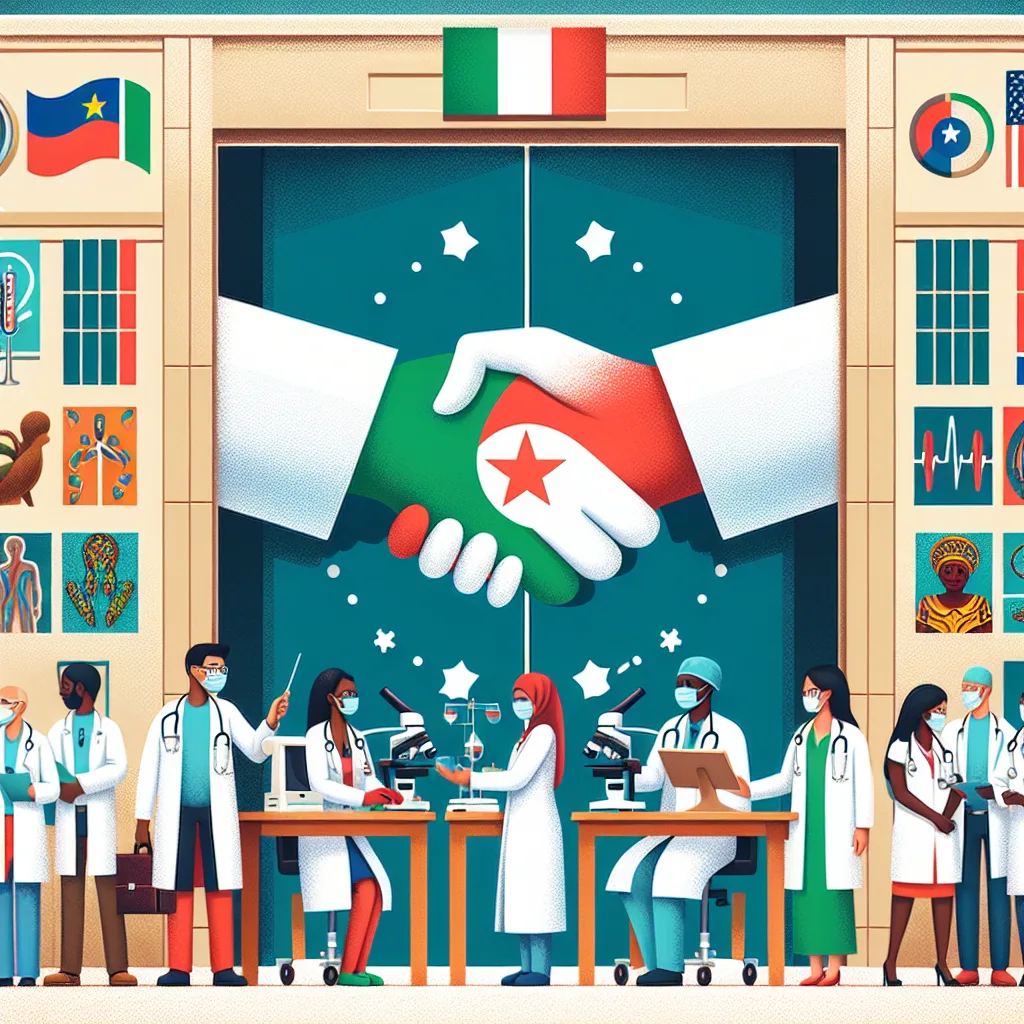
Strengthening health security in West Africa remains a shared priority as the United States and Burkina Faso formalize a five-year health agreement. This landmark pact equips local health systems to independently confront infectious threats while safeguarding communities on both sides of the Atlantic. By embedding resilience into national health infrastructure, the initiative prioritizes early detection, rapid response, and sustainable protection against disease outbreaks across the Sahel.
A robust bilateral cooperation framework has been established to align resources, set measurable targets, and ensure transparent execution. The agreement emphasizes long-term impact through coordinated planning, shared accountability, and performance-driven milestones that will be regularly assessed to guarantee efficiency and sustainability.
strategic funding to combat infectious diseases
Significant financial commitments have been allocated to tackle HIV/AIDS, malaria, and other life-threatening infections. Funds will be strategically deployed to enhance prevention, diagnostic accuracy, and treatment accessibility while optimizing operational effectiveness. Additionally, the Burkina Faso government has pledged increased public health spending, reinforcing local ownership and ensuring the longevity of health interventions. A dedicated portion of the budget will support emergency preparedness to mitigate crisis escalation.
key public health priorities
A comprehensive roadmap has been implemented to focus efforts on high-impact health interventions. Malaria control will be intensified through targeted campaigns, insecticide-treated mosquito nets, and expanded access to rapid diagnostic tests. HIV/AIDS response will be reinforced with integrated prevention strategies, sustained treatment adherence programs, and improved continuity of care. Maternal and child health services will be decentralized to prevent care disruptions and improve accessibility.
modernizing disease surveillance for faster response
The agreement places real-time infectious disease detection at its core. Digital platforms will streamline data reporting, enhance accuracy, and inform timely decision-making. Interoperable alert systems will enable proportional emergency responses, while training programs will elevate the quality of epidemiological reporting and case tracking. These advancements aim to curb outbreaks swiftly and minimize human and economic costs.
upgrading laboratory capacity for precise diagnostics
Laboratory infrastructure will be significantly enhanced to deliver reliable pathogen identification. New diagnostic tools, standardized protocols, and reinforced reference networks will accelerate confirmations and expertise sharing. Regular audits will uphold quality standards, biosafety protocols, and equipment maintenance, reducing diagnostic delays and optimizing patient care pathways.
empowering community health workers
The backbone of this initiative rests on community health agents, who will be equipped with tools, continuous training, and supervision to deliver prevention, screening, and treatment services directly to populations. Simplified care pathways will reduce treatment abandonment, while public awareness campaigns will promote protective behaviors and service utilization. These measures are designed to foster trust and ensure no one is left behind in accessing essential healthcare.
building a sustainable health workforce
To ensure lasting impact, personnel funded by international partners will be integrated into Burkina Faso‘s permanent health workforce. This transition prevents service disruptions and stabilizes care delivery. Laboratory technicians will also receive professional recognition to strengthen local expertise. By prioritizing national talent retention and clear governance, the system will become more resilient and self-sufficient over time.
national ownership and accountability
Ownership by Burkina Faso is the cornerstone of this agreement. National budget allocations will be adjusted to secure social and health investments, while monitoring frameworks will track progress, address gaps, and share lessons learned. Joint accountability mechanisms will ensure funds are used effectively, accompanied by regular consultations with local stakeholders to maintain alignment with community needs.
regional collaboration to prevent cross-border threats
The initiative extends its reach beyond national borders to prevent epidemic spillover. Information exchange with neighboring countries and regional technical bodies will be facilitated, while joint simulation exercises will test emergency response plans. By reinforcing Burkina Faso as a Sahel health hub, the partnership aims to create a ripple effect, enhancing regional preparedness and supply chain resilience for medical supplies.
navigating political transitions with continuity
The framework accounts for Burkina Faso‘s transitional political phase, ensuring health programs remain insulated from institutional volatility. Technical and financial partners will collaborate closely with health authorities to maintain service neutrality and uninterrupted access to essential care, even amid political restructuring.
aligning with global health security strategies
The initiative aligns with the United States‘ Global Health Security Strategy, which links health resilience with broader security objectives. Bilateral engagements across Africa are being consolidated to amplify prevention and response efforts, fostering alignment, reducing duplication, and accelerating outcomes. Synergies between vertical health programs and horizontal system-strengthening will be maximized for greater efficiency.
measuring success and sharing progress
Clear indicators will track service coverage, care quality, and fiscal efficiency. Interactive dashboards will guide decision-making, refine priorities, and document impact. Best practices will be disseminated to inspire similar programs across the Sahel, with the ultimate goal of reducing preventable infections and maternal-child mortality sustainably.
what this means for citizens
Households stand to benefit from more reliable proximity services, faster diagnostics, and improved availability of medical supplies. Enhanced health literacy and targeted protections for vulnerable groups will further strengthen community resilience. With disciplined governance and sustained investment, the partnership charts a clear path toward enduring health progress in Burkina Faso and the wider region.
Comments are closed, but trackbacks and pingbacks are open.