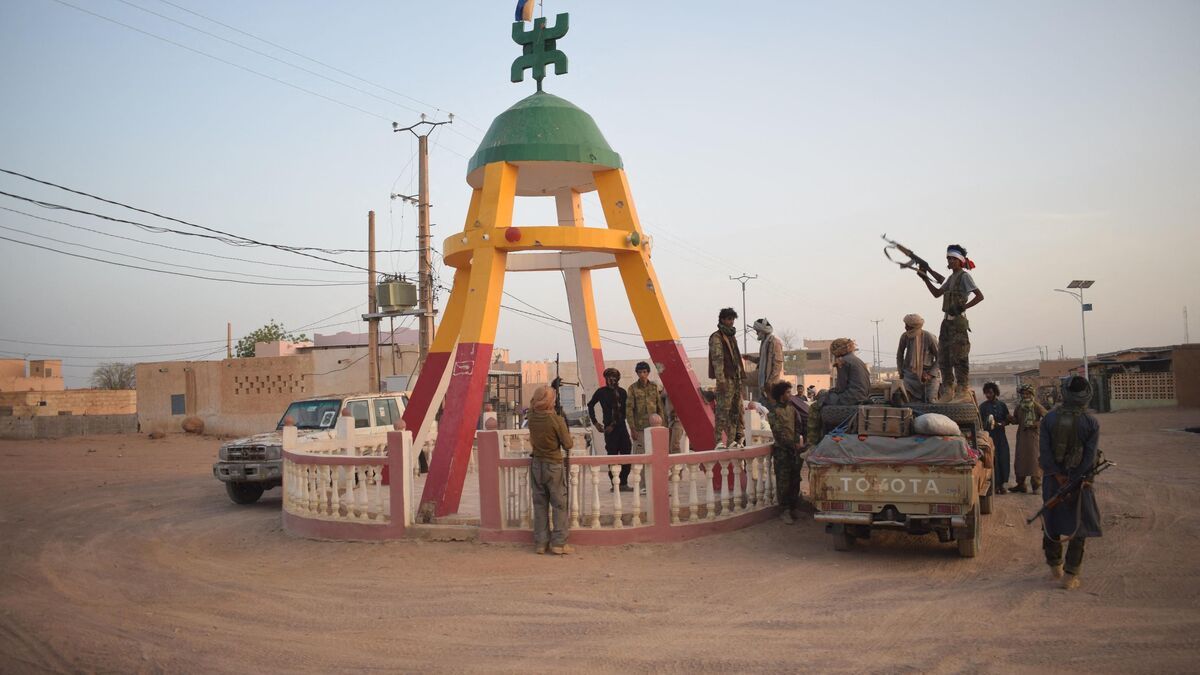
The Sahel is witnessing a dramatic shift in military alliances. In a weekend of fierce clashes, a rebel alliance seized control of Kidal, a strategic stronghold in eastern Mali that had been firmly held by a shadowy Russian paramilitary unit for years. The group, known as Africa Corps, has now withdrawn from the city—but its presence remains a critical factor across the region.
Formally established in late 2023, Africa Corps emerged as a successor to the Wagner Group, inheriting its role as Moscow’s primary military proxy in Africa. Unlike its predecessor, which operated with a degree of autonomy and a reputation for brutal tactics, Africa Corps is tightly controlled by the Russian Ministry of Defense, with direct oversight from Deputy Defense Minister Iounous-bek Evkourov. The transition became public when military blogger Deux Majors shared details on Telegram, citing comments from Igor Korotchenko, a former Russian colonel and Kremlin-aligned commentator.
From Wagner to Africa Corps: a calculated rebrand
After the death of Wagner founder Evgueni Prigojine and his deputy Dmitri Outkine in a suspicious plane crash in August 2023, Russia sought to reorganize its African operations under a new structure. Africa Corps was created not just to replace Wagner, but to refine its methods. Western intelligence sources describe it as a more disciplined and centralized force, designed to avoid the public scandals that plagued Wagner, including accusations of war crimes and resource exploitation.
The group’s name is no coincidence. It echoes the Afrikakorps, the German expeditionary force that fought in North Africa during World War II—a deliberate historical nod intended to signal strength and historical continuity. But while the original Afrika Korps served Nazi Germany, Russia’s Africa Corps presents itself as a defender of sovereignty, promising to help African nations break free from neocolonial dependence and expel Western influence.
Strategic goals and regional expansion
According to Korotchenko, Africa Corps was formed with a clear mission: to conduct large-scale military operations across Africa, support allied governments, and secure Moscow’s geopolitical and economic interests. Its stated objectives include:
- Strengthening military ties with pro-Russian governments by providing training, weapons, and troops.
- Securing resource-rich zones, particularly in the Sahel, where uranium, gold, and oil deposits are abundant.
- Disrupting Western presence, especially following the withdrawal of French and other European forces from Mali, Burkina Faso, and Niger.
- Controlling migration routes, using its influence to shape cross-border movement patterns.
Since its inception, Africa Corps has rapidly expanded beyond Mali. It has established footholds in Libya, Sudan, the Central African Republic, and Burkina Faso, often absorbing former Wagner fighters and equipment. In Mali, it deployed hundreds—or possibly thousands—of combatants to prop up the junta in Bamako amid a growing rebellion by Tuareg forces and Islamist militants.
Controversy and international scrutiny
Despite its more discreet approach, Africa Corps has not escaped global criticism. In 2024, the United Kingdom sanctioned the group, accusing it of systematic human rights abuses across Africa and exploiting natural resources for profit. The allegations mirror those once leveled against Wagner, though Africa Corps has so far avoided the same level of notoriety.
Its withdrawal from Kidal—a city of immense strategic value—marks both a tactical retreat and a sign of growing pressure. Rebel forces, including Tuareg separatists and jihadist groups, continue to challenge the junta’s control, while Western nations watch with increasing unease. Yet Moscow shows no sign of abandoning its African strategy. Africa Corps remains a key instrument in Russia’s broader ambition to reshape the continent’s security landscape and challenge Western dominance in the Sahel.