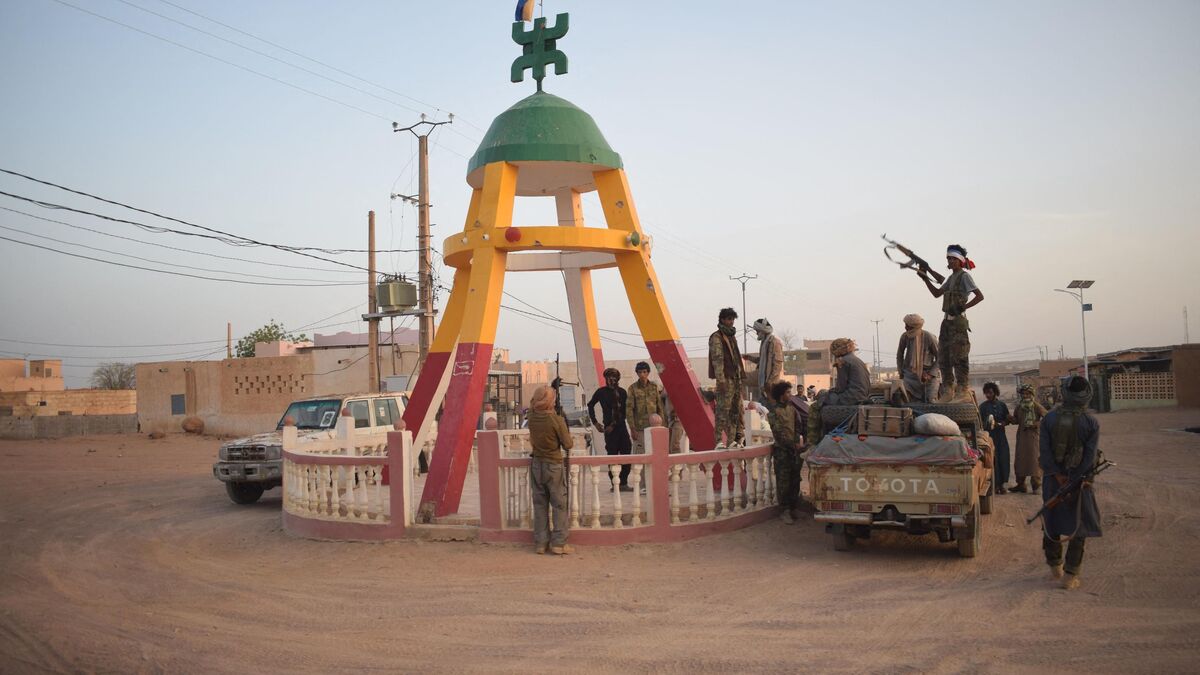
The Russian paramilitary group Africa Corps has been forced to withdraw from a strategic stronghold in northern Mali, ceding control of Kidal—a critical hub held under tight grip for years. This development marks a significant shift in the regional power dynamics, even as Moscow seeks to maintain its influence across the Sahel.
From Wagner to Africa Corps: a strategic pivot
The emergence of Africa Corps in late 2023 signaled Moscow’s intent to reshape its military footprint in Africa. Following the collapse of the Wagner Group—once a dominant but controversial force—Russia sought a more controlled and centralized alternative. According to military analyst Igor Korotchenko, the new entity operates under the direct supervision of Russian Deputy Defense Minister Iounous-bek Evkourov, ensuring tighter Kremlin oversight.
The timing was no coincidence. Wagner’s founders, oligarch Evgueni Prigojine and ex-intelligence officer Dmitri Outkine, perished in a suspicious plane crash in August 2023, months after Prigojine’s brief mutiny against the Russian leadership. Africa Corps, described as more disciplined and less visible, quickly absorbed former Wagner operatives and expanded its operations across Burkina Faso, Libya, Sudan, the Central African Republic, and Niger.
Moscow’s hidden agenda in the Sahel
Africa Corps positions itself as a defender of African sovereignty, vowing to counter Western influence and combat what it terms “neocolonial dependence.” Korotchenko’s statements highlight the group’s stated mission: to conduct large-scale military operations across the continent, securing alliances with friendly governments while providing combat support and military hardware.
Unlike Wagner—plagued by accusations of war crimes and brutal repression—Africa Corps adopts a subtler approach. Its focus lies in strengthening ties with local regimes, particularly in Mali, where it has deployed hundreds (possibly thousands) of fighters since 2024. The group’s presence is seen as a counterbalance to the withdrawal of Western forces, including France’s Operation Barkhane, and a means to secure trade routes and critical mineral resources.
Mali: a battleground for influence
The loss of Kidal represents a setback for Africa Corps, which had relied on the city’s strategic location to project power in northern Mali. Rebel forces, including jihadist factions and Tuareg separatists, overran the region in a series of coordinated attacks, forcing the Russian mercenaries to retreat. While the group retains influence elsewhere in the country, its withdrawal from Kidal underscores the challenges Moscow faces in sustaining its African ambitions.
Despite its reduced visibility, Africa Corps remains a target of international sanctions. In 2024, the United Kingdom accused the group of widespread human rights abuses and resource exploitation, aligning with broader Western concerns over Russia’s expanding military footprint in Africa.
What’s next for Africa Corps?
The group’s future hinges on its ability to adapt. With Wagner’s legacy fading and Africa Corps still consolidating its presence, Moscow must navigate a complex landscape of shifting alliances, rising insurgencies, and geopolitical tensions. Whether it can replicate Wagner’s influence—or avoid its fate—remains an open question as the Sahel continues to be a flashpoint for global powers.