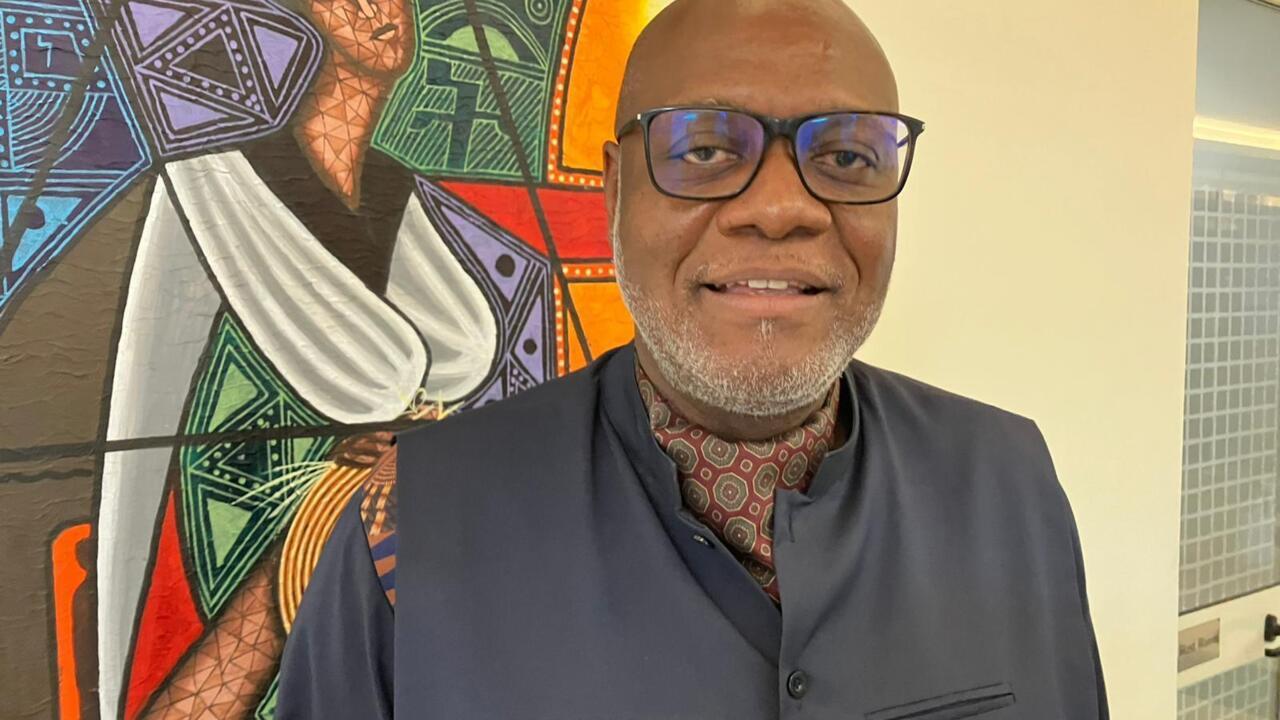
The 39th African Union summit in Addis Ababa concluded with a bold declaration: silencing weapons and rejecting unconstitutional power transfers. But can this stance hold weight when those behind coups are later legitimized at the ballot box? Paul-Simon Handy, a Cameroonian researcher and regional director for the Institute for Security Studies (ISS) in Eastern Africa, weighed in during a high-profile discussion on the continent’s political landscape.
a stark warning from the heart of the african union
Handy, who was present at the summit, offered a sobering assessment: «It is simply unacceptable for architects of coups to later be elected through democratic processes.» His remarks underscore a growing tension between the AU’s official condemnation of unconstitutional power grabs and the reality of post-coup transitions where military leaders seek—or achieve—electoral validation.
The summit’s closing declaration, calling for an end to armed conflicts and a firm stance against constitutional violations, has been met with skepticism. Critics argue that while declarations are plentiful, enforcement remains inconsistent, particularly when political expediency overrides principle.
the gap between rhetoric and reality
At the core of the debate lies a fundamental contradiction. The AU has repeatedly vowed to deny recognition to governments that seize power through force. Yet, in practice, several nations have witnessed former coup leaders transitioning into elected leaders, often with the AU’s tacit or explicit approval. Handy emphasized that this inconsistency undermines the credibility of the Union’s commitment to democratic governance.
«The message sent to the continent is clear,» Handy noted. «If coups are followed by elections, even under questionable conditions, the international community may turn a blind eye. This creates a dangerous precedent where the ends justify the means.»
challenges to the au’s zero-tolerance policy
Several recent examples highlight the AU’s struggle to maintain a consistent stance:
- Political survival over principle: In some cases, regional blocs have prioritized stability—or perceived stability—over democratic integrity, leading to the readmission of governments with dubious origins.
- International pressure: Geopolitical interests often complicate the AU’s position, with external actors influencing decisions on recognition and engagement.
- Domestic legitimacy: Post-coup leaders frequently exploit nationalist rhetoric, framing their rule as a necessary corrective to corrupt or ineffective governments, thereby gaining domestic support.
Handy pointed out that the AU’s reliance on «soft power»—diplomatic pressure, peer reviews, and peer influence—has proven insufficient to deter future coups. «Without robust enforcement mechanisms, declarations alone will not silence the guns,» he stated.
what’s next for the african union?
The path forward remains uncertain. The AU has taken steps to strengthen its governance architecture, including the establishment of a peer review mechanism and the African Charter on Democracy, Elections, and Governance. However, Handy stressed that these tools are only as effective as the political will behind them.
«The AU must move from declarations to decisive action,» he urged. «This includes suspending member states that violate constitutional order, imposing targeted sanctions, and ensuring that elections following coups are held to international standards—if they are held at all.»
As the continent grapples with recurring crises, the summit’s outcomes serve as a reminder that words alone cannot guarantee stability. The real test will lie in whether the AU can translate its high ideals into tangible results that protect democracy across Africa.
Comments are closed, but trackbacks and pingbacks are open.