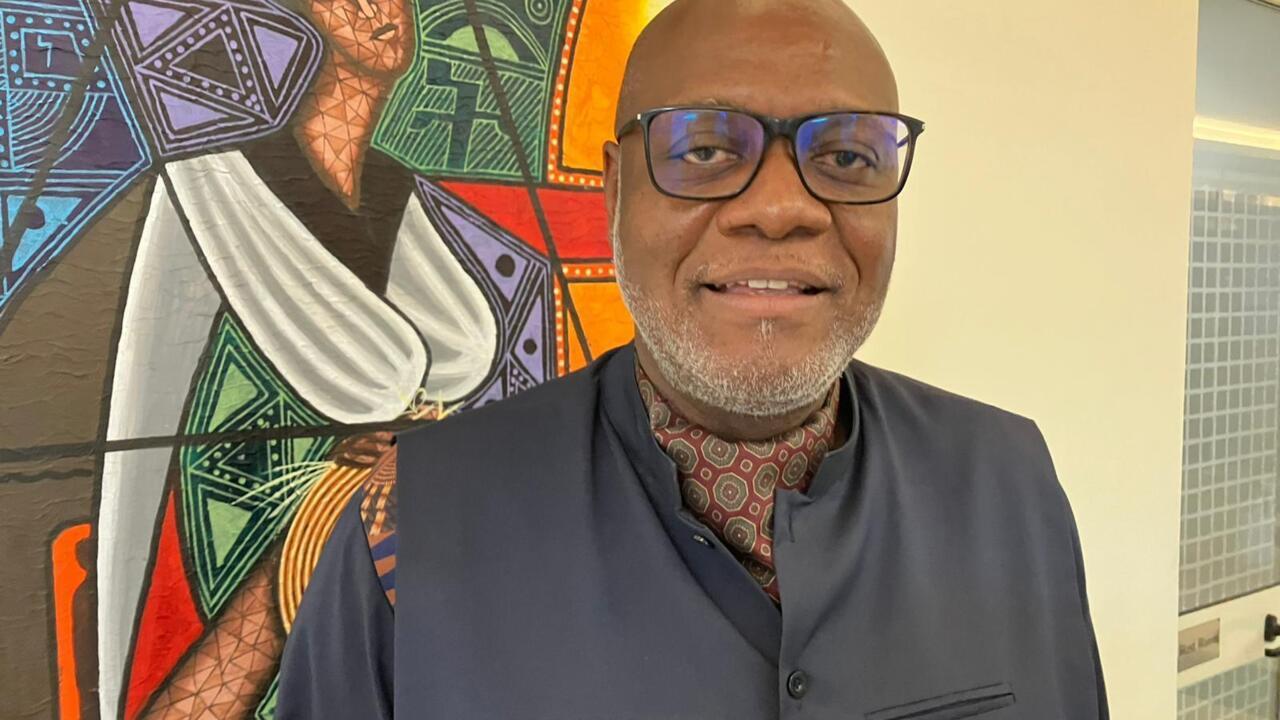
The 39th African Union summit concluded with a bold declaration: to silence the guns and put an end to unconstitutional power grabs. But can this stance hold up in practice? Paul-Simon Handy, a Cameroonian researcher and regional director of the Institute for Security Studies (ISS) for East Africa, shared his insights from Addis Ababa during a live discussion on Africa Midi.
a bold declaration at the AU summit
The African Union’s latest gathering in Addis Ababa sent a clear message: unconstitutional changes of government will no longer be tolerated. Yet, the declaration leaves room for debate—particularly when it comes to the participation of coup leaders in future elections. Paul-Simon Handy, who attended the summit, weighed in on this critical issue during a high-profile discussion.
the dilemma of democratic legitimacy
At the heart of the controversy is a troubling paradox: should individuals responsible for overthrowing democratic governments be allowed to run for office? Handy firmly rejects this idea, arguing that it undermines the very principles of democracy and governance. His stance highlights a growing tension within the continent’s political landscape, where the line between stability and legitimacy remains blurred.
expert analysis from the iss
As regional director of the ISS for East Africa, Handy brings a wealth of expertise to the conversation. His analysis of the summit’s outcomes sheds light on the challenges Africa faces in enforcing its zero-tolerance policy for unconstitutional power transfers. His perspective underscores the need for stronger mechanisms to prevent coup leaders from regaining political influence through democratic means.
Handy’s remarks reflect a broader conversation about accountability and governance in Africa. While the AU’s declaration marks a step forward, its effectiveness depends on how strictly these principles are applied moving forward.
Comments are closed, but trackbacks and pingbacks are open.