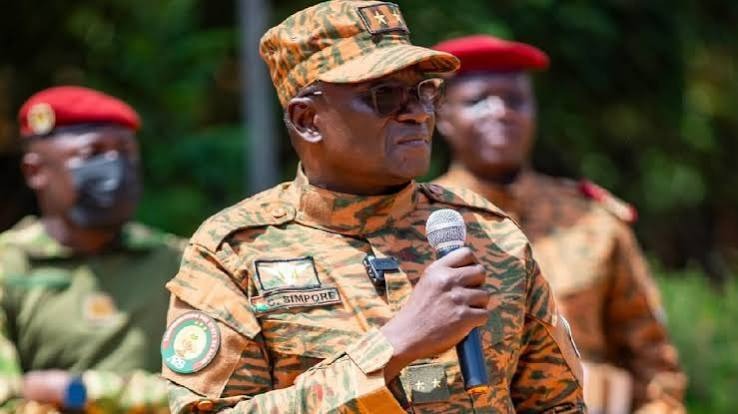
The statement that changed the conversation
When General Célestin Simporé, Minister of Defence, appeared on the national broadcaster RTB to praise the security record of Captain Ibrahim Traoré, few expected what came next. In an attempt to explain the current security stalemate, he claimed that the Burkinabè army had historically been “poorly trained.” The remark, intended to deflect responsibility, has instead triggered a wave of public reaction and left many questioning the future of the country’s security strategy.
Reactions: a narrative under fire
The admission has not been well received. Across social media, in markets, and in homes, the question on everyone’s lips is a simple one: if yesterday’s army was so deficient, how did it manage to contain the enemy far more effectively than today’s “new army” — retrained by Moscow and equipped with billions in hardware?
For many observers, the general’s words amount to rewriting history to mask a present-day debacle. The public debate has shifted from whether the security strategy is working to why it is failing so visibly.
The facts that refuse to be ignored
Under previous governments, despite glaring material shortages and undeniable structural weaknesses, the military managed to hold the provincial capitals and maintain coherent territorial defence lines. Today, even as the transition boasts of creating over 30 new battalions and placing military training at the heart of its agenda, state control has collapsed across more than 65% of the national territory.
Outlook: what next for the Burkinabè army?
The fallout from the RTB interview raises difficult questions about the direction of the security strategy. The pivot to Russian training, delivered by Africa Corps, was supposed to be a game-changer. Instead, it has coincided with a sharp rise in battlefield lethality.
- A devastating human toll: From the tragedy of Mansila to recent setbacks in the Centre-Nord region, the hastily formed units are paying an unprecedented price in blood.
- Ineffective against asymmetric warfare: The Russian method, focused on frontal brutality and indiscriminate firepower, is proving ill-suited to mobile terrorist groups that operate in small motorcycle columns and use improvised explosive devices.
- Broken ties with local populations: By sacrificing human intelligence and military ethics for a scorched-earth approach, the new doctrine has alienated rural communities — depriving soldiers of their most effective shield against infiltration: information from ordinary citizens.
The human cost of political spin
To declare on television that troops were “poorly trained” is an insult to the memory of the thousands of soldiers and gendarmes who fell in combat over the past decade. With rudimentary means and counted rations, these men held the line against a nascent threat without ever abandoning entire regions — unlike today, where retreats are rebranded as “tactical evacuations,” as seen in the Boussouma drama.
An admission that convinces no one
General Simporé’s televised admission has failed to persuade the public. Two years after Captain Traoré’s absolute seizure of power, blaming yesterday’s training is an admission of powerlessness. It is not yesterday’s weapons that lacked value; it is today’s strategy that is collapsing under the weight of its own propaganda.
Comments are closed, but trackbacks and pingbacks are open.