This weekend, Bamako is under a heightened security alert as the United States Embassy in Mali has issued a strict advisory for its citizens in the capital. From Saturday, May 30, 2026, American nationals and personnel are urged to minimize unnecessary travel and avoid public gatherings. The move reflects a sharp escalation in perceived security risks, prompting a reassessment of threats by Washington’s intelligence services.
The weight of a restrictive alert
Diplomatic advisories of this nature are never issued lightly. When a major embassy like that of the United States imposes such restrictions, it signals that credible intelligence has identified specific threats. Whether these involve potential attacks, suspicious movements, or operational indicators, the precautionary principle takes precedence. For observers of the Sahel’s security landscape, this alert underscores the fragile calm that has prevailed in Bamako in recent months.
Terrorist groups at the gates of the capital
The timing of the alert is particularly telling, coming as it does against a backdrop of escalating insecurity in Mali. The Group for the Support of Islam and Muslims (JNIM), Al-Qaeda’s primary affiliate in the Sahel, has repeatedly demonstrated its ability to strike deep into urban centers, including military installations and key infrastructure on Bamako’s outskirts. Meanwhile, the situation in northern and central Mali continues to deteriorate, with armed factions like the Permanent Strategic Framework and its evolving alliances, including those linked to the Front for the Liberation of Azawad (FLA), maintaining relentless pressure on Malian armed forces.
The proliferation of sleeper cells and improvised explosive devices (IEDs) remains a daily reality for security forces, who work tirelessly to contain these threats. The U.S. Embassy’s alert serves as a stark reminder that asymmetric terrorism retains a formidable projection capacity.
Economic strangulation as a weapon of war
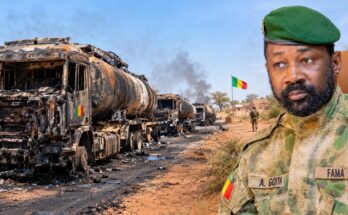
Beyond direct attacks, a more insidious strategy is unfolding: the systematic blockade of critical road arteries. Fuel tankers and supply convoys heading to Bamako have become prime targets for militants. These road closures do more than cripple the national economy—they instill fear and isolate the capital from vital regions. By cutting off fuel and essential goods, armed groups aim to erode public trust and expose the state’s inability to secure its lifelines. For the U.S. Embassy, this vulnerability at the city’s periphery heightens the risk of major incidents in and around Bamako.
A clash of perceptions: local reassurance vs. global caution
While Malian transitional authorities seek to project control through increased patrols and roadblocks at the city’s entrances, Western chancelleries are taking no chances. This divergence in perception highlights the tension between political messaging and the cold, data-driven risk assessments conducted by powers with advanced intelligence capabilities. This weekend, Bamako will be under intensified scrutiny, with Malian security forces already stepping up identity checks and vehicle inspections in key districts.
The weight of uncertainty
The U.S. Embassy’s advisory acts as a wake-up call, exposing the reality of a Mali perpetually on the brink. Between the looming threat of JNIM’s asymmetric strikes and the crippling impact of road blockades on daily life, Bamako remains shrouded in a thick layer of security uncertainty. As the weekend unfolds, prudence is the watchword for all—nationals and expatriates alike—as they await developments to see if this alert will fade without incident.