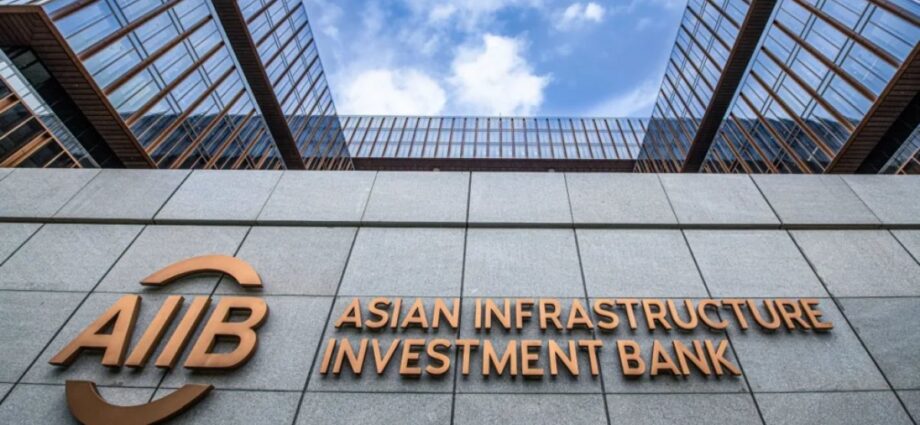
Behind Benin’s $730 million AIIB pipeline: what the fine print reveals
The indicative $730 million envelope agreed between Cotonou and the Asian Infrastructure Investment Bank for 2027-2028 is less a done deal than a structured starting point — here is the context, the mechanics and the signals behind the announcement.

CONTENTS
When Cotonou and the Asian Infrastructure Investment Bank put their signatures to a memorandum on September 24, they were not announcing a disbursement. They were agreeing on a planning figure: an indicative $730 million portfolio covering 2027 and 2028, meant to frame how future energy, transport and climate-resilience operations will be identified and prepared. The distinction matters, and it sits at the heart of how the arrangement should be read.
The AIIB is explicit on this point. No project is automatically financed by virtue of appearing in the pipeline. Each operation still has to clear its own preparation phase, due diligence and approval process before any money moves. The $730 million is therefore best understood as a roadmap rather than a cheque.
The $250 million policy-based slice
Within that total, $250 million is earmarked as policy-based financing, a mechanism that links disbursement to reform commitments rather than to bricks and mortar. In this case, the stated anchor is Benin’s national development blueprint, Vision Bénin 2060. Beyond that component, the envelope leaves room to draw on the bank’s other instruments, spanning energy, food security, economic resilience and climate finance.
The signing itself carried weight in terms of who was in the room. Rajat Misra, the AIIB’s director general for public sector clients in region 1, represented the bank, while Hugues Oscar Lokossou, the minister delegate in charge of external resource mobilisation and debt management, signed for Benin. Also present were the AIIB’s president, Zou Jiayi, and Aristide Medenou, the minister of economy and finance responsible for cooperation — a configuration that signals the file is being treated as a strategic, cross-cutting priority rather than a routine technical matter.
Why this is a first for the AIIB in Africa
The bank is framing the arrangement as its first multi-year pipeline of this kind anywhere on the African continent. That framing is itself revealing. It suggests Benin has moved from being one borrower among many to serving as a testing ground for how the AIIB structures longer-horizon engagement with African sovereign clients — a shift with implications beyond this single envelope.
The groundwork for that deepening relationship is already visible in transport. In December 2025, the AIIB signed a $200 million loan for the Grand Nokoué sustainable urban mobility project, a component of a wider programme worth roughly $500 million that is co-financed with other partners. In other words, the 2027-2028 pipeline does not emerge from a blank slate — it extends a relationship that has already produced a concrete, sizeable commitment.
Read together, these elements explain why the announcement deserves attention without being overstated. The headline number is significant, but the more instructive story lies in the structure: a policy-based tranche tied to a long-term national vision, a first-of-its-kind multi-year framework for Africa, and a transport loan already on the books. That combination is what turns an indicative figure into a meaningful signal about the direction of Benin’s external financing.
Comments are closed, but trackbacks and pingbacks are open.