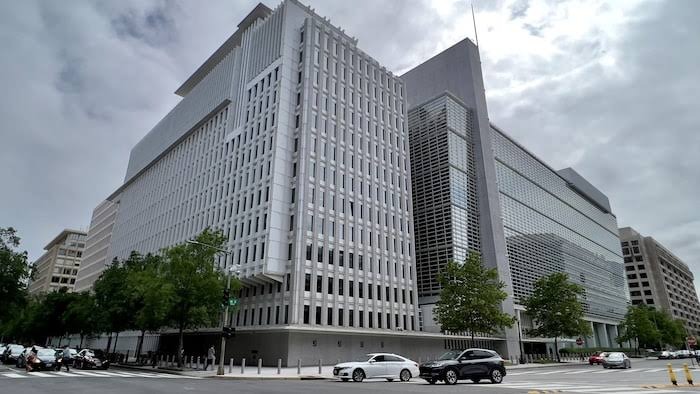
Benin is quietly consolidating its position as one of West Africa’s most resilient economies, and the latest projections from the World Bank suggest the country’s upward trajectory is far from over. The institution’s medium-term outlook puts Benin on a path of sustained expansion through 2027, with growth rates that outpace much of the region. What sets this performance apart is not a single driver, but a combination of infrastructure spending, port and agricultural logistics upgrades, and business climate reforms that have steadily broadened the economy beyond its traditional extractive base.
The road to a 7.7% growth rate in 2027
After an estimated 8.1% expansion in 2025 and 7.8% in 2026, the World Bank expects Benin’s gross domestic product to grow by 7.7% in 2027. That figure, while slightly lower than the previous two years, still places the country well above the average for sub-Saharan Africa. The projections reflect a maturing growth model: rather than relying on a single sector, Benin has spread its momentum across transport, agriculture, and services, with public investment acting as a catalyst for private activity.
Price stability and the poverty trajectory
One of the most striking aspects of the outlook is the containment of inflation. After an estimated low of 0.5% in 2026, price growth is expected to edge up to 1.6% in 2027, a technical rebound that remains comfortably below the 3% ceiling set by the West African Economic and Monetary Union (UEMOA). This gives households breathing room and protects purchasing power.
The social impact is equally significant. As growth feeds into economic inclusion programs, the poverty rate is projected to decline gradually, reaching 22.3% by 2027, down from 31% recorded in 2024. That decline, while incremental, signals that the benefits of expansion are beginning to reach broader segments of the population.
Why Benin stands out within UEMOA
These forecasts reinforce Benin’s position at the top of the UEMOA growth league. For investors and partners, the country offers a rare combination: a stable macroeconomic framework, consistent reform momentum, and a government that has prioritized logistics and trade facilitation. The World Bank’s numbers suggest that Benin’s growth is not a cyclical spike but a structural shift, one that could attract further public and private partnerships in the coming years.
Comments are closed, but trackbacks and pingbacks are open.