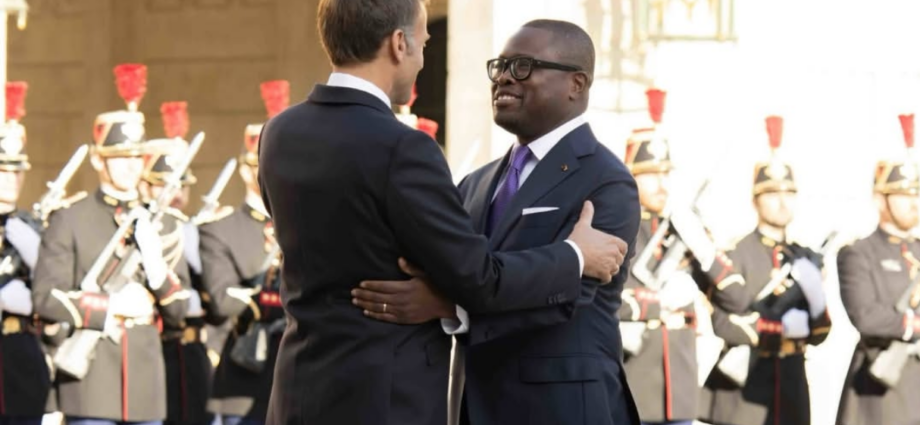
When Benin’s negotiators walked into the Élysée on Monday, October 5, 2026, the headline figure was already settled: 65.5 billion CFA francs in financing from French and European partners. But the story worth telling is not the sum itself — it is the calculation behind it. The money is not a blank cheque. It is a carefully weighted bet on three sectors that, for different reasons, have become the pressure points of Benin’s economic trajectory: electricity, agriculture and health.
Why this deal took shape now
The ceremony in Paris formalised commitments that had been under discussion for months. What made the timing work, according to the logic laid out by both sides, is a convergence of agendas: Benin’s push to accelerate its economic transformation, and France’s interest in anchoring its footprint in West Africa through concrete, project-based cooperation rather than broad declarations.
The 65.5 billion CFA francs, mobilised with French and European backers, are earmarked for structural projects. Each sector carries its own rationale — and its own political weight.
The electricity bet: infrastructure as a growth trigger
Electricity sits at the centre of the package, and the reasoning is straightforward. Reliable, available power is a precondition for almost everything else Benin wants to achieve: industrial activity, small business growth, public services and household welfare.
Behind the financing, the underlying dynamic is well known to anyone following Benin’s development agenda. The country has been trying to expand its energy infrastructure and capacity, and the gap between current supply and future demand is the real driver of this investment. For households, firms and productive sectors alike, better energy provision is the lever that determines whether other reforms translate into results.
In a context where Benin wants to speed up its economic transformation, the electricity funding is not simply an infrastructure line item. It is a condition for attracting new activities and improving essential services over the long term.
Agriculture: the sector that touches everyday incomes
The second pillar addresses agriculture, a sector that remains central to Benin’s economy, employment and food security. Here, the financing aims to support a more productive, better structured farming sector capable of meeting population needs.
The context behind this priority is the direct link between agricultural performance and household incomes. Strengthening investment in farming can improve productivity, create more value and open new prospects for producers and processors along the value chain.
By targeting agriculture alongside energy, the partnership is effectively addressing two sides of the same coin: power to run the economy, and productive capacity to feed and employ it.
Health: the human dimension of the package
The third area is health, and its inclusion says something about how the deal was conceived. Health investments are framed around a simple idea: that wellbeing belongs at the centre of development priorities.
The deeper rationale is demographic. Benin’s population is growing, and the demand for healthcare services is rising with it. The resources mobilised are meant to support projects that strengthen the sector’s capacity and, ultimately, the quality of services offered to citizens.
By combining health with energy and agriculture, the agreements sketch a comprehensive approach — one built on reinforcing the sectors that underpin both economic and social life.
France and Europe: the coalition behind the numbers
Beyond the 65.5 billion CFA franc figure, the Élysée ceremony revealed something about the architecture of the partnership. The financing brings together French and European partners around structural projects, reflecting interest in Benin’s ambitions and its development trajectory.
For Cotonou, the money represents an opportunity to accelerate projects with direct or indirect impact on the population. For Paris and its European partners, it signals a willingness to sustain cooperation built on concrete objectives and on accompanying the priorities Benin itself has defined.
What happens after the ceremony
A signature is only a starting point. The real test of these agreements will be their implementation and their results on the ground.
Expectations are particularly high in electricity, agriculture and health — three fields whose performance directly affects daily life and the country’s economic prospects.
With these new commitments, Benin intends to continue pursuing more sustained and inclusive development. The cooperation with France and European partners is now tied to investments meant to answer priority needs.
In that sense, the Élysée ceremony marks a new chapter in relations between Cotonou and Paris. By mobilising 65.5 billion CFA francs for structural projects, both sides are betting that their partnership can serve as an instrument for development, growth and the wellbeing of Benin’s people.
Comments are closed, but trackbacks and pingbacks are open.