The latest United Nations findings on the AFC/M23 campaign in eastern Democratic Republic of Congo reveal a pattern that goes well beyond battlefield confrontations. According to the report, operations ostensibly aimed at the Forces démocratiques de libération du Rwanda (FDLR) have repeatedly translated into reprisals against civilians in the disputed zones of North and South Kivu. The document directly undermines the rebel coalition’s core narrative: that its military presence is justified solely by the fight against Rwandan Hutu fighters who have remained on Congolese soil since the 1994 genocide.
How the violence against civilians became systematic
UN investigators describe a recurring mode of operation. Rather than restricting themselves to direct clashes with the FDLR, AFC/M23 offensives have been accompanied by punitive actions against villages suspected of sheltering or supporting the Rwandan armed group. Summary executions, forced displacements and the destruction of homes are among the violations documented. These acts form part of a territorial occupation strategy that has profoundly reshaped the security map of eastern Congo since hostilities resumed in 2022.
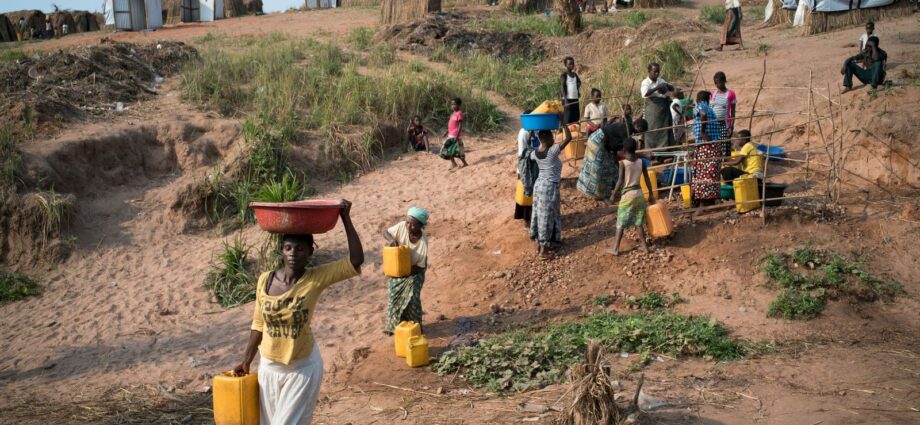
The report highlights a persistent difficulty on the ground: distinguishing combatants from Congolese Hutu populations who are sometimes wrongly lumped together with the FDLR. This confusion fuels a cycle of communal violence that humanitarian actors struggle to contain. UN agencies operating in Goma and Bukavu report a continuous influx of displaced people, in a context where humanitarian access remains hampered by fighting and restrictions imposed by the warring parties.
Kinshasa’s disarmament plan under scrutiny
Confronted with this reality, Congolese authorities defend a political process of voluntary disarmament of the FDLR, presented as the fundamental answer to the presence of the Rwandan armed group on their territory. Kinshasa argues that some fighters have already been cantoned and that repatriation mechanisms are being studied, in coordination with the United Nations Organization Stabilization Mission in the Democratic Republic of the Congo (MONUSCO) and several regional partners.
This approach is squarely rejected by Kigali, which views the FDLR as an existential threat and accuses the Congolese government of de facto collusion with the group. Rwanda leans on this reading to justify its support — documented in earlier UN expert reports — for AFC/M23 operations. The new report does not fundamentally alter that equation, but it shifts the debate toward the human cost borne by Congolese civilians.
Regional fallout that extends beyond the Kivus
The UN conclusions land at a pivotal moment for regional diplomacy. The Luanda process, led by Angola, and the Nairobi process, sponsored by the East African Community, seek to link ceasefire arrangements, the withdrawal of foreign forces and the neutralization of armed groups. The accusations against AFC/M23 complicate any prospect of politically integrating the movement, a scenario nonetheless floated in some mediation tracks.
For the DRC’s economic partners, particularly in strategic mineral supply chains for coltan, cobalt and tin, the persistence of insecurity in the Kivus poses a major challenge. Traceability mechanisms promoted by the European Union and major technology industries collide with the reality of a war economy in which supply routes remain captured by armed groups. The UN’s precise documentation of abuses could intensify pressure on international buyers and on neighbouring states involved in cross-border flows.
Then there is the question of judicial follow-up. Previous expert panel reports have rarely led to prosecutions, despite repeated referrals of the Congolese situation to the International Criminal Court. Human rights organizations are urging that the evidence gathered feed concrete proceedings, in Kinshasa as well as The Hague. The UN document is expected to be examined in the coming weeks by the competent bodies of the Security Council.
Further reading
Anglophone crisis: 707 separatist materials seized in Ekok · Israel and UAE move toward support for Ethiopia against Eritrea · Mali: Amnesty documents abuses by the army and Wagner
Comments are closed, but trackbacks and pingbacks are open.