
The government of Bénin is turning campaign promises into tangible action with a landmark social investment package worth 31 billion West African CFA francs. Unveiled in Toviklin, Couffo Region, this initiative targets three critical areas of public welfare, signaling a new era in the country’s development priorities.
The announcement, delivered before a gathering of citizens, educators, and local leaders from all six municipalities in the Couffo Department, laid out a clear vision: no more empty rhetoric—only measurable impact on the people’s daily lives.
Immediate care takes precedence: a billion francs for emergency health services
The most emotionally charged component of the plan is a dedicated fund of 1 billion CFA francs for emergency medical care. This allocation embodies a bold shift in policy: treatment begins first, payment comes later. The government has declared that no patient in critical condition will be denied care due to financial constraints.
« A life-threatening emergency deserves immediate attention, not a financial transaction. Oxygen isn’t negotiable, and neither is human life. »
In response to concerns about inconsistent implementation, officials assured the audience that stringent monitoring systems will be implemented nationwide to ensure this policy reaches every community without delay or discrimination.
20 billion francs to transform schools into safe, functional learning spaces
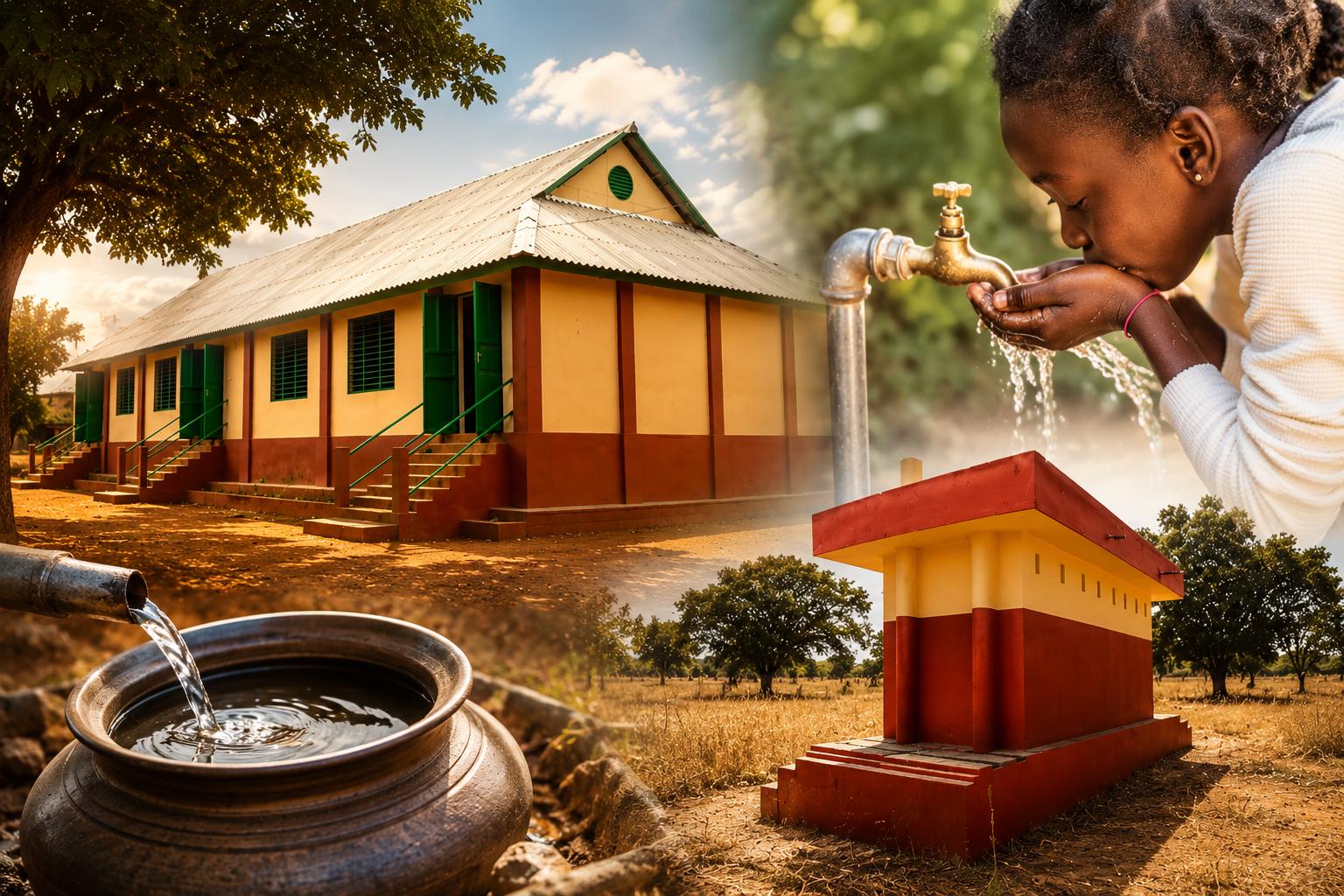
Another 20 billion CFA francs have been earmarked to address what officials describe as a « silent crisis »: the absence of basic infrastructure in many schools across Bénin. This allocation will fund the installation of clean drinking water, reliable electricity, and gender-separated sanitation facilities in educational institutions.
By prioritizing these essentials, the government aims to restore dignity to students, especially young women who often face barriers due to inadequate restroom facilities. School attendance and completion rates for girls are expected to improve significantly as a result.
10 billion francs to power rural health clinics with solar energy
The third tranche, totaling 10 billion CFA francs, focuses on revitalizing local health clinics by ensuring consistent access to electricity and clean water. Recognizing the fragility of traditional power grids in rural areas, the government is turning to solar photovoltaic systems to power medical facilities around the clock.
This decision is not merely about comfort—it’s about saving lives. Reliable power enables nighttime emergency procedures such as C-sections, while uninterrupted water supply ensures strict adherence to hygiene protocols. Together, these measures strengthen the foundation of public health in underserved communities.
A unified strategy rooted in local needs
These initiatives are not isolated gestures; they form a cohesive national strategy designed to build from the ground up. The administration of Romuald Wadagni has chosen to anchor development in the strengthening of essential social services—starting with the basics that every citizen deserves.
In Toviklin, the clarity of the vision has sparked widespread support among residents, educators, and local representatives. Yet, with the spotlight now on implementation, the public is calling for rapid, transparent progress: functioning water points, reliable electricity connections, and operational health centers. The countdown to project launches has begun, and expectations are high.
