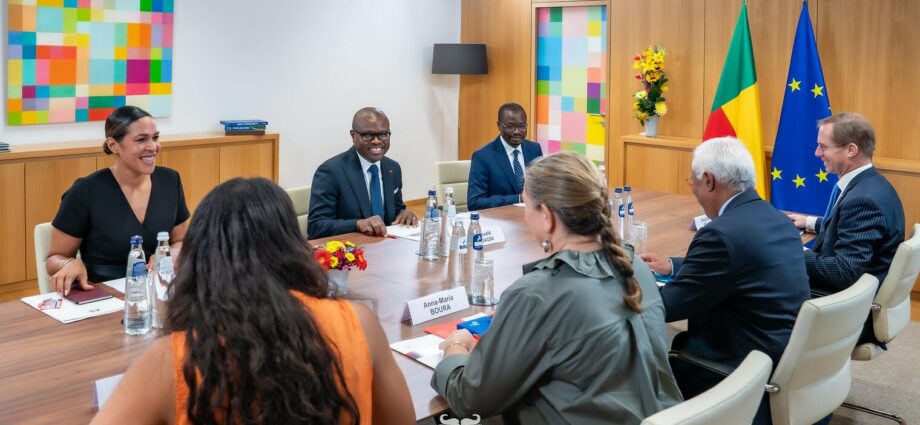
Cotonou witnessed a landmark ministerial meeting on October 21, 2026, as Bénin and the European Union (EU) reinforced their bilateral cooperation with a forward-looking agenda. High-ranking officials from both sides gathered to review existing agreements and chart new paths for economic collaboration across key sectors.
Direct outcomes for local communities
At the opening session, Bénin’s Minister of Foreign Affairs, Corinne Amori Brunet, underscored the critical need for transparent, results-driven partnerships with Europe. She emphasized redirecting EU-backed funding and programs toward measurable outcomes that directly benefit citizens—particularly in job creation, digital transformation, and social services.
The EU delegation praised Bénin’s progress in institutional reforms and stability, reaffirming their commitment to align with the country’s National Development Plan. A shared priority emerged: ensuring investments translate into tangible progress for local economies.
Projects under the microscope
The talks zeroed in on evaluating ongoing initiatives funded by the EU, with discussions structured around:
- Sustainable development: Progress in renewable energy, climate resilience, and agricultural modernization.
- Governance & transparency: Strengthening public sector efficiency and anti-corruption measures.
- Digital transition: Expanding infrastructure to bridge the urban-rural tech divide.
- Infrastructure upgrades: Road networks, ports, and energy supply enhancements.
Aligning with Bénin’s economic priorities
The partnership’s next phase will prioritize initiatives that mirror Bénin’s urgent needs, including:
- Youth employment programs through vocational training and entrepreneurship grants.
- Support for small and medium enterprises (SMEs) to fuel private-sector growth.
- Expansion of healthcare and education access in underserved regions.
Regional stability as a shared goal
Bénin and the EU framed this partnership as a strategic pillar for West Africa’s evolving landscape. By deepening trade ties and reinforcing mutual commitments, both parties aim to create a model of cooperation that adapts quickly to sub-regional challenges—economic shocks, security pressures, and climate pressures.
The Cotonou meeting set a clear roadmap: a partnership built on accountability, shared risks, and tangible benefits for citizens.
Comments are closed, but trackbacks and pingbacks are open.