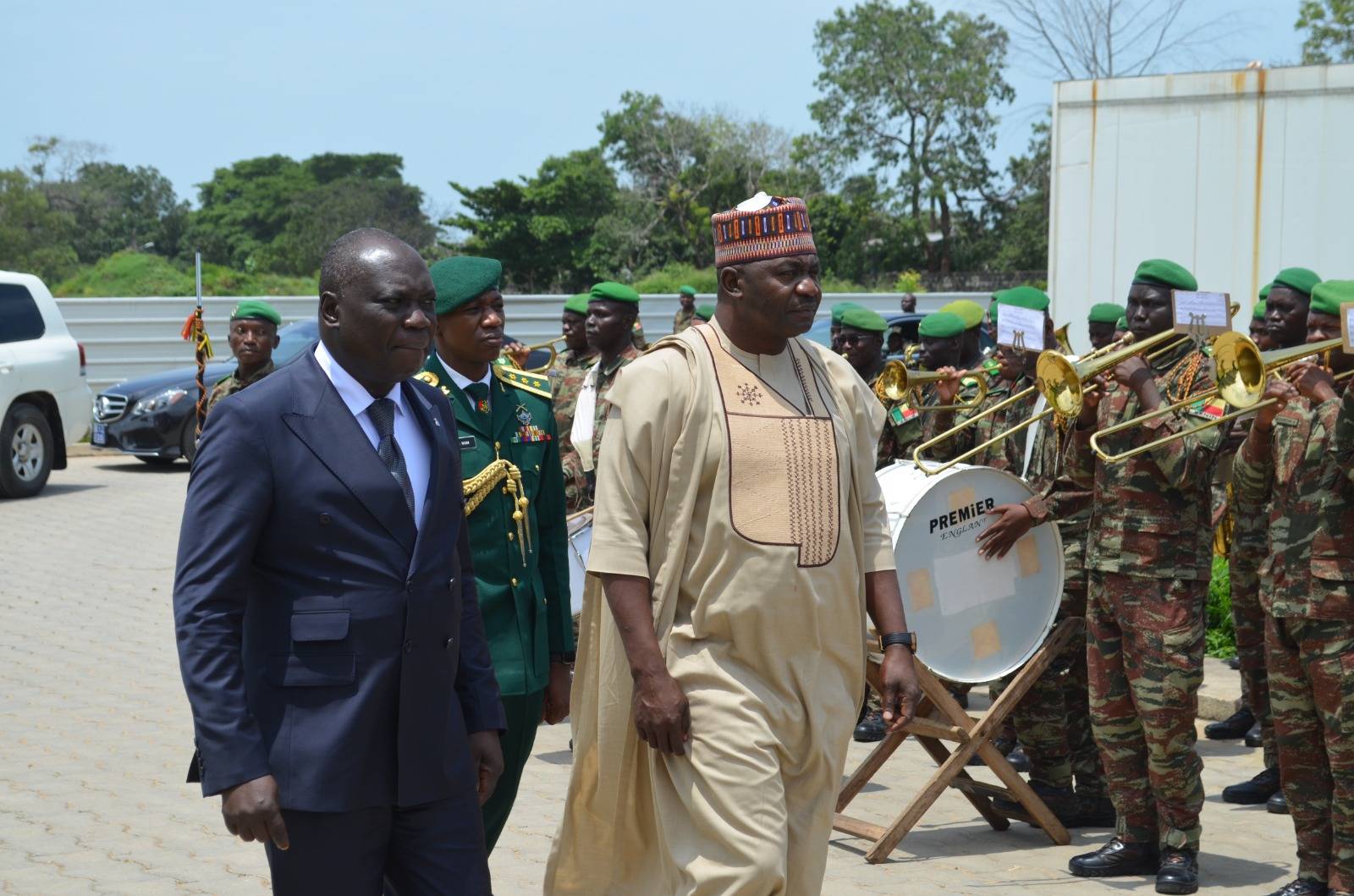
The escalating threat posed by armed groups across West Africa has prompted Bénin and Nigeria to deepen their security collaboration. On August 4, 2026, a high-level Nigerian military delegation, led by Defense Minister General Christopher Gwabin Musa, met with his Béninois counterpart, Gildas Agonkan, in Cotonou. This strategic gathering marks a significant step toward a more robust and coordinated regional defense strategy.
United by urgency and shared commitment
The visit underscored a shared sense of urgency as both nations confront the growing reach of violent extremist factions. Beyond formalities, General Musa’s presence in Bénin’s economic hub highlights the severity of the regional crisis and the need for immediate, collective action. Prior to official talks at the Ministry of Defense headquarters, the delegation visited Togbin military barracks, where Nigerian troops deployed for Bénin’s 66th Independence Day celebrations were stationed—a gesture symbolizing the deep historical and cultural ties between the two countries.
The subsequent working session focused on translating long-standing diplomatic solidarity into a tangible operational shield against jihadist expansion. The consensus was clear: isolated national responses are no longer viable in the face of transnational threats.
Confronting the terror threat across borders
The Sahel and Gulf of Guinea are experiencing unprecedented instability, with armed factions linked to Al-Qaïda and the Islamic State infiltrating southern territories. Bénin’s northern regions, bordering Burkina Faso and Niger, face relentless pressure, while Nigeria grapples with Boko Haram, ISWAP, and armed banditry. The porous nature of borders remains a critical vulnerability, allowing militants to exploit gaps in security.
General Musa emphasized that defeating terrorism demands a unified strategy, integrating defenses from the Sahel to the Gulf of Guinea. Despite political complexities, the overriding imperative is to maintain seamless communication among regional armed forces to preempt and dismantle extremist networks.
Forging a South-South security alliance
Béninois Defense Minister Gildas Agonkan hailed the meeting as a testament to the political will of both nations’ leaders to forge an unbreakable alliance. In his address, he stressed the need to pool resources and intelligence to counter the scourge crippling regional progress.
Concrete steps include:
- Sharing strategic intelligence to dismantle terrorist financing networks;
- Conducting joint border patrols to eliminate blind spots;
- Enhancing military interoperability for synchronized operations.
This South-South cooperation model demonstrates that sustainable solutions to Africa’s crises must originate from within, leveraging local expertise and unity.
Strengthening the citizen-army partnership
While tactical coordination is crucial, the fight against terrorism also hinges on community engagement. Extremist groups often exploit rural isolation and economic despair, making civilian vigilance indispensable. General Musa urged Béninois and Nigerian citizens to remain alert, reporting suspicious activities to security forces. Trust between local populations and military units is vital for gathering actionable intelligence and thwarting infiltration attempts.
Securing West Africa’s future
The enhanced security pact between Bénin and Nigeria transcends bilateral interests, serving as a cornerstone for regional stability. By securing their shared frontier and fostering seamless collaboration, Cotonou and Abuja send a powerful message to criminal networks. Economic growth, trade integration, and public welfare are inseparable from territorial security. This August 2026 commitment reaffirms both nations’ resolve to act as bulwarks against violent extremism, paving the way for a peaceful future.
Comments are closed, but trackbacks and pingbacks are open.