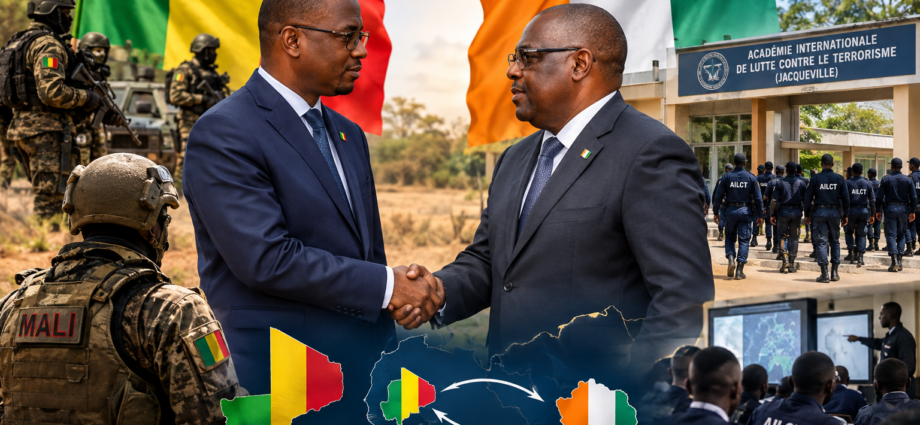
Mali seeks Côte d’Ivoire’s counterterrorism playbook to counter rising threats
On October 15, 2026, Bamako welcomes a high-level delegation from Abidjan as Mali intensifies its search for innovative solutions to combat terrorism. The visit by Ivorian intelligence chief Vassiriki Traoré, hosted by Malian counterpart Modibo Koné of the National Security Agency (ANSE), marks a pivotal moment in regional security cooperation under escalating Sahelian threats.
Strengthening security ties after years of regional fragmentation
After strained relations between Bamako and Abidjan, the upcoming meeting signals a strategic thaw in bilateral security collaboration. Terrorist groups operating across borders have increasingly exposed the limitations of unilateral counterterrorism efforts, pushing Mali to explore proven models that have shown success elsewhere in West Africa.
What Côte d’Ivoire brings to the table
The Ivorian approach to counterterrorism centers on three pillars: rigorous intelligence gathering, targeted training, and seamless inter-service coordination. Notably, the International Counterterrorism Academy (AILCT) in Jacqueville launched in 2021 serves as a regional training hub where military, police, and judicial units receive specialized counterterrorism education.
Intelligence-driven operations: Enhanced surveillance and real-time threat assessment reduce attack risks by identifying vulnerabilities before they’re exploited.
Force readiness: Specialized training programs prepare soldiers for asymmetric warfare, improving response times and operational success.
Unified command: Breaking down bureaucratic silos ensures all security agencies act on shared intelligence, closing loopholes exploited by militant groups.
From theory to implementation: Mali’s tactical considerations
While dialogue is essential, Bamako faces a strategic choice: adopting adapted elements from Abidjan’s model without compromising national sovereignty. The goal isn’t blind imitation but selective integration of best practices into Mali’s evolving security doctrine. This includes evaluating whether Ivorian training modules, ransomware detection systems, or border monitoring protocols could plug gaps in Mali’s current framework.
Long-term viability hinges on measurable outcomes
Beyond diplomatic niceties, Bamako must prioritize actionable results. Success will be measured by reductions in attack frequencies, improved civilian protection, and fortified inter-agency trust. Cooperation must extend beyond Abidjan’s visit to include regular joint exercises, intelligence-sharing protocols, and joint investigation teams.
As terrorist networks evolve, so too must Mali’s defense mechanisms. The Bamako meeting offers more than a snapshot of Côte d’Ivoire’s expertise it presents a chance to redefine regional security partnerships for a Sahel under siege.
Looking ahead: A regional security reset
The October summit arrives at a critical inflection point. With militants exploiting porous borders and exploiting local grievances, Mali’s decision to study Abidjan’s playbook reflects a pragmatic acknowledgment: no nation can counter terrorism in isolation. The visit’s true significance lies not in the mere exchange of ideas, but in its potential to catalyze a new phase of collaborative defense in West Africa.
By Alasane OUEDRAOGO — Journalist
Comments are closed, but trackbacks and pingbacks are open.