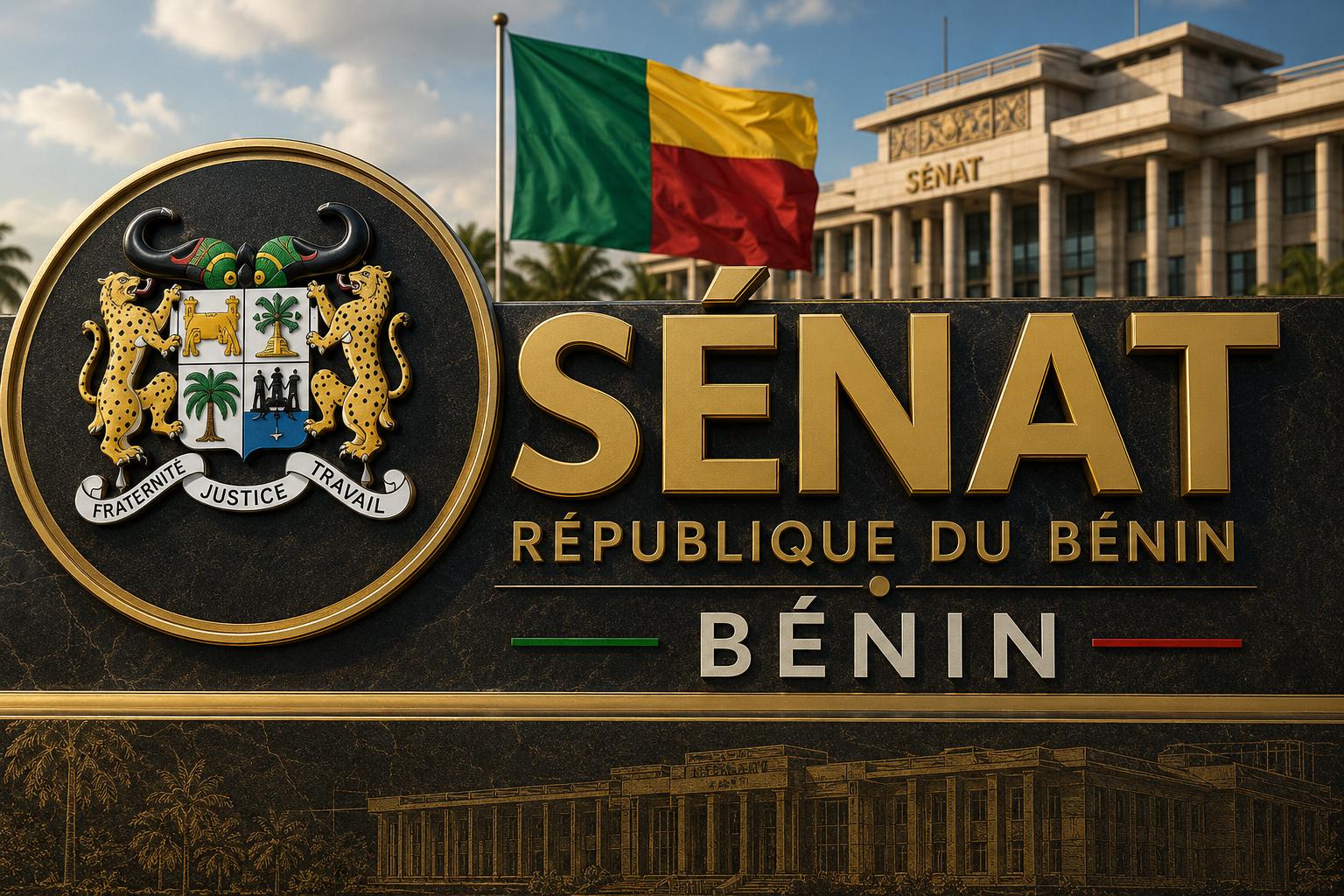
The appointment of a former president to lead the Bénin Senate has ignited lively discussions online and fueled speculation about hidden influence. Yet a close look at the constitutional framework shows a different story: a strict separation of powers where the Executive remains fully independent and the Legislative arm gains new strength.
Since the upper house of Parliament was installed and its presidency assumed by an outgoing head of state, digital spaces have buzzed with questions. Why does the government seem unchanged? What, exactly, are the limits of the Senate’s role? To clarify the picture, we must turn to the letter of the Constitution and the mechanics of national governance.
Executive authority remains entirely with the president
The first and most important fact is that presidential powers are now exercised by the newly elected president alone. The Constitution gives the head of state full authority to set national policy, appoint and oversee the government, lead the armed forces and administer public affairs. No other office—whether a Senate presidency or otherwise—shares these responsibilities.
Former president Patrice Talon left office as required by law. The notion that he continues to steer public action from the Senate presidency misunderstands the structure of the state. The sitting president holds the titles of President of the Council of Ministers, Supreme Commander of the Armed Forces and guarantor of public administration. Budget execution, major project arbitration and daily governance decisions remain squarely in the president’s hands.
Senate functions are purely legislative and oversight-based
Another common mistake is to imagine the Senate president as a co-decision maker in the Executive branch. In fact, the Senate is a legislative chamber with a strictly advisory and revisory role. It does not form a second government, and its president does not attend cabinet meetings or draft implementing decrees.
Financial oversight is illustrative: Parliament passes the budget, but only the Executive branch executes it. The Senate president has no authority to commit or release public funds. The chamber’s mandate is to review legislation, scrutinize government actions, hold second readings of bills and represent local authorities. Its leader organizes debates within the Senate, not within the ministries or the presidency.
Bénin’s presidential system differs from neighbouring parliamentary models
Some commentators have drawn parallels with constitutional changes in nearby countries where the prime minister wields real executive power. In Bénin, however, the system is unambiguously presidential. The president is directly elected by universal suffrage and retains all executive prerogatives. The addition of a Senate simply introduces a second legislative chamber—bicameralism—to refine lawmaking without altering the fundamental balance of power.
Wisdom chamber bolsters stability and democratic maturity
Beyond day-to-day politics, the Senate is designed to be a chamber of reflection. Its members—former senior officials, seasoned politicians and qualified experts—provide steady, long-term input on constitutional matters. In a political landscape often driven by electoral passions, the Senate acts as an institutional ‘palaver tree,’ offering calm review of draft laws, safeguarding national unity and ensuring continuity in governance.
By taking on the Senate presidency, Patrice Talon shifts from daily executive duties to a role centered on guidance, counsel and preservation of republican values. He remains a key voice in national life but no longer shapes policy line by line.
A milestone in democratic consolidation
The establishment of the Senate and the clear distribution of roles it embodies mark a significant step forward for Bénin’s democratic institutions. Far from masking a hidden transfer of power, the constitutional framework secures a sharp division: the president commands the Executive, the Senate cultivates legislative wisdom and republican vigilance. This clarity allows public debate to rest on facts rather than conjecture, fostering both truth and tranquility in national discourse.
Comments are closed, but trackbacks and pingbacks are open.