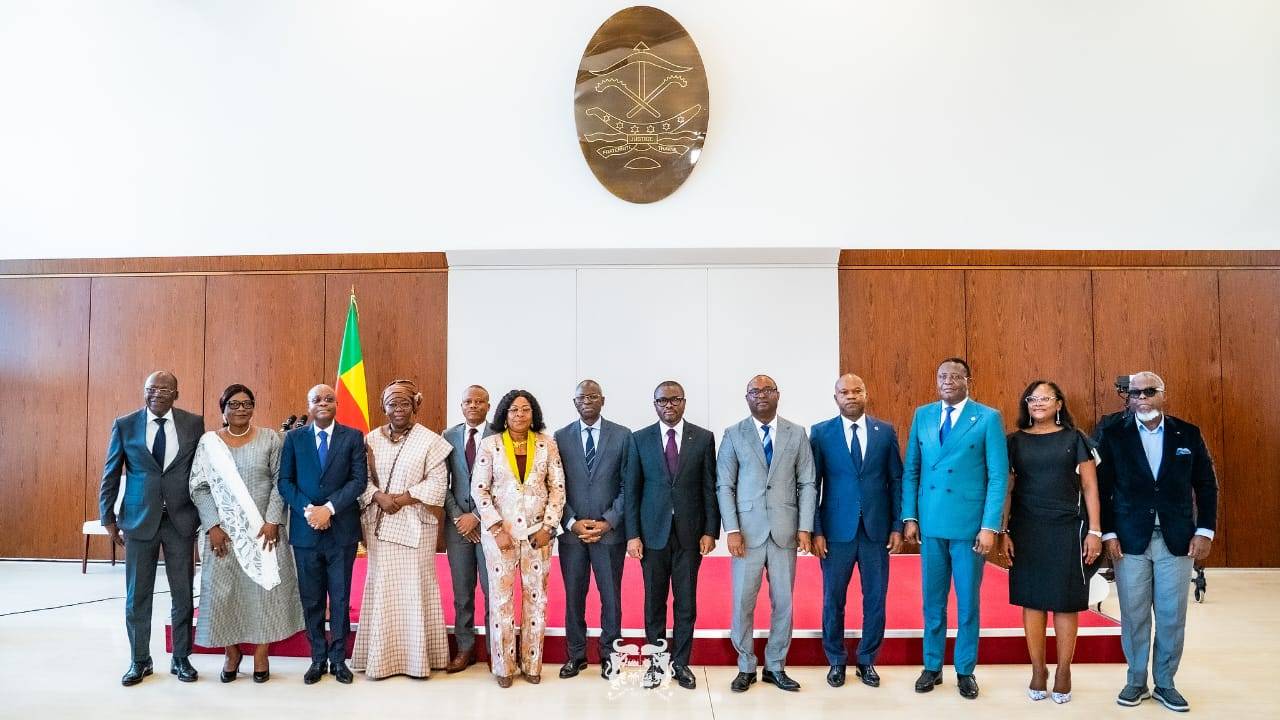
The Bénin has taken a decisive step toward institutional modernization with the official launch of its National Commission for Legal Reform. On the morning of July 28, 2026, within the historic halls of the Palais de la Marina, President Romuald Wadagni inaugurated the Permanent Committee of this newly established body, marking the beginning of a comprehensive overhaul of the nation’s legislative framework.
An institutional milestone for the nation
Surrounded by key government figures—including the Vice President, senior judicial officials, and the Minister of Justice—the President underscored the historic significance of this moment. The establishment of the Permanent Committee signals a bold commitment to aligning Bénin’s legal system with contemporary demands, fostering an environment where justice and development advance in tandem. This initiative is not merely procedural; it represents a visionary leap toward a modern, responsive state governed by law.
From vision to action: the birth of a reform engine
The origins of this transformative project trace back to October 15, 2025, when the National Commission for Legal Reform was formally adopted by the Council of Ministers. Following months of preparatory work, the Permanent Committee was officially appointed on July 1, 2026. Led by President Noël Gbaguidi, with Djidjouè Gboyou as Vice President and Igor Guedegbe as Rapporteur, this three-member team has been entrusted with a mission of national importance.
Their responsibilities extend far beyond routine legal maintenance. The Committee is tasked with continuous legislative monitoring, forward-looking legal studies, and the drafting of high-standard public texts. It will also play a pivotal role in aligning Bénin’s legal framework with regional community law, ensuring harmonization and coherence across economic and social sectors.
Modernizing the legal arsenal: a catalyst for progress
In his keynote address, President Wadagni outlined the critical priorities facing the Committee. The first order of business is a rigorous assessment of Bénin’s existing legal corpus, identifying outdated provisions and eliminating contradictions that undermine the justice system. The President emphasized that legal clarity and coherence are not abstract ideals but foundational pillars of public trust and economic stability.
The reform agenda goes beyond mere housekeeping. It seeks to transform the nation’s legal architecture into a dynamic engine of development. In a world where industries evolve rapidly—from climate-resilient agriculture to digital innovation and sustainable urban planning—the law must not lag behind. The President framed this shift with clarity: “Our legal system must evolve from a static guardian of order into a proactive tool for progress.”
Designing a future-proof legal ecosystem
The benefits of this modernization are both immediate and long-term. A clear, predictable legal environment reduces transaction costs for businesses, making Bénin more attractive to investors. It also ensures that economic growth is environmentally and socially responsible, protecting the nation’s resources and most vulnerable citizens. Moreover, streamlined regulations will enhance public service efficiency, accelerating the implementation of critical infrastructure projects.
Collaboration as the cornerstone of success
Recognizing the scale of the challenge, President Wadagni called for an inclusive approach. The Permanent Committee is urged to engage widely with stakeholders—legal scholars, judges, legal professionals, civil society leaders, and sector experts. Only through broad-based dialogue, he argued, can the reforms gain legitimacy and practical relevance. The government has pledged full support, ensuring the Committee has the technical, logistical, and financial resources needed to fulfill its mandate.
With the Permanent Committee now fully operational, Bénin stands at the threshold of a new era. If the Committee delivers on its ambitious mandate, the nation’s legal framework will transition from a reactive system to a strategic engine of transformation—driving economic growth, social equity, and sustainable development for generations to come.