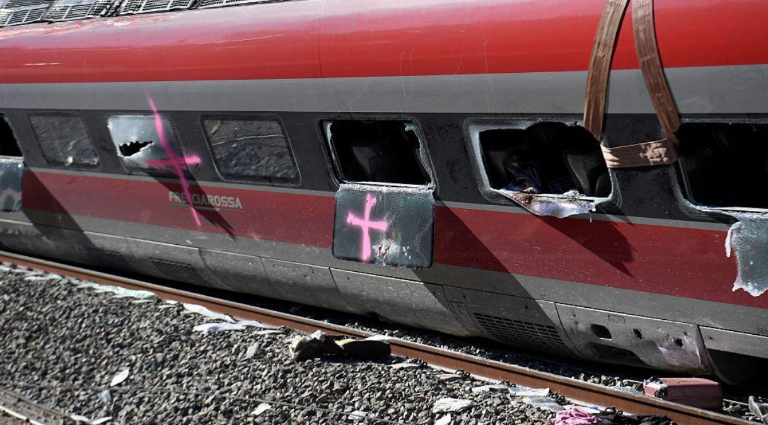
Collison between two high-speed trains leaves 46 dead and 179 injured
The heart of Spain’s rail network has been shattered after a catastrophic collision between two high-speed trains left at least 46 people dead and 179 others injured near Urda in Toledo province. Rescue operations remain underway as investigators race to uncover the sequence of events that led to one of the country’s deadliest railway disasters in recent years.
Emergency response teams mobilized after devastating impact
The accident occurred on a critical stretch of track linking Madrid to Andalusia, where a high-speed train operated by Spain’s publicly owned Renfe service collided with a stationary train belonging to the private operator Iryo. Witness accounts describe a violent impact that sent multiple carriages derailing, some plunging off the tracks onto an adjacent embankment, creating a chaotic scene for rescue workers.
Emergency services including firefighters, medical teams, and civil protection personnel were deployed immediately, with first responders working against the clock to free passengers trapped in mangled wreckage. The sheer number of travelers aboard both trains—many of whom faced life-threatening injuries—turned evacuation efforts into a grim race against time.
Provisional death toll likely to rise following rescue operations
Hospitals across the region have been placed on high alert, with the most critically wounded stabilized before being transferred to specialized care. Among the survivors, some injuries remain severe, and authorities caution that the official death toll may climb as search operations continue and the full extent of the damage is assessed.
The accident has also brought rail traffic across key routes to a standstill, disrupting travel plans for passengers bound for Madrid or destinations further south. While some services are expected to resume in stages, the broader impact on regional connectivity remains under review.
Signal failure suspected as investigators probe cause of crash
Preliminary scrutiny of the disaster has raised immediate concerns about potential failures in rail signaling and traffic management systems. Reports suggest possible miscommunication between train operators or lapses in automated safety protocols that could have allowed the collision to occur despite the presence of modern high-speed infrastructure.
Crucial evidence now under examination includes onboard recording systems, signal logs, and communication exchanges between drivers and control centers. Forensic teams will focus on whether technical malfunctions, human error, or an unforeseen combination of factors led to the tragedy. A definitive reconstruction of events prior to impact is expected to take days or even weeks to complete.
National outrage sparks renewed scrutiny of rail safety measures
The latest tragedy comes in the wake of growing public concern over multiple railway accidents in Spain, prompting renewed debate over infrastructure maintenance, equipment reliability, and traffic control procedures. While each incident must be evaluated on its own merits, the recurring pattern of preventable failures has intensified calls for systemic reform.
Transport officials face mounting pressure to deliver transparent findings that not only assign responsibility but also outline concrete steps to prevent future catastrophes. Families of the victims and the traveling public alike are demanding answers—answers that must balance urgency with meticulous accuracy.
Nation holds vigil as Spain seeks closure and accountability
Beyond the raw statistics—46 lives lost, 179 injured, hundreds traumatized—lies a human tragedy etched into the lives of those affected. Funerals will soon commence, while survivors confront long recoveries and the emotional scars of their harrowing ordeal.
With the nation in mourning, authorities stress that premature conclusions about cause or blame would undermine the integrity of the investigation. Until then, the immediate priorities remain clear: ensuring no victim is left behind, supporting grieving families, and restoring confidence in Spain’s rail network through unwavering truth and decisive action.
Comments are closed, but trackbacks and pingbacks are open.