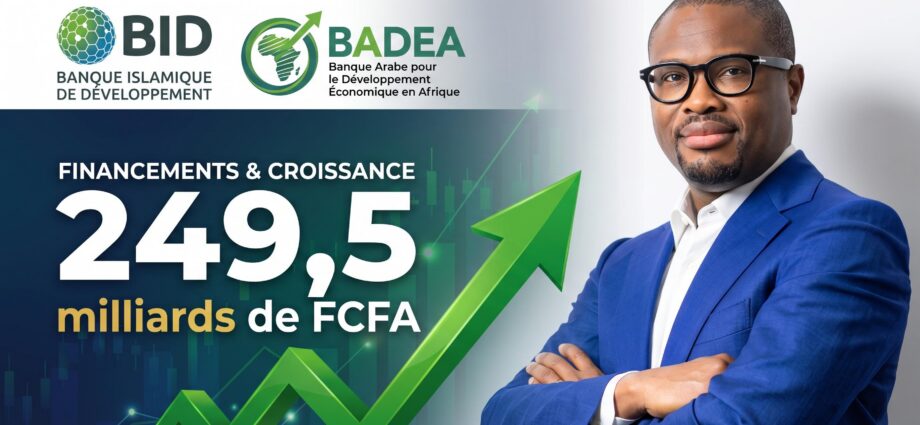
Benin has sealed a strategic financing deal worth 249.5 billion FCFA (approximately $460 million) during the 2026 IMF and World Bank Annual Meetings in Bangkok. The agreements with the Islamic Development Bank (IsDB) and the Arab Bank for Economic Development in Africa (BADEA) underscore the country’s growing financial credibility and commitment to infrastructure-led economic transformation.
Direct financing injection to fuel Benin’s development vision
At the heart of these agreements are three key financing instruments tailored to Benin’s development priorities. The funds will be channeled into critical infrastructure projects aimed at enhancing connectivity, energy access, and public service delivery across the country. This move reflects a deliberate strategy to leverage external financing while maintaining fiscal discipline.
Strengthening financial credibility through strategic partnerships
The partnerships with IsDB and BADEA highlight Benin’s success in diversifying its funding sources. By engaging with multiple financial institutions, the country reduces dependency on any single lender and gains access to more flexible financing terms aligned with project needs. This approach not only broadens the scope of potential investments but also strengthens Benin’s position in international financial circles.
Debt as a growth catalyst: when borrowing fuels progress
The 249.5 billion FCFA financing brings the debt debate into sharp focus. Contrary to common perceptions, strategic borrowing can serve as a powerful tool for economic advancement. When used effectively, debt can finance transformative infrastructure, stimulate private sector activity, and create jobs. The key lies in selecting projects with high economic multipliers, ensuring transparent procurement, and maintaining rigorous project execution.
From debt to dividends: what effective borrowing looks like
- Project quality: Funds must flow into infrastructure that directly benefits citizens, such as rural roads, electrification projects, and healthcare facilities.
- Execution efficiency: Timely completion, budget adherence, and measurable outcomes are essential to justify borrowed funds.
- Fiscal sustainability: Repayment schedules, interest rates, and debt-to-GDP ratios must remain within manageable limits.
Tracking fiscal progress: a look at Benin’s economic trajectory
Benin’s recent fiscal performance reflects efforts to balance growth with stability. Data from the IMF indicates the budget deficit narrowed from 7.2% of GDP in 2021 to 3.1% in 2024. This improvement stems from stronger revenue mobilization, controlled public spending, and debt reduction strategies. The decline in public debt between 2023 and 2024 underscores these achievements, even after adjusting for statistical revisions to include public enterprise liabilities.
Turning numbers into tangible benefits for citizens
The ultimate test of Benin’s financing strategy will be the real-world impact on its people. Completed projects should bridge rural-urban divides, reduce transport costs, and improve access to essential services. For this to happen, project selection must align with community needs, and implementation must be transparent. Independent audits and public disclosure of procurement processes will build trust and ensure funds translate into lasting value.
Sustaining financial trust in a changing global landscape
The 249.5 billion FCFA financing deal reinforces Benin’s financial reputation. But maintaining this credibility requires continuous reform, disciplined debt management, and efficient project delivery. The challenge ahead is clear: ensuring that borrowed resources generate economic returns that outpace repayment obligations. By doing so, Benin can turn its financial strategy into a blueprint for sustainable development and shared prosperity.
Comments are closed, but trackbacks and pingbacks are open.