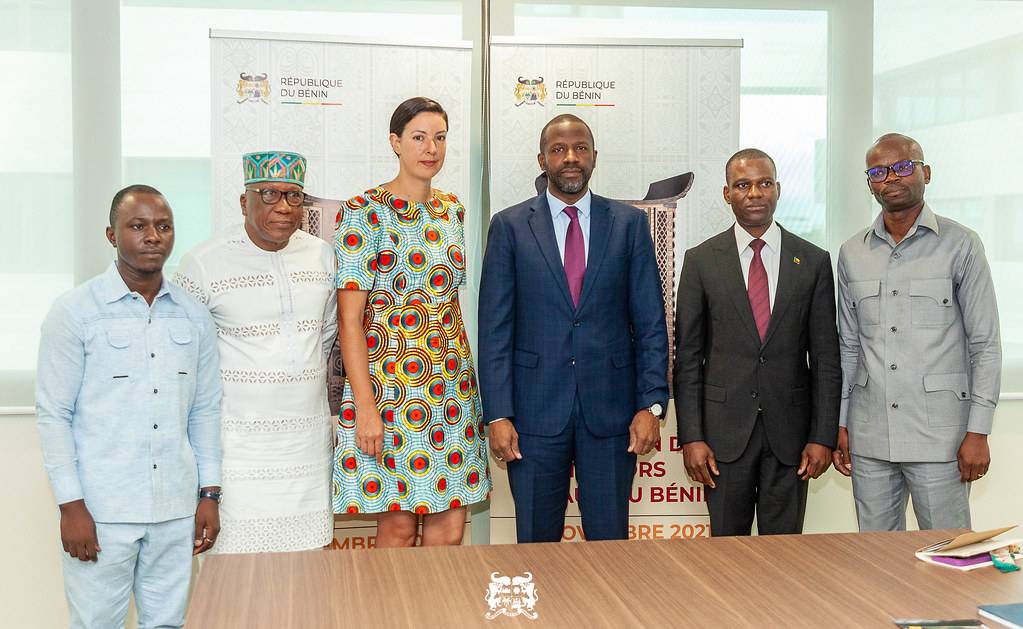
Following the historic success of an initial wave of cultural restitutions, Benin is taking a decisive new step. By establishing a national scientific committee on July 14, 2026, Cotonou is laying the groundwork for the return of 35 additional cultural artifacts and valuable colonial-era archives held in France. Far beyond symbolic gestures, this initiative is part of a pragmatic strategy: transforming restored heritage into a catalyst for a thriving tourism and cultural economy, fueled by local enthusiasm.
Crafting a new era of Beninese cultural sovereignty
Benin is not resting on its laurels. As a trailblazer in sub-Saharan Africa for cultural restitution, the country is now entering the second phase of its diplomatie patrimoniale. The government has formally requested France to return 35 significant artworks and national history archives, essential for reconstructing Benin’s historical narrative.
To execute this meticulous legal, historical, and scientific endeavor, a National Scientific Committee was inaugurated in Cotonou on July 14, 2026. Comprising six leading experts and led by Alain Godonou, a respected figure in African heritage, the committee’s mission is twofold: to strengthen Benin’s advocacy and to collaborate closely with the future Franco-Beninese joint scientific commission.
During the committee’s installation, the Minister of Culture, Arts, and Heritage, Yassine Latoundji, underscored the sacred nature of their mandate: “Your duty demands intellectual rigor, independence, collegiality, a commitment to the public good, and unwavering fidelity to scientific truth.”
From heritage to economic growth: A strategic investment
While the moral and political significance of restitution is undeniable, the Beninese government views it primarily as a strategic economic investment. In cities like Cotonou, Abomey, and Ouidah, culture is no longer seen as a financial burden but as a powerful productive sector capable of generating thousands of jobs—directly and indirectly.
Building world-class cultural infrastructure
To ensure these artifacts are preserved in optimal conditions, Benin has launched ambitious construction projects nationwide. The future Musée des Rois et des Amazones in Abomey will pay grand homage to the legendary history of the Dahomey Kingdom. In Porto-Novo, the International Vodun Museum aims to reclaim and reeducate the global public about a spirituality often misunderstood. Meanwhile, the extensive renovation of Ouidah’s historic forts will solidify the city’s role as a hub for memorial tourism linked to the transatlantic slave trade.
These world-class infrastructures act as magnets for foreign investment and nurture local expertise in museography, cultural mediation, and art restoration.
Revitalizing memory tourism: A cycle of opportunity
The arrival of 35 new cultural artifacts and archives will significantly enrich Benin’s museum offerings. For the local economy, the impact will be multifaceted:
- Hospitality sector: Hotels and restaurants will see a surge in bookings from regional and international tourists.
- Artisanat: Bronze casters, weavers, and wood sculptors will experience a renaissance, drawing inspiration from recovered historical pieces to create contemporary works.
- Services: A dynamic ecosystem will emerge, including tour guides, drivers, and event organizers, further boosting employment.
Voices from the ground: Pride and hope for the future
In Cotonou, the formation of the new scientific committee has sparked widespread enthusiasm. In the bustling neighborhoods of the economic capital, people are both proud and deeply aware of the stakes.
“To us, these objects are more than museum pieces,” shares Séraphin, a bronze artisan at the Dantokpa market. “They embody the spirits of our ancestors and the craftsmanship stolen from us. Seeing them return is like reclaiming a piece of our soul. And if it means attracting visitors from around the world to our workshops, it’s our youth who will benefit most.”
Students at the University of Abomey-Calavi echo this sentiment. For them, the return of national archives represents an academic revolution:
“Previously, to conduct in-depth research on our own colonial history, our scholars had to secure scholarships to study in Paris or Aix-en-Provence,” explains Amélie, a history PhD candidate. “The return of these archives to Cotonou is a scientific victory. We can finally write our history from our own soil, in our own words.”
This grassroots support is the backbone of the government’s project. The return of these artifacts isn’t just an elite or diplomatic affair—it’s a popular reclaiming that strengthens national unity.
A redefined bilateral partnership rooted in mutual respect
By launching the committee on Bastille Day—July 14—Benin sends a powerful message of mature, uninhibited partnership. This is no longer about confrontation but about a balanced, scientific collaboration based on mutual respect, knowledge exchange, and shared expertise.
The next phases of this partnership are already mapped out. The first, launched in July 2026, focuses on establishing the National Scientific Committee under Alain Godonou’s leadership. By the end of 2026, Beninese experts will systematically consolidate the dossiers for the 35 artworks and archives, working in close consultation with French museum institutions. The final milestone arrives in 2027, when the joint Franco-Beninese commission will officially validate the transfers.
A blueprint for 21st-century Africa
Benin’s methodical approach demonstrates that cultural restitution transcends historical reparation. By scientifically structuring its claims and meticulously preparing for the arrival of these treasures, Cotonou is turning heritage into a tool for political emancipation, a source of national pride, and above all, a cornerstone of its future economic development. As these 35 artifacts and archives prepare to journey back to their ancestral land, Benin is proving to the world that culture is not just a relic of the past—it is a wealth of the future.
Comments are closed, but trackbacks and pingbacks are open.