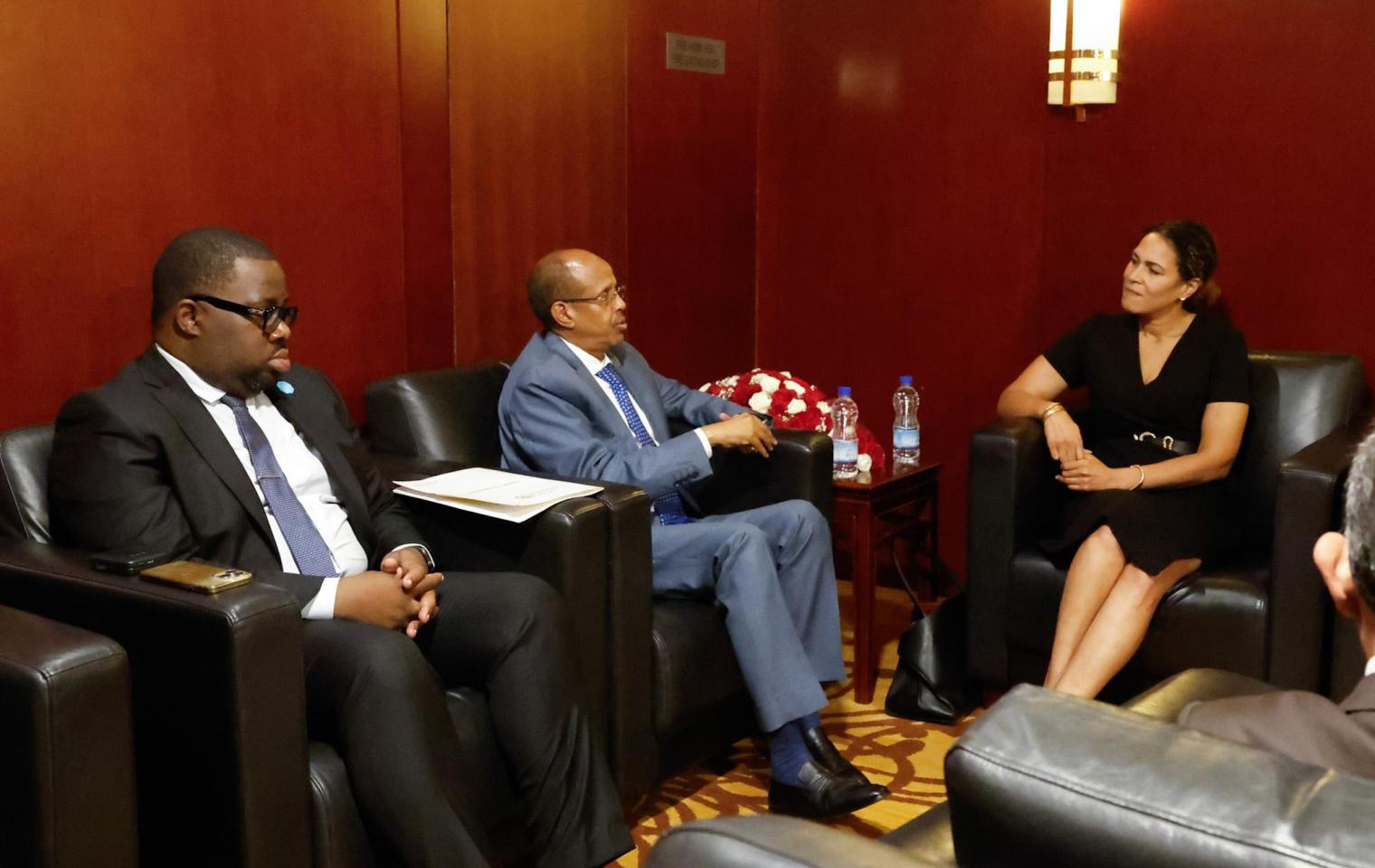
In the hushed corridors of the African Union headquarters, a significant signal emerged. On July 28 and 29, 2026, Benin‘s Minister of Foreign Affairs, Corinne Amori Brunet, engaged in strategic discussions with Mahmoud Ali Youssouf, Chairperson of the African Union Commission, on the sidelines of the 49th ordinary session of the Executive Council. This meeting was far from a mere courtesy call—it was the groundwork for a high-stakes milestone: Benin’s upcoming presidency of the AU Peace and Security Council in September.
From election to execution: a presidency forged in preparation
The path to this leadership role was paved earlier this year. On February 11, 2026, Benin was elected to serve on the Peace and Security Council for the 2026–2028 term. While the presidency itself lasts just one month, the role is one of the most scrutinized in the African Union’s structure, wielding influence over crisis arbitration, peacekeeping mission mandates, and political transitions across the continent. For a mid-sized nation like Benin, long regarded as a quiet regional player, this spotlight presents both an opportunity and a challenge.
The timing amplifies its impact. Benin’s presidency will coincide with the 81st session of the United Nations General Assembly in New York, offering a global stage to amplify African voices on peace and security. Cotonou sees this as a chance to strengthen the dialogue between the African Union and the UN—an institutional partnership critical to addressing crises from the Sahel to the Horn of Africa.
Diplomacy in action: shaping the agenda, not just following it
The meetings in Addis Ababa underscore a deliberate strategy. By engaging directly with the AU Commission ahead of the presidency, Benin is signaling its intent to shape—not merely respond to—the continental agenda. This proactive stance comes at a time when regional security is increasingly fragile, with armed groups expanding toward West African coastal states, fragile transitions in the Sahel, and simmering tensions within regional blocs. Success here will hinge on Benin‘s ability to broker consensus amid divergent national interests.
For Corinne Amori Brunet, the challenge will be transforming visibility into influence. Leading the Peace and Security Council requires setting priorities, navigating complex negotiations, and delivering a message that is both resolute and unifying. A single misstep could erode hard-earned diplomatic capital. Yet, if executed with precision, this role could demonstrate how a nation’s diplomatic acumen can outweigh its geographic footprint.
The test of consistency: beyond the spotlight
While the presidency is a fleeting moment in a two-year term, its success will be measured by the consistency with which Benin upholds its priorities long after the gavel passes to another. The groundwork laid in Addis Ababa will soon face its first real test during the UN session in September. In a region grappling with deepening security fractures, a presidency rooted in dialogue and method could prove invaluable.
Benin is banking on the belief that patient diplomacy remains a strategic asset. As it steps into the heart of the continental peace apparatus, the nation is making a calculated bet: that measured, persistent engagement can yield outsized returns. The proof will unfold in the coming weeks—and the stakes couldn’t be higher.