An institution born of constitutional reform
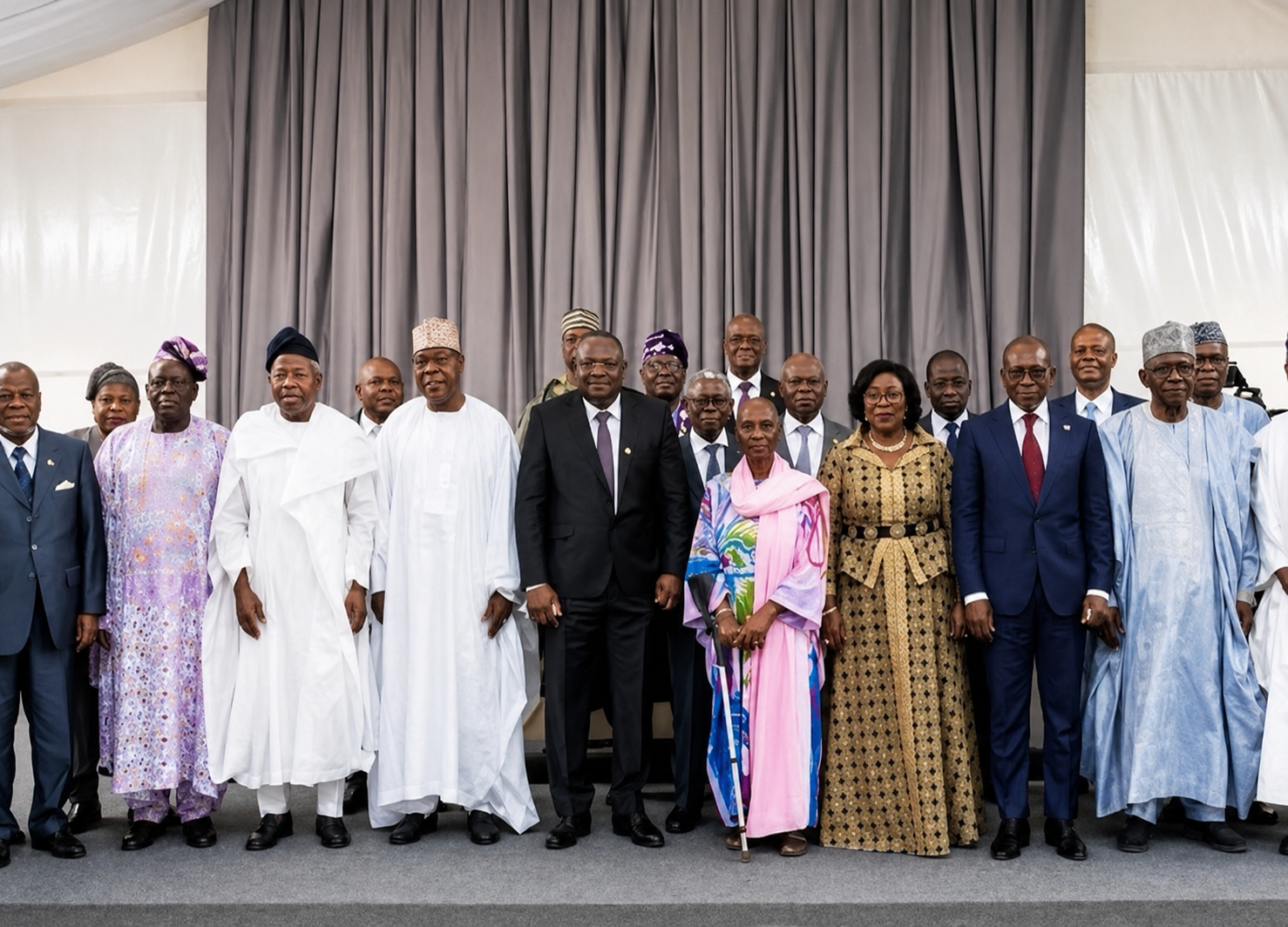
The establishment of Benin’s first Senate on July 30, 2026, followed by former President Patrice Talon’s election as its president on August 6, marks a significant milestone in the country’s institutional evolution. This bicameral Parliament structure, established through the constitutional revision of December 17, 2025, introduces a new balance in Benin’s governance framework.
Addressing misconceptions about the Senate’s purpose
The Senate’s creation has sparked considerable debate, with some critics portraying it as a potential “shadow government” or a mechanism for Patrice Talon to maintain political influence beyond his presidency. However, such interpretations warrant closer examination against the constitutional framework.
The debate surrounding the Senate may legitimately focus on its utility, composition, powers, and operational dynamics. Yet it is crucial to differentiate between political influence, institutional role, and executive authority—these are distinct concepts that cannot be conflated.
Constitutional foundations versus personal interpretations
The Senate is not a structure created around Patrice Talon; it is a direct consequence of the 2025 constitutional amendment. The revised Constitution clearly establishes Benin’s Parliament as a bicameral body comprising the National Assembly and the Senate, with defined roles, composition, and powers.
As a constitutional institution, the Senate’s existence is not contingent on the individual holding its presidency. Criticism of its creation, structure, or implementation is valid, but it cannot be legally framed as a personalized mechanism designed to facilitate indirect governance by an ex-president.
Patrice Talon’s Senate presidency: influence without executive power
Patrice Talon’s election as Senate president has fueled speculation about his potential influence. As a former head of state assuming leadership of a new institution, such questions are understandable. However, it is essential to separate potential political influence from the constitutional exercise of presidential authority.
Talon concluded his two-term presidency in 2026, with Romuald Wadagni sworn in as President on May 24, 2026. The transition of power occurred in full compliance with constitutional provisions. Talon’s Senate presidency does not equate to a revival of his presidential functions under a different guise.
The Senate president does not possess the same constitutional powers as the President of the Republic. He neither leads the government nor commands state administration. The executive authority remains firmly vested in the presidency, while the Senate operates within the legislative framework as defined by the Constitution.
The Senate’s role: regulation without governance
Much of the current criticism stems from confusion regarding the Senate’s actual functions. The Constitution grants it significant regulatory powers aimed at preserving national unity, democracy, peace, political stability, and state continuity. It is tasked with ensuring compliance with political truce and ethical standards in governance.
Yet these responsibilities do not transform the Senate into a parallel government. Regulation is not governance, oversight does not constitute administration, and advisory roles do not replace executive functions. The Senate does not substitute the presidency, government, or ministries; it operates within the parliamentary sphere and the regulatory mechanisms outlined in the Constitution.
Legislative powers with constitutional guardrails
While the Senate is not a symbolic institution, its powers are precisely delineated. Certain legislative categories including constitutional amendments, electoral laws, and regulations governing political parties require the Senate’s non-objection before enactment. This objection requires a two-thirds qualified majority, and the absence of a response within the prescribed period constitutes tacit approval.
The Senate may also request a second deliberation of laws passed by the National Assembly, with specific exceptions such as finance laws, budgetary regulations, and program laws. These provisions underscore that the Senate is far from ornamental; it serves as an additional layer of legislative scrutiny and reflection.
However, it remains critical to distinguish between legislative authority and executive power. The Senate’s role is confined to the parliamentary domain, while the executive continues to operate under presidential and governmental authority.
A ‘chamber of wisdom’ designed for consensus-building
The Senate’s composition reflects a deliberate effort to incorporate institutional experience. The Constitution mandates the inclusion of ex-officio members from high ranking positions, as well as representatives from defense and security sectors. If these numbers are insufficient, additional members are appointed to meet the constitutional minimum of 25 senators.
This structure positions the Senate as a potential forum for dialogue, mediation, and crisis prevention complementing the majoritarian dynamics of the National Assembly. In a democracy, governance is not solely about majority rule; it also requires mechanisms for negotiation, compromise, and institutional continuity.
The paradox of criticism: influence without institutional overreach
Critics who question Patrice Talon’s potential influence are not entirely off the mark in a political sense. A former president retains substantial experience, networks, and institutional knowledge, which can translate into significant political sway. However, this reality must not be misconstrued as a legal argument that he has reclaimed presidential authority.
The pertinent question is not whether Talon can exercise influence clearly, he can, as any former head of state in a prominent institutional role would. The more relevant inquiry is whether this influence can constitutionally override the President’s executive authority.
The answer lies in the Constitution: the Senate has defined competencies but does not direct administration, formulate government policy, or assume the President’s constitutional duties. The debate, therefore, must remain anchored in legal texts rather than speculative intentions.
Political continuity versus institutional seizure
The transition from Patrice Talon to Romuald Wadagni as President has been widely interpreted as a continuation of political direction. Wadagni, Talon’s former Minister of Economy and Finance, won the April 2026 presidential election with over 94% of the vote, supported by the presidential majority.
While this continuity may be critiqued politically, it does not automatically imply an institutional seizure of power. A democracy can experience political succession without abrupt policy ruptures. The true test lies in whether institutions function within their designated competencies, responsibilities are clearly delineated, and oversight mechanisms operate effectively.
Assessing the Senate by its actions, not assumptions
As a new institution, the Senate’s effectiveness cannot be measured solely by the intentions of its architects or the fears of its detractors. Its performance will be determined by its day-to-day operations.
Observers will need to assess whether the Senate exercises its powers without devolving into a mere rubber stamp body, how effectively it engages with the National Assembly, its relationship with the government, its use of second-deliberation powers, and above all its capacity to fulfill its regulatory mandate. Another critical factor will be the adherence of senators to their constitutional obligation of political reserve, which prohibits them from acting as political partisans.
The Senate’s true measure will not be Patrice Talon’s leadership but how the institution exercises its constitutional mandate.
Clear roles for sustainable governance
The most effective way to dispel misconceptions is to reiterate the division of responsibilities: the President leads the executive, the government implements policy, the National Assembly and Senate constitute Parliament, and the Constitutional Court ensures constitutional compliance and resolves institutional disputes.
Within this framework, Patrice Talon’s Senate presidency does not restore his presidential powers. He may wield significant political influence, but this is distinct from holding constitutional executive authority.
Beyond speculation: evaluating the Senate by outcomes
While debate about the Senate is entirely legitimate, it must be grounded in facts rather than conjecture. The Senate is not an extra-constitutional entity; it is an institution enshrined in the revised 2025 Constitution, with precise powers and a defined role within the bicameral Parliament.
Its president is not a proxy president, its powers do not mirror those of the government, and its existence does not diminish the President’s constitutional responsibilities.
The ultimate test for Benin will not be whether the Senate is framed as a “shadow government” but whether it fulfills the constitutional mission assigned to it: enhancing institutional stability, improving legislative quality, fostering political dialogue, and safeguarding peace.
The era of speculation must give way to one of evaluation. The Senate is now an institutional reality. Its effectiveness will be determined by its actions, decisions, and strict adherence to constitutional boundaries its true measure of success for the future of Benin.
Comments are closed, but trackbacks and pingbacks are open.