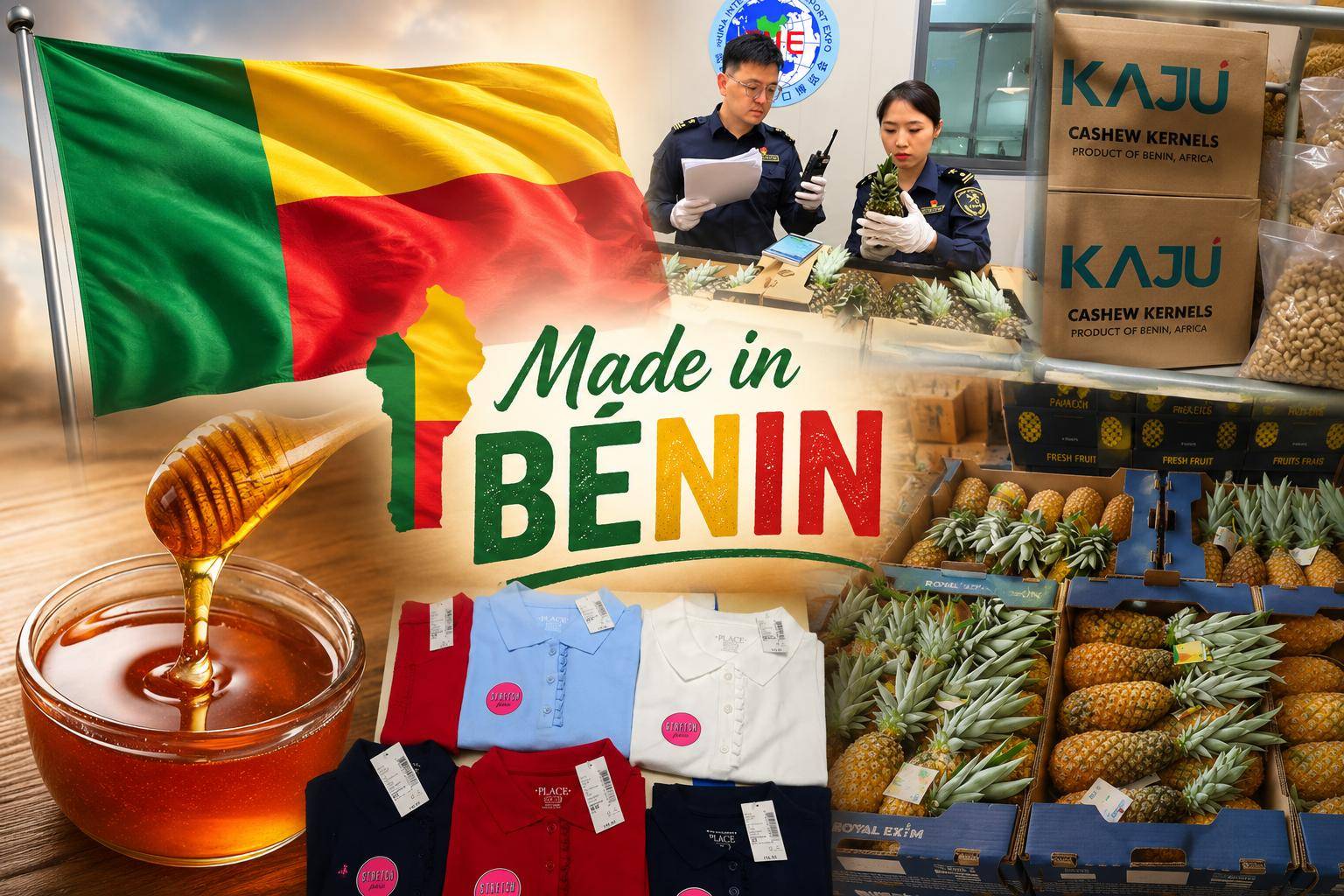
The smallholder farmers of Benin are writing a new success story on the world stage. From the sugar-loaf pineapples of Allada to the organic soya of the Ouémé Valley and the golden honey of the northern hills, Benin’s agricultural treasures are no longer confined to local markets. Under the leadership of President Patrice Talon, the nation has systematically dismantled export barriers, transforming its farm sector into a high-value global player.
beyond borders: turning compliance into competitive advantage
Exporting agricultural goods is not simply about surplus production; it is about meeting the world’s strictest sanitary and phytosanitary norms. Benin discovered this the hard way in 2017 when European authorities suspended pineapple shipments over traceability concerns. Rather than retreat, the government chose to overhaul its entire food-safety architecture. Massive investments upgraded national laboratories, culminating in the accreditation of the Beninese Agency for Food Safety (ABSSA). Today, every consignment leaving Benin carries impeccable documentation, from soil analysis to harvest records, ensuring seamless entry into European, Asian and other premium markets.
honey from the hills: Benin’s “liquid gold” hits european shelves
A watershed moment arrived in early 2018 when the European Commission granted Benin official approval to export honey. This endorsement confirmed what local beekeepers had long known: their product is pure, pesticide-free and rich in therapeutic qualities. Northern and central apiarists now sell at stable, premium prices, turning a once-marginal activity into a youth magnet. Apiaries are expanding, floral biodiversity is preserved, and rural incomes are climbing steadily.
ananas pain de sucre: the first protected taste of Benin
October 2021 marked another milestone when the Plateau d’Allada sugar-loaf pineapple earned the country’s inaugural Protected Geographical Indication under the OAPI system. Celebrated for its exceptional sweetness and crisp texture, the fruit is now shipped fresh to European delicatessens or pressed into 100 % pure juice, carrying the unmistakable signature of Benin freshness to breakfast tables worldwide.
soya and cashew: two crops climbing the value chain
The industrial zone of Glo-Djigbé (GDIZ) has become a hub for processed soya, from organic flour to protein isolates sold in health-food stores across Europe and Asia. Meanwhile, the gradual ban on raw cashew exports is forcing processors to hull, grade and pack within Benin, creating thousands of factory jobs and adding months of value before the nuts ever leave the continent.
farmers feel the impact every day
On the ground, the changes are tangible. “We now sell with the confidence that we receive a fair price,” says a soya farmer from Savalou. Cooperative structures have strengthened, allowing smallholders to negotiate collectively and access finance. Training programs have slashed chemical inputs, restoring soil fertility for future generations. With agriculture employing over 60 % of the workforce, these reforms are not just economic—they are social transformers, lifting entire communities out of poverty while securing foreign-exchange earnings.
the “made in Benin” seal: proof that quality travels
Benin has redefined its agricultural identity. Through relentless quality upgrades, rigorous certification and strategic promotion, the nation has turned humble farm products into diplomatic ambassadors. Whether it is the amber honey dripping from forested hills or the sun-ripened pineapples of Allada, each shipment carries a single message: “Made in Benin” is no longer just a label—it is a promise of excellence, sustainability and unmistakable flavour.