The Burkina Faso transition government is facing mounting scrutiny as its priorities come under question amid an escalating humanitarian and security crisis. With daily reports of terrorist attacks, besieged villages, and thousands of internally displaced persons, public sentiment is reaching a breaking point.
A study in contrasts: propaganda versus urgent needs
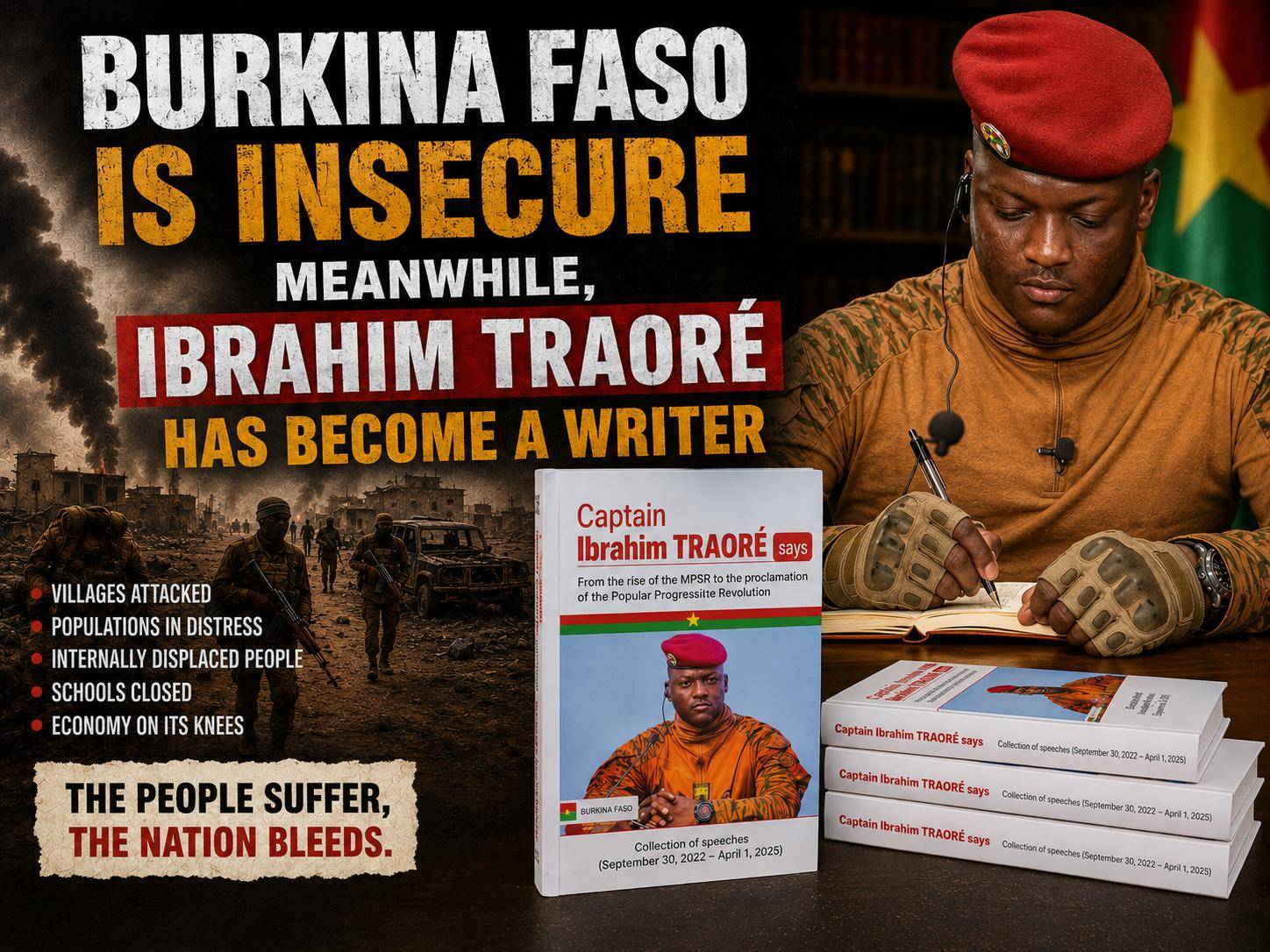
On one side of this divide stands a population desperate for security and stability, while on the other, state resources appear to be diverted toward a different agenda. A recent publication attributed to Captain Ibrahim Traoré has drawn sharp criticism, with many questioning the timing and purpose of such a project. In a climate where security forces remain under-resourced, the allocation of funds for state-sponsored literature seems not only misplaced but deeply disconnected from reality.
Citizens across Ouagadougou and rural areas share a unified demand: tangible action over symbolic gestures. The message is clear—people are not seeking narratives; they are pleading for the restoration of their homeland and the return of peace.
A leadership crisis of credibility
When Captain Ibrahim Traoré assumed leadership, he inherited a nation plagued by insecurity and a fractured social contract. His initial appeal rested on a promise of restoring territorial integrity and delivering security where previous administrations had failed. Yet, as the crisis deepens, the focus on state propaganda and personality-driven narratives has overshadowed the very mission that once garnered public trust.
The cost of misplaced priorities
The decision to prioritize the promotion of a book at a time when security forces struggle with critical logistical shortages reflects a troubling detachment from the nation’s immediate needs. Security cannot be safeguarded with printed words, nor can lives be protected through slogans. The frustration among the populace is palpable, and the patience for unfulfilled promises is wearing thin.
A civil society representative, speaking on condition of anonymity, encapsulated the sentiment: “The people do not need stories; they need their nation restored to them.”
From contract to confrontation
The transition’s legitimacy was built on an unwritten agreement—a pledge to secure the country and restore stability. Today, however, the focus on image management over operational effectiveness has eroded that trust. The population’s tolerance for unmet security demands has reached its limit, and calls for accountability are growing louder.
For many, the choice is stark: either the government realigns its priorities to address the security vacuum, or it risks being swept away by the tide of public discontent. The current trajectory suggests a widening chasm between leadership and the people it is meant to serve.
What lies ahead for Burkina Faso?
The government now stands at a crossroads. Continuing to prioritize state-sponsored narratives over tangible solutions will only deepen the rift with the citizenry. Burkina Faso does not need figureheads with literary ambitions; it needs decisive leadership capable of restoring peace and stability.
If Captain Traoré fails to pivot toward addressing the nation’s most pressing challenge—security—the historical record may reflect a leadership that wrote its legacy in the ink of illusion while the country burned.