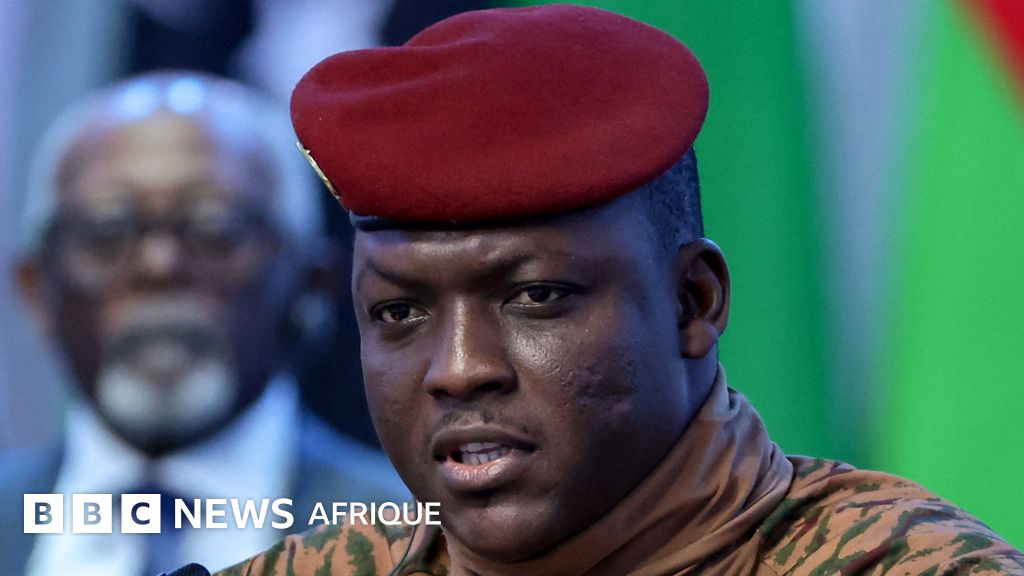
The military leader of Burkina Faso has called for the nation to abandon democracy, describing the system as destructive and incompatible with the country’s needs. In a prime-time television interview aired on national broadcaster RTB, Captain Ibrahim Traoré declared that Burkinabé citizens should forget about democracy, framing it as a foreign imposition that brings only chaos.

From promise to postponement: a broken timeline
Traoré rose to power in a 2022 coup and initially pledged to restore constitutional rule by July 2024. Yet with just two months remaining before that deadline, the junta announced a five-year extension of its mandate, effectively sidelining democratic transition. Earlier this year, authorities banned all political parties under a sweeping state reconstruction plan, consolidating authority under military rule.
Rejecting the western model
During the televised interview, Traoré drew parallels with Libya, a nation he described as a cautionary tale. He argued that Western-backed democratization efforts elsewhere have led to instability and bloodshed, pointing to the fall of Muammar Gaddafi—whose regime, despite its flaws, once provided social services—as an example of what can go wrong. Since Gaddafi’s ouster, Libya has remained mired in division and conflict, with no functioning elections and rival administrations controlling different regions.
« Democracy is not for us, » Traoré stated bluntly. « People must forget about it. » He went on to dismiss political parties as inherently corrupt and divisive, asserting that Burkina Faso requires a revolutionary path rooted in sovereignty and national unity. « A real politician here is a liar, a flatterer, a charlatan, » he claimed, positioning his military-led government as a break from past failures.
A new vision: sovereignty, patriotism, and hard work
The captain outlined a vision centered on self-reliance in both economy and defense, emphasizing long working hours and grassroots mobilization. Traditional leaders and community structures, he argued, would play a central role in governance. « We are not copying anyone, » he insisted. « We are here to completely change how things are done. »
Crackdown on dissent
Traoré’s tenure has been marked by a firm suppression of opposition. Critics, media outlets, and civil society groups face restrictions, while dissenters have reportedly been sent to frontline positions in the fight against Islamist militants. Despite these measures, his anti-Western rhetoric and panafricanist stance have earned him significant support across the continent.
Turning to Russia amid ongoing violence
Like neighboring Mali and Niger, Burkina Faso has distanced itself from Western partners—particularly France—in its battle against Islamist insurgencies that have plagued the Sahel for over a decade. Instead, Ouagadougou has turned to Moscow for military assistance, yet violence continues unabated. A recent Human Rights Watch report estimates that over 1,800 civilians have been killed in Burkina Faso since Traoré’s 2023 takeover, with two-thirds of the deaths attributed to state forces and allied militias.
As the junta consolidates power under a banner of national renewal, the question remains: can Burkina Faso achieve stability and development without democratic institutions—or will its revolutionary path deepen the crisis?