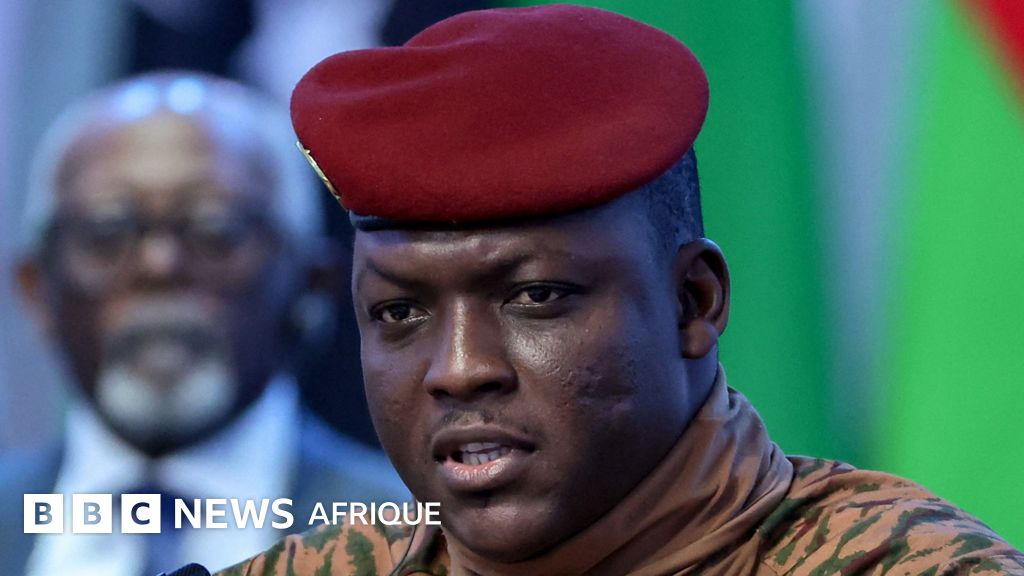
The leader of Burkina Faso has declared that democracy is not the solution for his nation, urging citizens to abandon the concept entirely. Speaking during a televised address, Captain Ibrahim Traoré asserted that the political system has failed the country and must be replaced by an alternative approach tailored to Burkina Faso’s unique circumstances.
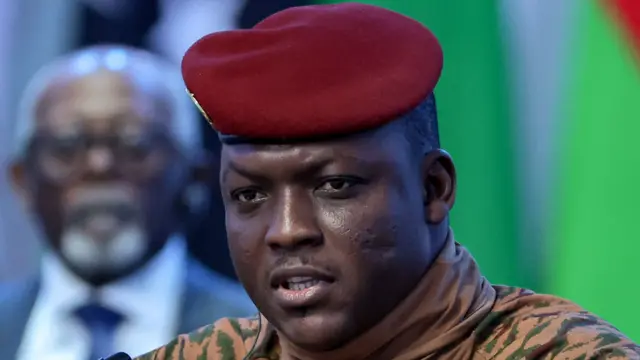
a bold rejection of traditional governance
In his recent remarks, Traoré emphasized that Burkina Faso must move beyond democratic structures, stating, « People must forget about democracy. It is not for us. » He drew parallels with Libya, highlighting the chaos that followed Western-backed regime change in the North African nation. Traoré positioned himself as a revolutionary leader, vowing to break from colonial legacies and foreign interference.
The military leader, who seized power in a 2022 coup, had initially pledged to restore civilian rule by July 2024. However, in a move that drew widespread criticism, his administration extended its transition period by five years, citing the need for deeper reforms.
political parties banned in pursuit of a new order
In January, Traoré’s government dissolved all political parties, transferring their assets to the state. He described these organizations as divisive and incompatible with his vision of a united, revolutionary Burkina Faso. « In Africa—at least in Burkina Faso—a true politician embodies all the vices: a liar, a flatterer, a charlatan, » he remarked, dismissing traditional political figures as corrupt and ineffective.
The junta leader has not detailed his proposed alternative system but insists it will prioritize sovereignty, patriotism, and grassroots mobilization. Traditional leaders and local structures are expected to play a central role in this new framework, which Traoré claims will « completely change how things are done. »
economic and military self-reliance at the forefront
Traoré’s vision extends beyond politics into the economic and military spheres. He criticized Burkina Faso’s reliance on foreign aid and called for longer working hours, arguing that shorter schedules hinder national progress. « Working six or eight hours a day will not help us catch up with wealthier nations, » he stated, advocating for a more rigorous approach to development.
The government has also intensified its crackdown on dissent, targeting opposition groups, media outlets, and civil society organizations. Critics accuse Traoré’s administration of silencing opponents by deploying them to frontline combat zones in the fight against Islamist militants.
regional shift away from western alliances
Traoré’s stance aligns with recent political shifts in West Africa, where military-led governments in Burkina Faso, Mali, and Niger have distanced themselves from former colonial power France. These nations have instead forged closer ties with Russia, seeking military support to combat Islamist insurgencies that have destabilized the region for over a decade.
Despite these alliances, violence continues unabated. A recent report by Human Rights Watch revealed that over 1,800 civilians have been killed in Burkina Faso since Traoré’s takeover in 2022. The report attributes two-thirds of these deaths to state forces and allied militias, with the remainder linked to Islamist groups.
Traoré’s defiance of democratic norms has garnered significant support across Africa, particularly among those frustrated by perceived Western interference. However, his methods have also drawn condemnation, with critics warning that his authoritarian approach risks deepening instability in an already volatile region.