
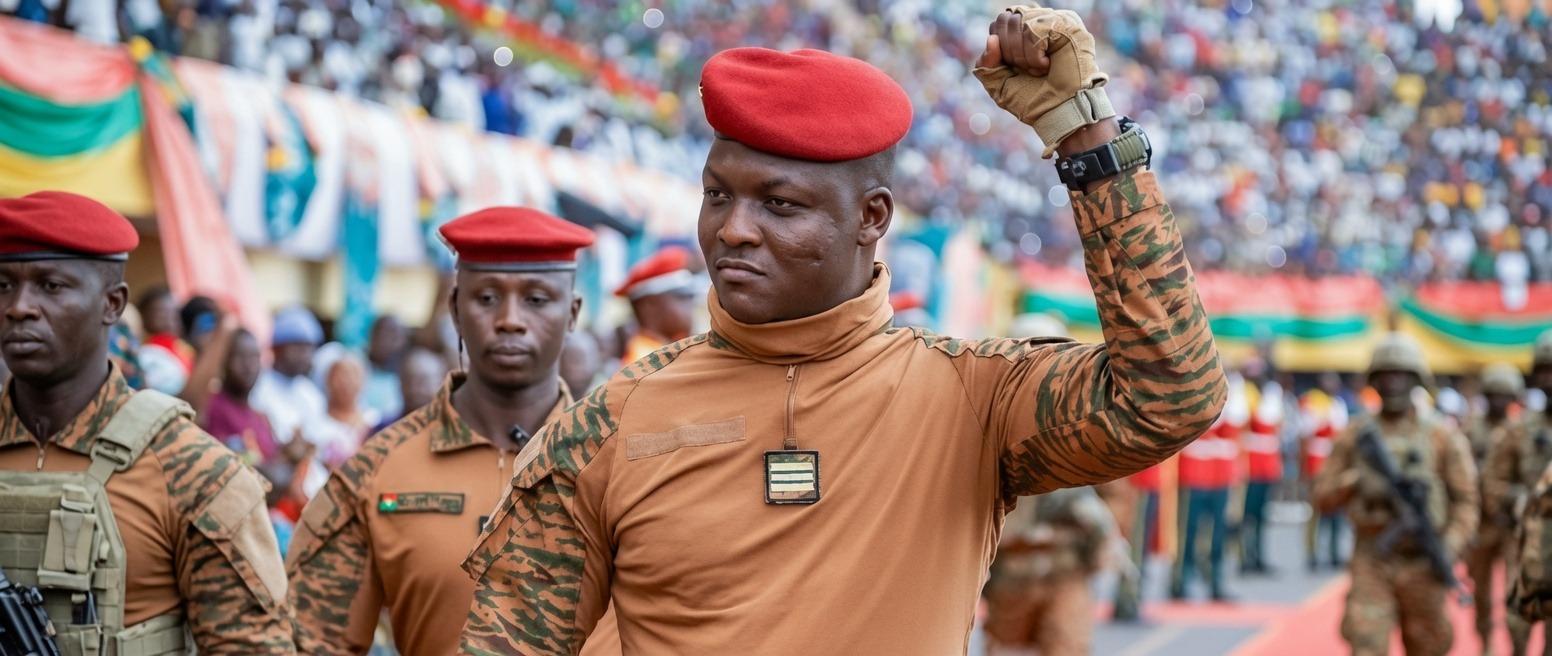
Burkina Faso’s transitional government has recently declared that it now controls 74.53% of the national territory, a figure intended to project an image of military progress and restored stability. Yet, when examining independent assessments, humanitarian reports, and the lived experiences of local communities, this official narrative appears more like a strategic communications effort than an accurate reflection of the security situation on the ground.
What does “control” really mean?
The government’s definition of territorial control is notably flexible. Rather than requiring sustained administrative, judicial, and security functions, the state considers a zone “under control” if military units are present, convoys move under armed escort, or mobile patrol teams (including Volunteers for the Defense of the Homeland—VDP) operate in the area. However, true territorial control demands more: uninterrupted public services, justice systems that function without interference, safe civilian movement without ambush threats, and a permanent security presence.
In reality, armed groups such as the Group for the Support of Islam and Muslims (JNIM) continue to disrupt life across much of the country. They frequently ambush military convoys, block major roadways, and impose de facto sieges on key towns whenever state forces temporarily withdraw. This pattern of asymmetric warfare contradicts the government’s claims of widespread security.
The information blackout fuels the discrepancy
The disconnect between official claims and ground truth is exacerbated by a strict media and data lockdown:
- Restrictions on independent reporting: Local NGOs, security analysts, and independent journalists face surveillance or outright bans on publishing conflicting security assessments. Those who do risk being accused of undermining troop morale.
- Lack of third-party verification: No external or international body has been granted access to independently validate the government’s territorial mapping. Meanwhile, reputable conflict-tracking organizations continue to document a high frequency of violent incidents across large parts of the country.
Humanitarian crisis persists despite official claims
If 75% of Burkina Faso were truly secure and administratively functional, one would expect a sharp decline in humanitarian indicators. Instead, the data tells a different story:
- Internally displaced persons (IDPs) remain trapped in limbo: Returns to original villages are rare and dangerous. The number of people relying on emergency aid has not significantly dropped, indicating ongoing instability.
- Public services are collapsing: In many areas labeled “under control,” thousands of schools remain shuttered. Health workers refuse to return without guaranteed safety, and civilian administration struggles to function beyond protected provincial capitals.
Why the optimistic narrative?
This upbeat portrayal serves immediate political purposes:
- Legitimizing the transition: Emphasizing territorial gains helps justify the extension of the transitional period and the continued imposition of war-related burdens on civilians—such as increased taxes and forced mobilizations.
- Distracting from tactical setbacks: By focusing on aggregate percentages, authorities deflect attention from recurring attacks on isolated military outposts and VDP units, particularly in the North, East, and Boucle du Mouhoun regions.
