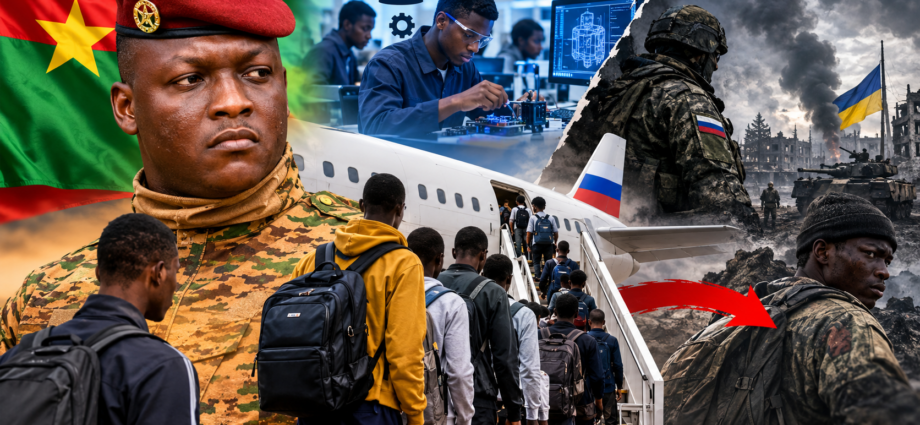
Burkina Faso’s government, under the leadership of Captain Ibrahim Traoré, has proposed an initiative to send young Burkinabè citizens to Russia for advanced technical training. While the program is framed as a step toward modernization, serious questions linger about the true intent behind the plan and the potential risks faced by the youth involved.
From education promise to potential danger
Captain Traoré has previously emphasized the importance of training Burkinabè youth within the country, advocating for national sovereignty in education and technological development. Yet, the current proposal contradicts that stance by redirecting young people to Russia, a nation deeply involved in a prolonged and costly war in Ukraine.
The shift raises concerns: Is the goal purely educational, or could it open doors to military exposure or recruitment under the guise of technical learning? Past cases involving African recruits in Russia have exposed individuals to dangerous scenarios, including being sent to conflict zones under false pretenses of employment or study opportunities.
Unanswered questions about the program’s structure
Vague commitments from Burkina Faso’s leadership leave families and observers with critical unanswered questions about the program’s implementation. How many young people will be selected? Which Russian institutions will provide the training? What qualifications will they earn upon completion?
Equally pressing is the issue of their safety. Will their return to Burkina Faso be guaranteed? What legal or diplomatic safeguards will prevent them from being coerced or recruited into military service during their time abroad? Without concrete answers, the program risks becoming a source of anxiety for parents and a potential liability for the nation’s future.
The contradiction of sending youth abroad
Captain Traoré once championed the idea of investing in Burkina Faso’s own educational infrastructure universities, technical schools, and research centers as a foundation for national growth. If the country possesses the capacity to develop homegrown expertise, why prioritize sending young people to a foreign country entangled in war?
The government must clarify whether this initiative is driven by a genuine need for specialized training or by other, less transparent motives. Families deserve transparency, and the youth deserve protection not exposure to risks they are neither prepared for nor responsible for.
Protecting the youth is non-negotiable
At its core, this debate is not about skepticism toward international cooperation but about ensuring that Burkina Faso’s youth are not exploited as pawns in conflicts beyond their control. The nation needs engineers, scientists, and skilled professionals to build its future, not young people who could become casualties in a war they never chose to fight.
The government owes the people of Burkina Faso clear answers. Without them, the program risks undermining national trust and leaving families in the dark about the safety and purpose of their children’s journey abroad.
By AMINATA KABORE — Journalist
Comments are closed, but trackbacks and pingbacks are open.