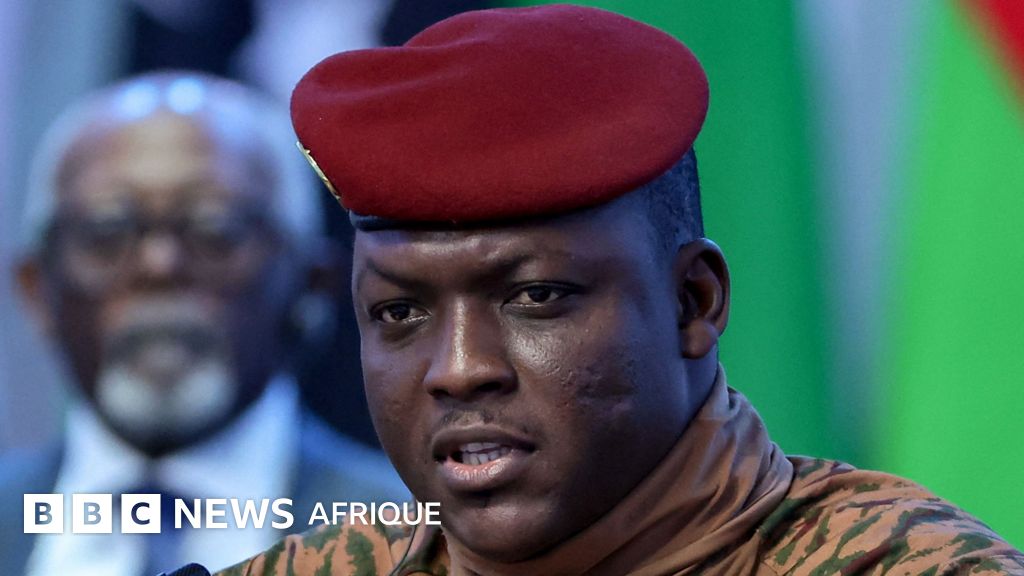
The military leader of Burkina Faso has urged citizens to abandon democratic aspirations, calling the system “deadly” and incompatible with the nation’s revolutionary vision. In a nationally televised interview, Captain Ibrahim Traoré, who seized power three years ago, declared that democracy holds no future for the country, asserting it “is not for us.”
From promised return to democratic rule to total rejection
Traoré initially pledged to restore civilian governance by July 2024, but with two months remaining, the military junta announced a five-year extension of its mandate. The decision came amid sweeping reforms, including the January ban on all political parties, framed as part of a broader effort to “rebuild the state.”
A revolutionary alternative to democracy
In his televised address, the 38-year-old leader framed democracy as a Western imposition that brings chaos, citing Libya as an example. He argued that Western-backed democratic transitions worldwide have consistently led to bloodshed, pointing to the North African nation’s post-Gaddafi collapse into factional violence and failed elections.
The captain dismissed political parties as inherently divisive, labeling them vehicles for corruption and empty rhetoric. “In Africa—at least in Burkina Faso—a real politician embodies every vice: a liar, a flatterer, a loudmouth,” he stated. Instead, he championed a homegrown system centered on sovereignty, patriotism, and grassroots mobilization, with traditional leaders playing a key role.
Economic and military self-reliance at the core
Traoré emphasized the need for Burkina Faso to achieve economic and military independence, arguing that standard working hours would never bridge the gap with wealthier nations. “Six or eight hours a day won’t solve our problems,” he declared, calling for relentless effort to forge a new path.
Controversial governance and regional alignment
The junta’s crackdown has extended to opposition figures, independent media, and civil society groups. Critics face harsh measures, including deployment to frontline combat zones against Islamist militants—a tactic Human Rights Watch has documented as contributing to over 1,800 civilian deaths since 2023, with two-thirds attributed to state forces and allied militias.
Despite the repression, Traoré has cultivated significant panafrican support by championing anti-Western rhetoric and aligning Burkina Faso with neighboring military regimes in Mali and Niger. The trio has severed security cooperation with former colonial power France, opting instead for Russian military assistance, yet insurgent violence persists unabated.
The leader’s vision, while resonating with anti-imperialist sentiments, raises grave concerns about democratic backsliding and human rights violations across the region.