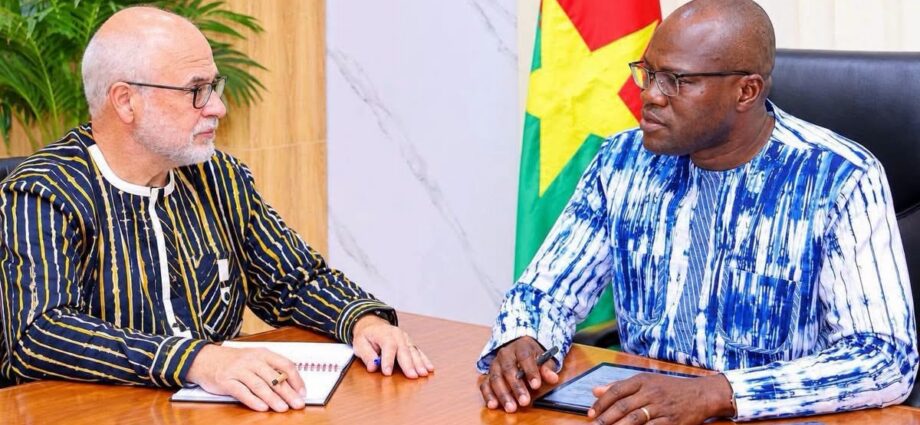
IMF approves potential $87.67 million funding for Burkina Faso
Despite its sovereignist rhetoric, Burkina Faso has reached a technical agreement with the International Monetary Fund (IMF) for a potential financing package worth $87.67 million (approximately 49.6 billion West African CFA francs). The funds, stemming from two ongoing economic programs the Extended Credit Facility (ECF) and the Resilience and Sustainability Facility (RSF) remain contingent upon the IMF board’s approval, expected by mid-January 2027. Of this amount, $65.38 million is allocated under the ECF, while $22.29 million falls under the RSF.
Broken promises: sovereign claims versus financial realities
Government officials frequently assert Burkina Faso’s ability to fund its development autonomously, yet the nation continues to rely on external financing mechanisms. How can authorities justify seeking IMF support while insisting on financial independence?
If domestic resources are sufficient, why persist with international aid? If external financing remains essential, why nurture the perception that Burkina Faso has severed ties with traditional funding models? The disconnect between political discourse and economic practice demands clear explanations rather than public relations maneuvers.
Mining wealth: a potential lifeline or another unfulfilled opportunity?
The IMF highlights Burkina Faso’s gold sector boosted by high global prices, increased production, and sector reforms as a key driver of economic activity and state revenue. However, natural resource wealth does not automatically translate into liquidity capable of covering all public expenditures.
Transparency is crucial: How much do mining revenues contribute to the national budget? What portion is allocated to public investments? What tangible improvements do citizens observe in their living standards? Economic sovereignty is measured not by political declarations but by the ability to convert national wealth into concrete progress.
IMF’s transparency demands: a test of governance credibility
In June 2026, the IMF underscored the need for Burkina Faso to enhance domestic revenue mobilization, improve public financial management, strengthen governance, and safeguard social spending for vulnerable populations. The institution also called for prudent debt management and greater transparency in public fund utilization.
These priorities raise a critical question: Beyond sovereignist slogans, what concrete assurances are being provided to citizens regarding public money management? The Burkinabè deserve more than hollow promises.
Sovereignty in action: aligning words with financial accountability
While state communications champion financial independence, citizens deserve clarity on the actual state of public finances and the terms of international financing agreements. Relying on the IMF is not inherently a sign of failure, but the double standard in messaging celebrating sovereignty on one hand and quietly negotiating IMF support on the other undermines public trust.
The debate extends beyond the $50 billion figure. It centers on the alignment between political promises, economic decisions, and the tangible state of public finances. True sovereignty is not demonstrated by denouncing international institutions in public while quietly accepting their resources when needed. It is, above all, about truthfully informing citizens about available means and how their taxes are spent.
By Alasane OUEDRAOGO — Journalist
Comments are closed, but trackbacks and pingbacks are open.