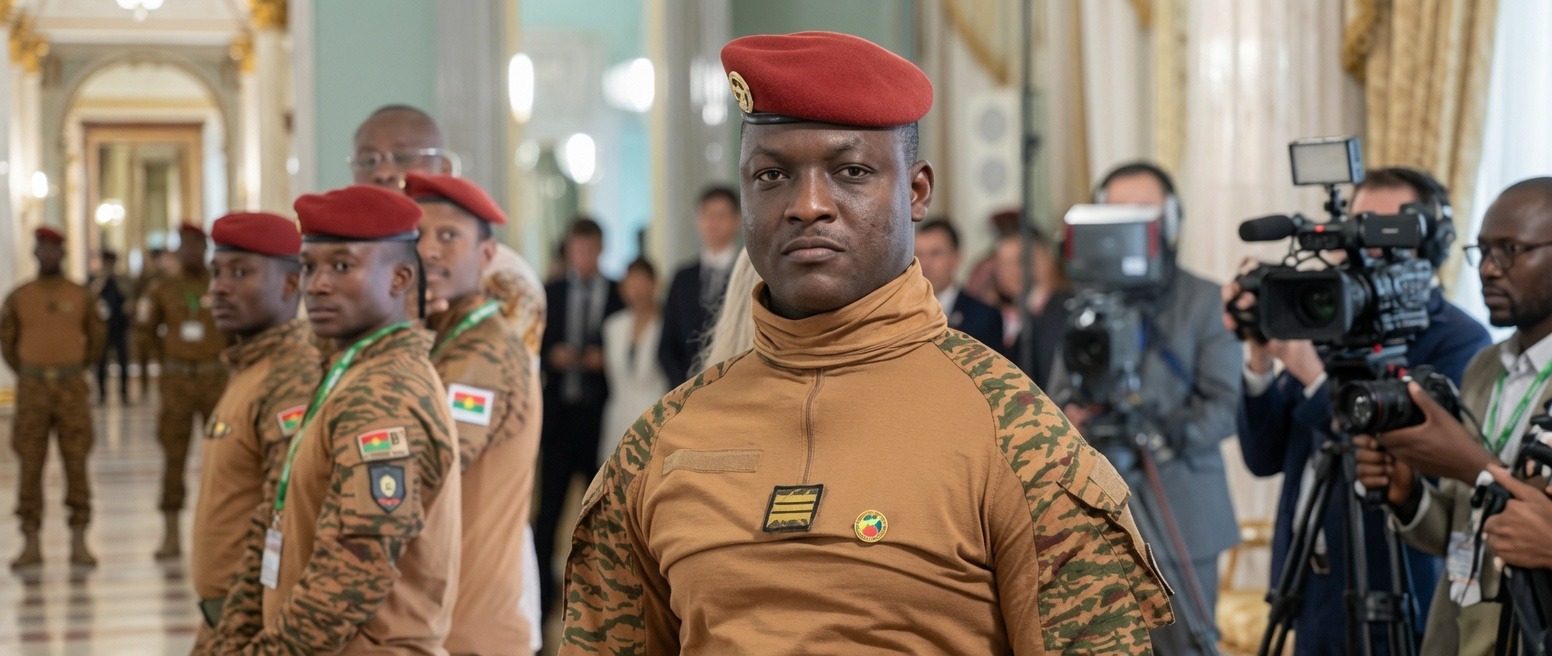
The captain Ibrahim Traoré’s address in Ouahigouya has laid bare a deep structural fracture within Burkina Faso’s ruling power. His unapologetic use of coarse language and threats to ‘crush without remorse’ signals a systemic crisis of trust within the military apparatus. In governance and warfare alike, the over-reliance on intimidation and sterile rhetoric is not a display of strength, but a glaring symptom of underlying fragility. A regime forced to publicly vow the suppression of its own officers implicitly confesses that its junta’s cohesion no longer stems from shared doctrine or strategy, but solely from fear of repression.
This approach breeds a perilous paradox for the country’s transition. By erasing the notion of a clear hierarchy—declaring ‘there is no number one or number two’—the transitional leader attempts to neutralize potential rivals. Yet, this flattening of ranks concentrates all strategic risks on his single shoulders. By staking his legitimacy exclusively on battlefield experience, he traps the regime in a classic pretorian trap: a legitimacy that is purely personal, non-transferable, and entirely dependent on immediate military victories.
The hardening of his discourse also obscures a critical strategic misstep. By prioritizing political loyalty checks over structural reforms within the armed forces, the transition risks crippling its own command chain. Officers, now more concerned with self-preservation and internal surveillance than tactical initiative, may retreat into cautious conformity. An army paralyzed by the fear of being labeled disloyal inevitably loses operational agility, widening the gap between Ouagadougou’s rhetoric of resolve and the harsh realities on the frontlines.
History warns that such governance through fear backfires. Rather than dissolving internal factions, the culture of suspicion and pervasive monitoring drives dissent underground. Experience from Sahelian military regimes shows that when open debate is suffocated by the threat of brutal suppression, opposition does not vanish—it merely bides its time, waiting for the balance of power to shift.