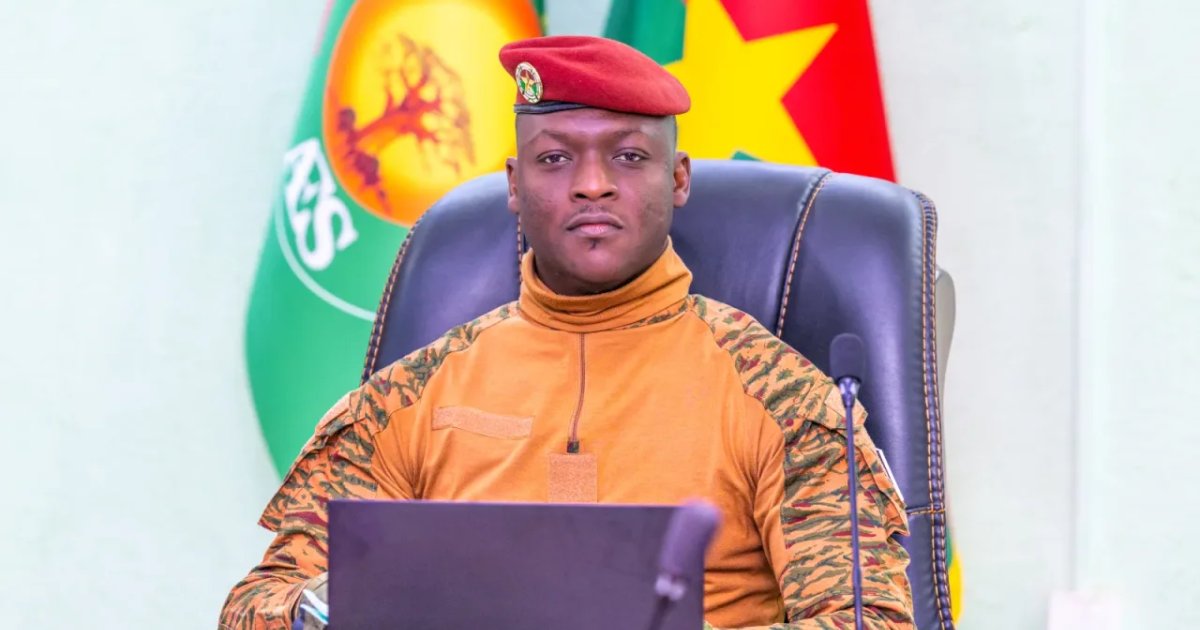
Burkina Faso’s silence on AES currency fuels regional uncertainty and public debate
Ibrahim Traoré’s latest remarks about the proposed single currency for the Alliance of Sahel States (AES) have left critical questions unanswered, triggering a wave of speculation and concern across West Africa. During a press appearance, the Burkinabè leader offered no concrete timeline, name, or operational framework for the project, instead emphasizing that discussions remain under way. As the clock ticks on economic decisions that could reshape the regional landscape, the absence of clear commitments is deepening public anxiety and sparking fresh debate over the future of monetary sovereignty in the Sahel.

Traoré’s guarded stance leaves timing, name, and mechanism unresolved
When directly questioned about the prospects of an AES single currency, President Ibrahim Traoré maintained a deliberately cautious stance. No launch date was announced. No official name was disclosed. Nor were any details provided regarding the currency’s design, governance structure, or transition process. His response—calling for patience and attention to future developments—leaves regional stakeholders with little more than uncertainty.
This lack of clarity is particularly striking in light of recent public statements and social media claims suggesting that banknotes are already printed or that circulation could begin soon. The leaders of the AES have already rejected such rumors, stressing that no monetary decisions have been formally adopted or endorsed by the three member states.
Regional integration advances, but monetary sovereignty remains a distant goal
While Burkina Faso, Mali, and Niger have made progress in areas such as defense coordination, diplomatic alignment, and financial cooperation, the creation of a shared currency represents the most complex and politically sensitive step yet in their union. For Traoré, monetary sovereignty is not merely about printing new bills—it entails building new institutions capable of managing reserves, exchange rates, price stability, and public financing without external oversight.
The AES has already introduced common financial instruments to support investment and major infrastructure projects. These steps signal deeper integration but do not constitute proof that a single currency is imminent. The transition to a new monetary system would require consensus on highly technical and highly political issues—including central bank governance, capital controls, debt management, and the legal status of contracts denominated in the new currency.
Economic stakes rise as public expectations clash with official silence
With nearly 100 million people across the three countries relying on the West African CFA franc, any move toward a new currency would carry immense economic consequences. Households, businesses, and governments alike are left to speculate: Will there be a conversion rate? A transition period? Will two currencies coexist temporarily? Will inflation surge during adjustment? These questions, left unanswered, are fueling market jitters and public skepticism.
For now, the AES member states continue to operate under the existing monetary framework. No official notice has been issued regarding a withdrawal from the UEMOA system, the establishment of a common central bank, or the adoption of a new currency code. Until concrete institutional and technical groundwork is laid, the dream of monetary independence remains in the realm of political ambition—far from practical reality.
What’s next? Analysts parse every word, but clarity is in short supply
As regional observers dissect every statement and rumor, the Burkinabè government’s silence is increasingly interpreted as caution, not confidence. The absence of deadlines or concrete commitments suggests that consensus among the three partner nations is still fragile. Meanwhile, businesses and families face rising uncertainty, with investment decisions and pricing strategies left in limbo.
The next AES summit could bring answers—or only deeper opacity. Until then, the people of Burkina Faso, Mali, and Niger are left to wonder: Is the promised monetary revolution coming? Or is it fading into political rhetoric?
Comments are closed, but trackbacks and pingbacks are open.