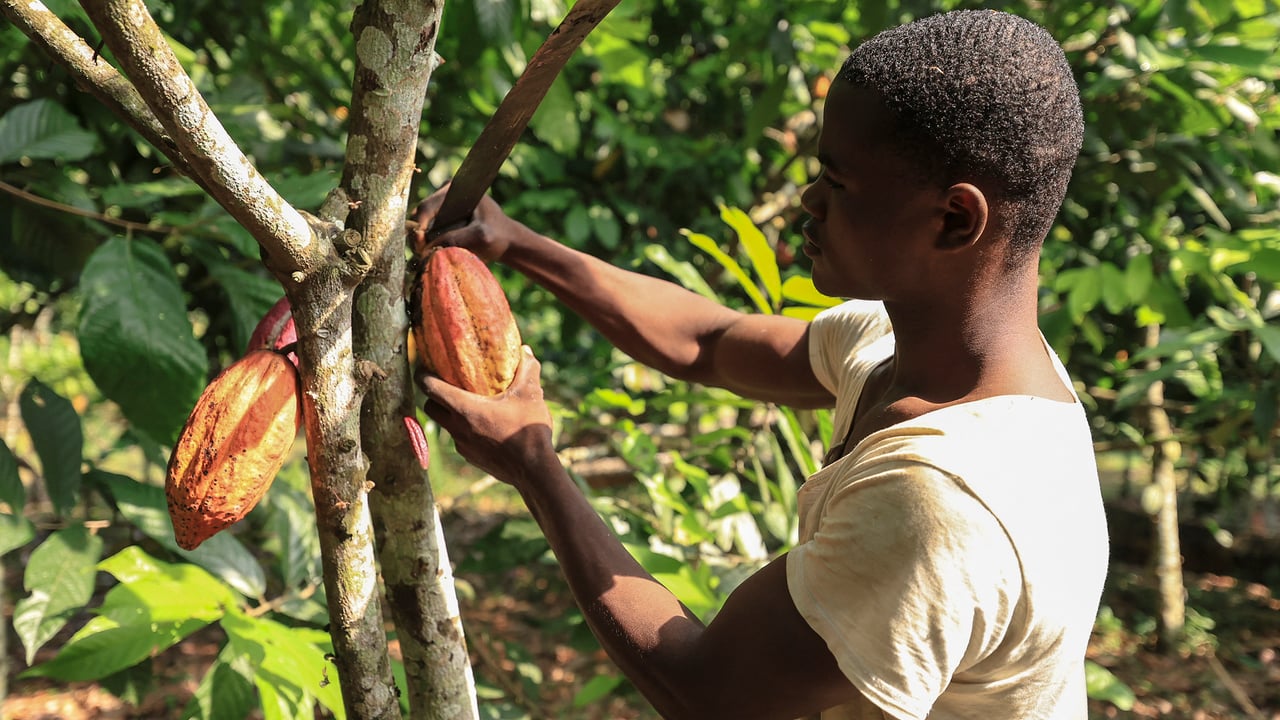

Across Cameroon’s lush southern regions, where cocoa trees flourish under the tropical climate, farmers are grappling with a harsh reality. The global price slump for cocoa has cast a shadow over their livelihoods, threatening the future of an industry that has long been the backbone of local economies.
From the rolling hills of the Centre Region to the dense forests of the South, cocoa producers are feeling the squeeze. Year after year, their incomes dwindle, despite their relentless efforts to cultivate some of the world’s finest beans. The situation has reached a critical point, with many questioning whether they can continue to rely on cocoa as their primary source of revenue.
Why are cocoa prices plummeting in Cameroon?
The decline in cocoa prices isn’t an isolated incident—it’s part of a broader trend affecting the global market. Several factors are contributing to this downturn:
- Oversupply from major producers: Countries like Côte d’Ivoire and Ghana, which together account for over 60% of the world’s cocoa production, have ramped up their output. This has flooded the market, driving prices down.
- Weakened global demand: Economic uncertainties in key markets, including Europe and North America, have reduced consumer spending on luxury goods, including high-end chocolate products.
- Logistical and financial hurdles: Cameroonian farmers face rising costs for fertilizers, labor, and transportation, further eroding their profit margins.
For smallholder farmers, who make up the majority of Cameroon’s cocoa producers, these challenges are particularly devastating. Without access to credit or modern farming techniques, they struggle to adapt to the shifting market conditions.
How are Cameroonian cocoa farmers adapting?
Facing an uncertain future, many cocoa farmers in Cameroon are exploring alternative strategies to sustain their incomes. Some of the most promising approaches include:
- Diversification: Planting other high-value crops, such as coffee or palm oil, to reduce dependence on cocoa.
- Cooperative movements: Joining forces with other farmers to negotiate better prices and share resources, such as storage facilities and transport.
- Certification and premium markets: Pursuing organic or fair-trade certifications to access niche markets where cocoa fetches higher prices.
- Government and NGO support: Collaborating with agricultural programs that provide training, improved seedlings, and financial aid to boost productivity.
While these efforts offer some relief, they are not enough to offset the broader economic pressures. The road to recovery remains long and uncertain for Cameroon’s cocoa sector.
What does the future hold for Cameroon’s cocoa industry?
The fate of Cameroon’s cocoa industry hinges on several key developments. On the global stage, a recovery in demand—particularly from emerging markets—could stabilize prices. Meanwhile, local initiatives aimed at improving farming practices and market access are gaining traction.
Yet, the challenges are formidable. Climate change poses an additional threat, with erratic weather patterns affecting crop yields. Political instability in neighboring regions also disrupts trade routes, adding to the farmers’ woes.
For now, the country’s cocoa farmers remain resilient, holding onto hope that conditions will improve. But time is running out, and without urgent action, the industry that has sustained generations may face irreversible decline.
Comments are closed, but trackbacks and pingbacks are open.