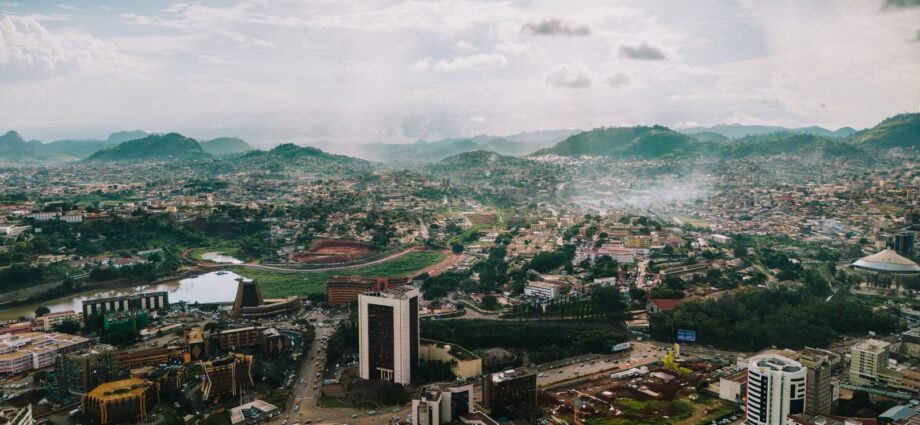
Cameroon’s International Debt Report 2026 confirms a pivotal moment: the country allocated 1,101 billion FCFA (1.896 billion USD) in 2025 to servicing its external debt, up from 1,023 billion FCFA the previous year. This 12.3% surge in dollar terms reflects a sharp increase in principal repayments—up 19.7% to 1.38 billion USD—while interest payments dipped slightly to 510 million USD. The total external debt stock rose 10.5% to 17.57 billion USD (9,812 billion FCFA) by December 31, 2025.
Export earnings under pressure as debt service peaks
The debt service ratio, closely monitored by the World Bank and IMF, worsened dramatically: external debt repayments now consume 22.1% of Cameroon’s export and primary income revenues, up from 19.1% in 2024. These revenues fell 2.9% to 8.57 billion USD, signaling a dwindling foreign exchange base. Structural declines in oil production—ongoing since the mid-2010s—and weaker cocoa and timber cycles have eroded export receipts, which still hinge heavily on hydrocarbons and agribusiness for foreign exchange.
The 2025 surge in principal repayments stems from a concentration of maturities on loans contracted in the early 2010s, particularly to Asian bilateral creditors financing projects like the Kribi port, Memve’ele dam, and major road networks. Eurobonds issued in 2015 and restructured in 2021 are now entering their heaviest repayment phases. Multilateral buybacks, including 130.4 million USD from the IMF in 2025 (up from 84.3 million in 2024), reflect the legacy of pandemic-era support.
Public investment takes a back seat as debt absorbs resources
The squeeze on public finances is hitting at a critical juncture. Net new external financing plummeted 32.8% in 2025 to 624 million USD, while net transfers—after interest payments—fell 71.5% to just 113 million USD. This marks a decisive shift: external debt is no longer a net resource for Cameroon’s budget but a net outflow. While Gabon and Congo-Brazzaville face similar pressures within the CEMAC zone, Cameroon remains the most exposed in absolute terms.
The scarcity of foreign currency has already begun to slow public investment. First-quarter 2026 budget execution data from the Ministry of Finance shows a 27.7% drop in public investment compared to the same period in 2025. This reflects both the demands of the IMF program and the growing burden of combined domestic and external debt service—external principal repayments alone are expected to exceed 600 billion FCFA on the regional public securities market in 2026.
A fiscal test for Cameroon’s post-Biya era
The International Debt Report 2026 aligns with joint IMF-World Bank debt sustainability analysis from March 2026 and the Fund’s October communiqué: Yaoundé remains classified as high risk for debt distress, though debt is assessed as manageable in the medium term. While external debt stands at 30.3% of gross national income, it represents 205.1% of foreign exchange earnings—highlighting a vulnerability rooted not in overall debt levels but in the capacity to generate foreign currency to meet obligations.
For the Cameroonian government, 2026–2027 will be a decisive testing ground. The transition of presidential leadership after four decades in power coincides with a period where every franc spent on debt service constrains social, wage, and security allocations. The next administration’s room to maneuver will hinge on renegotiating bilateral loans, reviving regional bond issuances through the Bank of Central African States (BEAC), and broadening the non-oil tax base.
Comments are closed, but trackbacks and pingbacks are open.