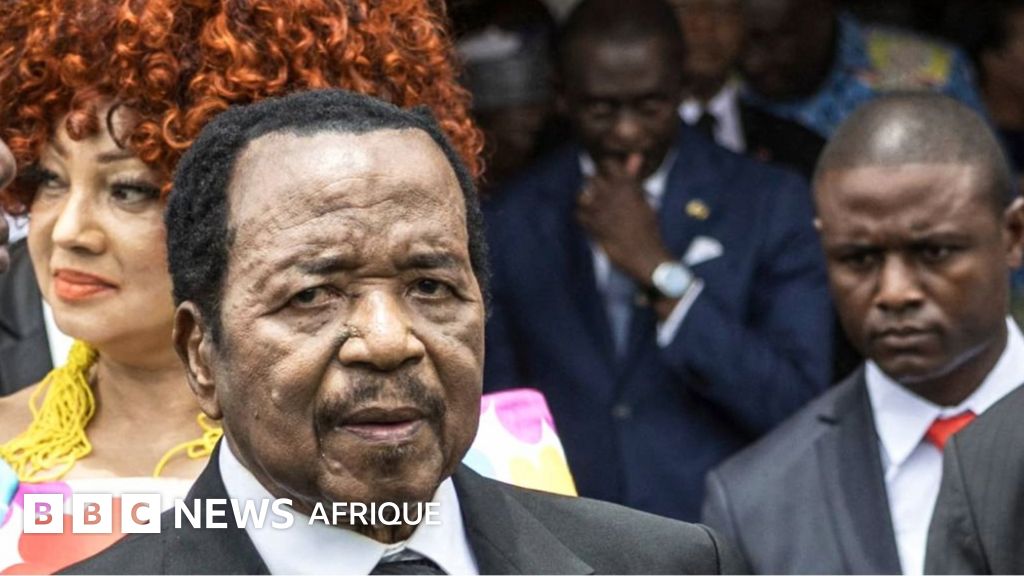
The veteran Cameroonian leader, President Paul Biya, has reshuffled key military positions amid growing public discontent over his prolonged absence from the country. At 93, Biya remains a polarizing figure, with his recent decisions sparking debates across the nation.
Last Monday, the President issued several decrees from Geneva, where he has been staying since June 7—a trip officially described as a “brief private visit.” Among the changes, five colonels were promoted to the rank of brigadier general, and new leaders were appointed to critical military roles.
The timing of these adjustments raises questions. Military reshuffles under Biya’s administration are not uncommon, particularly when public pressure mounts or perceived weaknesses emerge in leadership. Recent events, including a coup in neighboring Gabon three years ago, have heightened concerns about stability in the region, prompting swift strategic moves in Cameroon.
This is not the first time Biya has reshaped the military hierarchy. Last year, ahead of his controversial eighth-term bid, he overhauled top military ranks. In June, additional promotions within the defense and security forces were announced, further consolidating command structures.
Public reaction and political implications
The latest military reshuffle comes as Cameroonians grapple with uncertainty surrounding Biya’s prolonged absence. For nearly two months, official information about his activities has been scarce, fueling speculation about his health and the duration of his stay abroad. The government has repeatedly dismissed rumors of hospitalization, though no detailed updates have been provided.
The secrecy has drawn criticism, especially from opposition figures. Mamadou Mota, vice-president of the opposition party CRM, described the situation as a “flagrant institutional vacuum,” emphasizing that governance must occur within Cameroon’s borders, not from remote locations. “Executive power is exercised at the heart of the nation, not through vague signals or distant hotel suites,” he stated last month.
Biya’s absence has also cast a shadow over other political developments. Despite pledging to form a new government after last year’s election, the administration has yet to act. The newly created vice-presidential position, established in April, remains vacant, adding to the sense of unease.
Meanwhile, the President has signed multiple decrees from Geneva, including those authorizing loan agreements with international financial institutions. His prolonged stay has intensified debates, with some questioning whether his health can sustain the demands of leadership.
Freedom of the press advocates have also voiced concerns. Two years ago, authorities banned Cameroonian media from reporting on Biya’s health, a move that drew sharp criticism from global watchdogs. The government has since insisted the President remains active and will return soon, though no specific timeline has been shared.
The military reshuffle, while framed as routine, underscores the broader challenges facing Cameroon. As Africa’s oldest leader navigates domestic and regional pressures, the absence of transparency continues to fuel speculation and instability.
Comments are closed, but trackbacks and pingbacks are open.