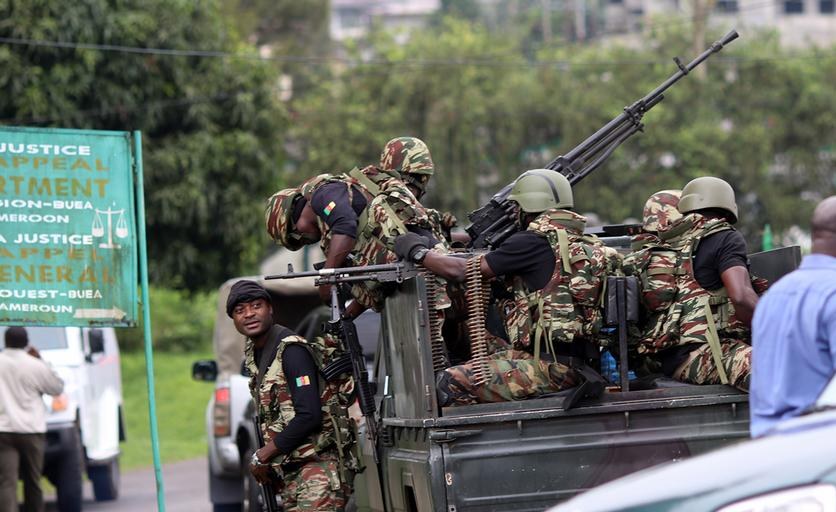
The absence of Paul Biya from Cameroon’s political stage has stretched beyond two months, casting a shadow over the nation’s stability. Officially described as a private stay in Europe, the 93-year-old president’s prolonged disappearance has triggered a wave of speculation, particularly as the military undergoes a sweeping overhaul.
Since departing Yaoundé on June 7, 2026, Biya has not been seen in public. Meanwhile, a series of military decrees has reshaped the command structure of the armed forces, raising concerns about an impending power vacuum and the militarization of governance.
The military reshuffle: a strategic shift or a power play?
On August 3, 2026, a presidential decree (No. 2026/265) appointed General Beko’o Abondo Raymond Jean Charles as the new head of the Presidential Guard—a critical role responsible for the president’s personal security. This move is part of a broader pattern of military appointments, including:
- Five new brigade generals
- A new Major General of the army staff, General Ebaka Hippolyte
- Six new territorial commanders across four of Cameroon’s five military regions
The timing of these changes, coinciding with Biya’s prolonged absence, has fueled suspicions that the military is being restructured in preparation for a forceful succession. As one retired colonel noted under anonymity, “No one can make such appointments without the president’s direct approval.”
Ethnic tensions and the specter of instability
Cameroon’s political landscape is increasingly divided between two dominant factions vying for influence:
- The consanguineous clan, led by Franck Biya, the president’s eldest son, seen as the guarantor of the regime’s continuity.
- The First Lady’s faction, centered around Chantal Biya and Ferdinand Ngoh Ngoh, the powerful Secretary-General of the Presidency.
Their rivalry has intensified since April 2026, when a constitutional revision reintroduced the vice-presidential position—intended to secure a smooth transition in case of a power vacuum. However, the role remains unfilled, leaving the succession mechanism dormant and dysfunctional.
The constitutional deadlock
The absence of a vice-president has paralyzed the constitutional process for succession. Opposition figures, including Maurice Kamto’s MRC party, have demanded that the Constitutional Council recognize a vacancy of power. Yet, without the vice-presidential office, the procedure cannot proceed, trapping Cameroon in an institutional limbo.
Health rumors and the crisis of transparency
Speculation about Biya’s health has swirled since early July, with reports suggesting complications from knee surgery. The government has consistently reassured the public of the president’s well-being, yet the lack of concrete information has only deepened mistrust. As opposition leader Roger Justin Noah of the MRC remarked, “If there are health concerns, the Cameroonian people deserve to know.”
Why the rush to reshuffle?
The timing of the military appointments—while Biya remains incommunicado—has raised eyebrows. Critics question why such sensitive decisions were made without the president’s public oversight. The government has dismissed rumors of forged decrees, but doubts persist, particularly as Biya’s return date remains uncertain.
The Rwanda precedent: a cautionary tale
Analysts warn that Cameroon’s current trajectory mirrors the conditions that led to Rwanda’s 1994 tragedy—where ethnic divisions within the military escalated into catastrophe. In Cameroon, ethnic tensions already simmer, and the fear of one group monopolizing state power threatens the nation’s fragile social contract.
Can Cameroon avert disaster?
The path forward remains unclear, but experts suggest three critical steps to prevent further destabilization:
- Transparency: The government must disclose Biya’s health status and expected return timeline.
- National dialogue: A mediated conversation among political factions to address ethnic grievances and power-sharing concerns.
- Filling the vice-presidential void: Appointing a vice-president to restore institutional legitimacy and safeguard the succession process.
Cameroon stands at a crossroads. The coming weeks will determine whether the nation navigates this crisis through dialogue and reform—or succumbs to the dangers of militarization and ethnic division.
Comments are closed, but trackbacks and pingbacks are open.