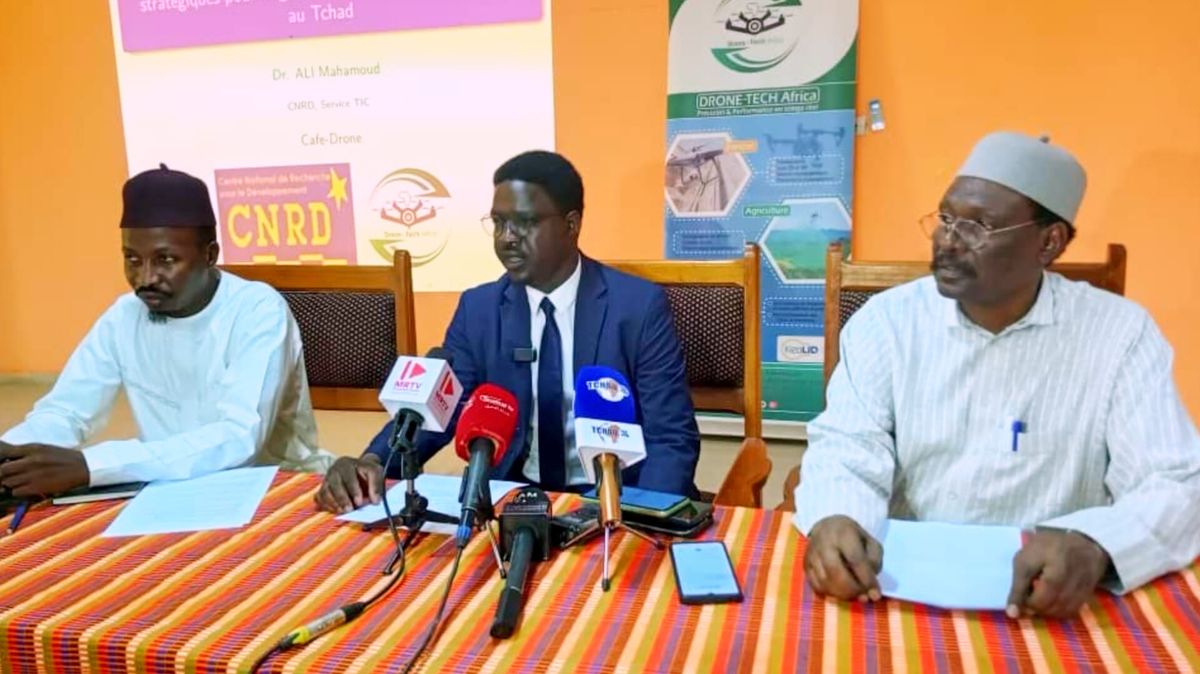
Chad’s inaugural café drone event takes flight, exploring civil drone opportunities
Chad recently hosted its first-ever Café Drone, a groundbreaking event that delved into the vast potential of civil drones across agriculture, livestock, and environmental stewardship. Experts convened to address crucial regulatory, training, and integration challenges in the burgeoning drone sector.
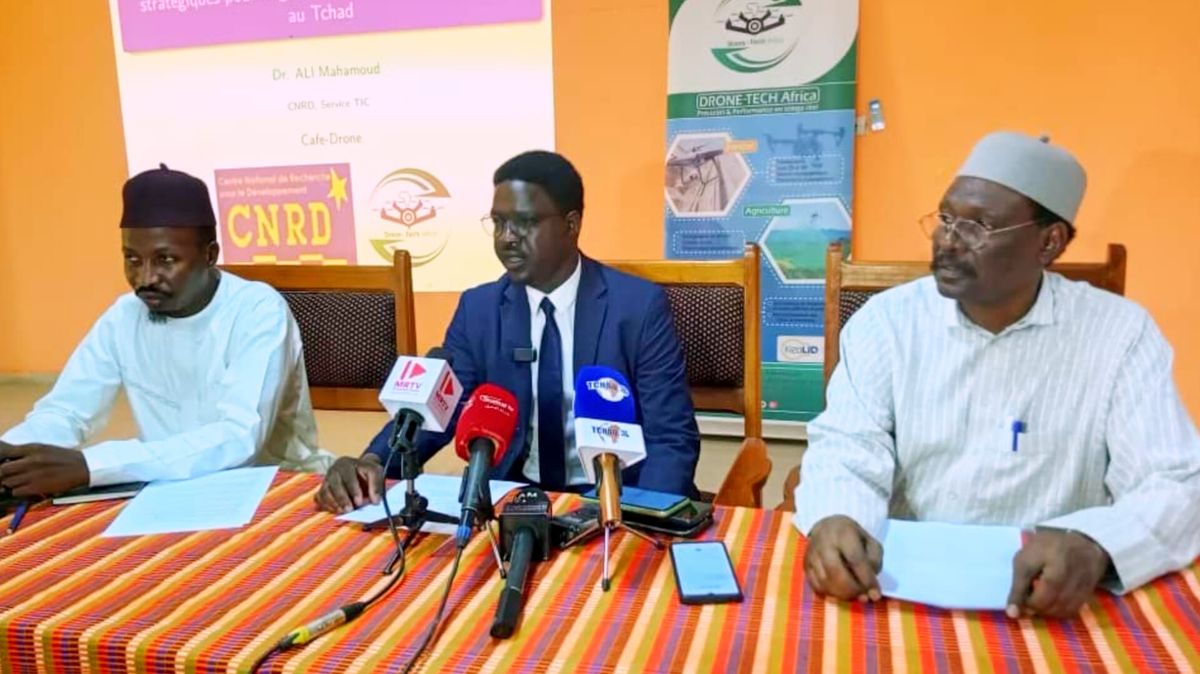
Tech Africa, Tchad FlyingLabs, WeRobotics, and the Centre National de Recherche pour le Développement (CNRD) collaboratively launched the inaugural Café Drone event. This significant gathering took place on June 25, 2026, at the CNRD facilities in N’Djamena, focusing on the compelling theme: « Les opportunités liées aux drones civils » (Opportunities related to civil drones).
The initiative’s core objective is to underscore and champion the vital role of drones across various sectors within Chad, particularly in enhancing agriculture, optimizing livestock management, and safeguarding the nation’s precious natural parks and reserves.
During his opening address, Professor Mahamoud Youssouf Khayal, Director General of the CNRD, highlighted the unprecedented nature of this event, bringing together national and international stakeholders in unmanned aerial technologies within a dedicated research and development environment in N’Djamena. He emphasized that drones are no longer futuristic concepts but a tangible reality of the present. Professor Khayal further elaborated, « Given Chad’s expansive territory, significant logistical hurdles, pressing need for geospatial data, and the imperative for rapid crisis response, drones emerge as an exceptionally pertinent solution. »
Professor Mahamoud Youssouf Khayal also outlined several critical challenges that must be overcome for Chad to fully harness the benefits of this technology:
- Regulatory Framework: Establishing secure drone usage while simultaneously fostering innovation.
- Training: Equipping the youth with the skills necessary for the jobs of tomorrow in the drone sector.
- Integration: Facilitating seamless dialogue and collaboration among institutions, private operators, and researchers.
The Director General of the CNRD extended his profound gratitude to the organizing partners – Drone Tech Africa, Tchad FlyingLabs, and WeRobotics – for their visionary initiative and unwavering commitment. He also acknowledged the presence of experts who have already translated these advanced technologies into practical, operational solutions. He encouraged all participants to seize this unique opportunity for learning, forging new partnerships, and laying the groundwork for a comprehensive national roadmap. « Research is not a distant endeavor; it is right here, at the heart of our daily concerns. Drones perfectly exemplify this principle, » he affirmed.
Professor Khayal also expressed appreciation to the dedicated teams at the Centre National de Recherche pour le Développement for their tireless efforts in organizing the event, along with the technical and financial partners who demonstrated faith in the project.
Mahamat Issa Abakar, Director of Drone Tech Africa, presented compelling insights from research conducted in Burkina Faso, illustrated through a detailed projection. He also showcased agricultural research undertaken in Chad’s Guéra province, specifically in Mongo, Baro, and Tabo. Here, a women’s agricultural project was meticulously filmed by a drone to understand their farming practices amidst resilience challenges. The ultimate aim of this research was to identify methods to boost agricultural yields by an impressive 30% through drone application.
Ali Mahamoud, a department head at the CNRD, provided an illuminating explanation of artificial intelligence’s application in research. He underscored the crucial role of drones in preventing conflicts between farmers and herders, often exacerbated by drought, water scarcity, and climate change. Mahamoud highlighted the invaluable utility of drones for wildlife surveillance within the renowned Zakouma National Park, as well as for monitoring transhumance corridors, conducting mineral prospecting, and even searching for gold. He emphasized how drones are instrumental in acquiring vital statistical data across these diverse fields.
The third expert speaker, Dr. Djimassal, a research officer, clarified the sophisticated use of satellites to capture specific images from space. These images provide detailed visual data on vegetation patterns, rivers, sparse forests, human settlements, arboreal and herbaceous savannas, grazing areas, and thickets, particularly in Chad’s northern regions. He offered a comprehensive interpretation of these images, revealing insights into various natural resources, lakes, and natural forests.
Following these insightful research presentations, a dynamic panel discussion was convened, allowing for an extensive exchange on the paramount importance of drone utilization across a multitude of applications.
Comments are closed, but trackbacks and pingbacks are open.