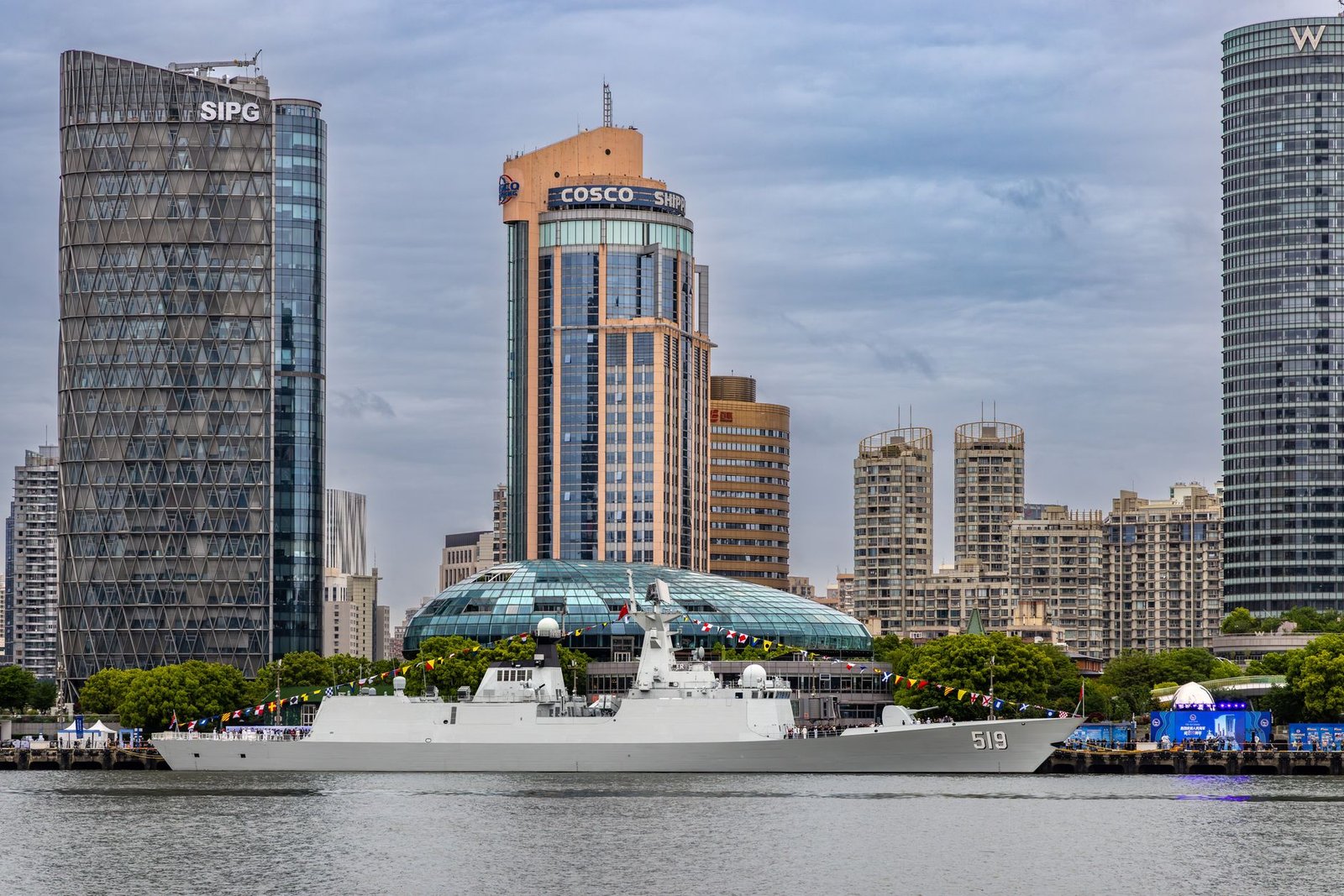
Military collaboration between China and Gabon is reaching a new level with the arrival of a Chinese defense attaché in Libreville. This development coincides with sensitive infrastructure projects, including a proposed naval base in Port-Gentil, plans for military barracks, and officer training programs. These initiatives outline a strategic partnership whose full scope remains somewhat veiled. While several of these endeavors are still in the planning stages, Beijing’s influence within Gabon’s defense apparatus has been steadily increasing year after year.
A Chinese military presence older than it seems
The recent appointment of the new military attaché from the People’s Republic of China in Libreville underscores a long-standing bilateral defense relationship. Exchanges between the two armed forces are not new; a history of equipment deliveries, training for Gabonese officers in China, reciprocal visits, and technical cooperation has marked a discreet but continuous trajectory. The renewal of the defense attaché position is a continuation of this dynamic, rather than its initiation.
Beijing has leveraged military diplomacy as a core instrument of its African policy, complementing its significant investments in mining, infrastructure, and telecommunications. Gabon, rich in raw materials and strategically positioned on the Gulf of Guinea, fits perfectly into this framework. Security cooperation naturally extends already well-established economic interests, particularly concerning manganese, timber, and hydrocarbons.
Port-Gentil, barracks, and training: mapping sensitive projects
The most closely observed project is the potential naval base in Port-Gentil, Gabon’s economic and oil capital, facing the Atlantic. Such a facility, if it materializes, would provide the Chinese navy with a rare foothold in the Gulf of Guinea, a maritime zone known for tensions related to piracy, illicit trafficking, and the security of energy routes. Currently, this remains a proposed project, lacking an official timeline or operational confirmation.
In addition to this prospect, discussions are underway regarding the construction of barracks and training centers for the Gabonese armed forces. The cooperation also encompasses anti-piracy efforts, an area where Beijing seeks to demonstrate a constructive role, consistent with protecting its merchant vessels and citizens in the region. Regular exchanges between the navies of both countries further enhance this arrangement, including port calls, joint exercises, and knowledge transfer.
A partnership that concerns France and Western partners
China’s growing prominence in Gabon’s security landscape cannot be separated from the ongoing strategic repositioning in Central Africa. Since the political transition began in August 2023, Libreville has actively diversified its partnerships, asserting a desire for decision-making autonomy, including in defense matters. While this shift does not exclude Paris, historically present through a reorganized military base, it creates an opening for other actors, such as China, Turkey, or Russia, to engage.
A potential Chinese naval facility on Gabon’s Atlantic coast would be scrutinized far beyond the sub-region. It would extend the logic initiated in Djibouti, where Beijing established its first overseas military base in 2017, and confirm the so-called
Comments are closed, but trackbacks and pingbacks are open.