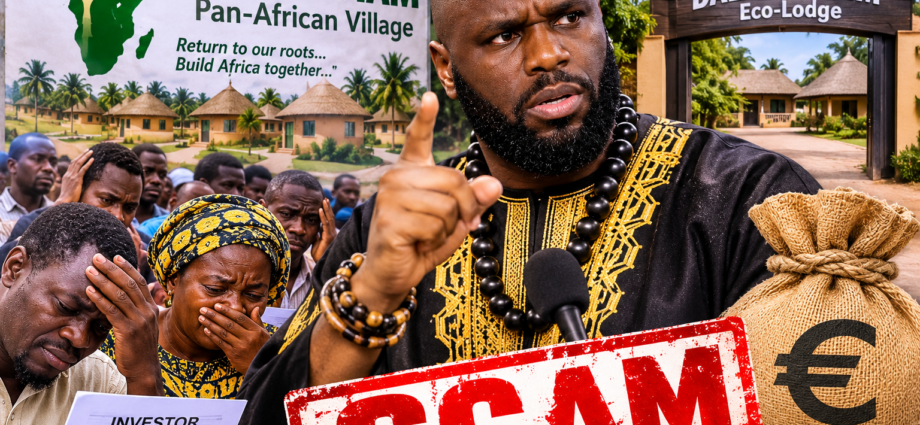
In 2011, Kémi Séba born Stellio Capo Chichi championed a bold initiative under the banner of Pan-Africanism: Dalaal Diam. Marketed as a return-to-roots movement and a financial rallying point for Afro-descendants, the project proposed a “Pan-African village” in Senegal, spearheaded by the organization Afrikan Mosaïque. The stated goal was to repatriate descendants of Africa and establish a hub for economic self-sufficiency grounded in the philosophy of Marcus Garvey.
The campaign appealed to symbolism and shared heritage, drawing early supporters with visions of an 8-hectare parcel of land and a projected budget of €360,000. The initiative was framed not just as a construction project, but as proof that Pan-African ideals could transcend rhetoric and become tangible reality.
From Vision to Vacancy: The Project’s Drifting Trajectory
Following initial subscriptions and public mobilisation, events took a downward turn. By 2012 and 2013, the project had already missed key milestones. Original components of the plan including infrastructure and communal facilities were abandoned. In a significant pivot, the endeavor was repurposed into an eco-lodge, with an opening date set for January 2014. The transformation was stark: from an expansive Pan-African village to a much smaller hospitality-oriented venture.
Financial Fallout: Investors Left Waiting for Refunds
Beyond the change in mission, serious questions emerged over the handling of funds. Multiple early contributors report that, despite the project’s scaled-down status and apparent abandonment of its original aims, they have still not received reimbursements. Sources close to the first subscribers confirm that financial recovery processes have stalled, leaving individuals who invested in good faith still awaiting resolution. The total amount at stake remains unspecified in public records.
A Contradiction in Words and Legacy
The term Dalaal Diam, which translates from Wolof as “peace be with you,” has taken on a different role in public discourse. Kémi Séba has continued to introduce speeches and public appearances using the phrase as a standard greeting. This symbolic appropriation raises ethical concerns: how can the founder of a project that failed its early supporters still leverage its name, while those who placed their trust and funds in the initiative remain uncompensated?
Unanswered Questions and Demands for Accountability
The failure of Dalaal Diam has left a trail of unanswered questions. What role did Kémi Séba play in soliciting public contributions? Where did the collected funds go? Why have initial investors not received reimbursements? These inquiries remain unaddressed by either Séba or Afrikan Mosaïque. The absence of transparency has only deepened mistrust among those who believed in the project’s ideals.
What began as a symbol of Pan-African resolve now stands as a cautionary tale. The movement’s rhetoric rooted in collective responsibility and historical justice demands more than symbolic gestures; it requires concrete accountability to those who trusted the vision enough to invest in it.
By AMINATA KABORE — Journalist
Comments are closed, but trackbacks and pingbacks are open.